Families who freeze meals in batches
If you regularly store portions of blanched peas, cooked meals and other ingredients, compare freezer litres and drawer space before choosing a fridge-to-freezer split.


Start with the freezer compartment, not the fridge-freezer’s total capacity. A 50/50 layout is worth considering if you regularly freeze portions of blanched peas and family meals; a 60/40 or 70/30 layout leaves a greater share for chilled groceries. Check the exact freezer volume and drawer arrangement, then make sure the appliance fits your kitchen and access route.
If you regularly store portions of blanched peas, cooked meals and other ingredients, compare freezer litres and drawer space before choosing a fridge-to-freezer split.
If chilled weekly groceries take priority and you freeze smaller quantities, a 60/40 or 70/30 layout may suit your storage balance. Bosch and Hotpoint both offer these fridge-heavy layouts; check the freezer volume of the individual model.
A narrow gap, limited delivery access or an existing integrated cabinet may determine which appliance you can install. Check door clearance, ventilation requirements and, for integrated models, the housing and hinge arrangement.
Choose the balance of frozen and chilled storage first, then compare the exact model’s fit and features.
Consider it when: frozen portions and chilled groceries are similarly important to your household.
Trade-off: the larger freezer share leaves less of the appliance for chilled food than a 60/40 or 70/30 layout; confirm the actual compartment litres.
Consider it when: your family keeps more fresh groceries than frozen meal portions.
Trade-off: a greater fridge share means a smaller freezer share, so check whether the stated freezer litres accommodate your usual portions.
Consider it when: you keep substantial family meal stocks and have room for a larger appliance.
Trade-off: the wider footprint makes the delivery route, installed space and door-opening clearance particularly important.
| Concern | What to check | Who this matters to |
|---|---|---|
| Freezer space and organisation | Compare frozen-compartment litres and whether the drawers accommodate your portion bags or containers. | If I freeze peas and family meals regularly, I need room to separate and find labelled portions; around 36% of consumers put organised freezer space first. |
| Kitchen fit | Measure the appliance space, delivery route and open-door clearance; check housing and hinges for an integrated model. | A fridge-freezer needs to fit through my access route and work in my kitchen, not just fit the gap on paper; around 29% of consumers prioritise installation fit. |
| Freezing features | Check the exact model for Frost Free or Total No Frost and, if you add substantial fresh portions, a Fast Freeze setting. | When I add freshly prepared food or want less defrosting work, I care which functions the model actually has; around 21% of consumers make freezing features their primary concern. |
| Energy information | Compare annual energy consumption alongside capacity rather than relying on the rating letter alone. | Before choosing a larger appliance, I want to weigh its stated energy use against the storage I need; around 14% of consumers put that comparison first. |
A large overall capacity may still leave too little freezer space if most of it belongs to the fridge.
Compare frozen-compartment litres and drawer arrangement before deciding whether a 50/50, 60/40 or 70/30 split suits your usual food stocks.
Frost-control features address ice build-up; Fast Freeze is a separate function for newly added food. Neither tells you how much frozen food will fit.
Check the exact model’s features and freezer volume, and decide whether reduced defrosting or frequent fresh additions matter to your routine.
An appliance can fit the measured gap yet be difficult to deliver or unable to open or ventilate as required. Integrated models also need compatible housing and door fixings.
Check the access route, door swing and manufacturer’s ventilation instructions; confirm cabinet dimensions and hinges before ordering an integrated model.
The rating letter does not show annual energy consumption or account for differences in appliance capacity.
Read the annual consumption figure alongside the storage volume and features you plan to use.
Bosch offers freestanding and integrated fridge-freezers in 50/50, 60/40 and 70/30 layouts.
Beko offers freestanding, integrated and American-style fridge-freezers, including models with Frost Free and Fast Freeze.
Hotpoint offers fridge-freezers in 60/40 and 70/30 layouts, including Frost Free and integrated ranges.
These fridge-freezers offer different appliance sizes and layouts for storing family meal portions. Compare each model’s freezer space with your chilled-food needs, then check installation clearance.
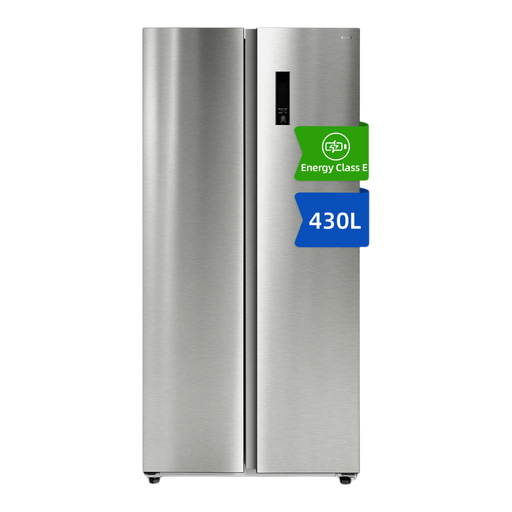 No image available
Consider this model if you need space for substantial family freezer stocks and can accommodate a wider appliance.
The listed width is 84 cm, and the name specifies No Frost. Check the freezer compartment and drawer arrangement against your portions, as well as delivery and door clearance.
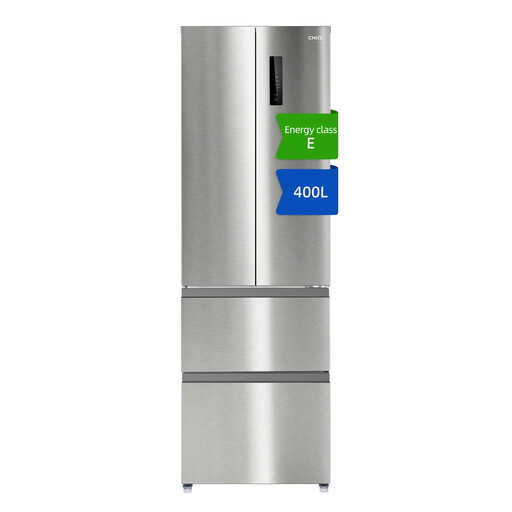 No image available
If you want a French-door layout for family groceries and frozen portions, compare its individual compartment volumes with what you usually store.
The listed width is 60 cm, and the name specifies Total No Frost. Check the full installation dimensions and open-door clearance.
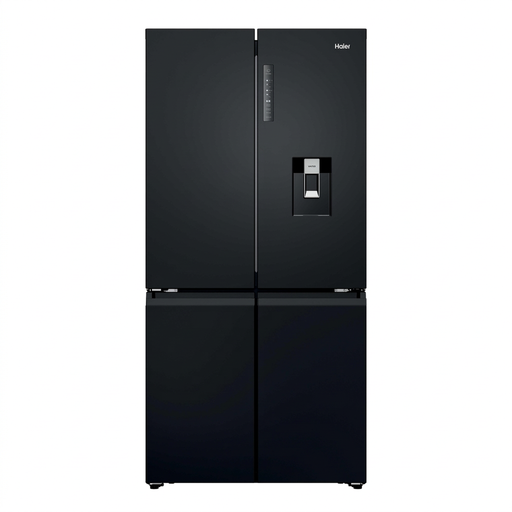 No image available
Consider this four-door model if you store substantial family meal supplies and have space for a larger appliance.
Its name specifies a 649 L total capacity. Check the freezer compartment volume separately, along with the delivery route and door-opening clearance; confirm any frost-control or Fast Freeze features you need.
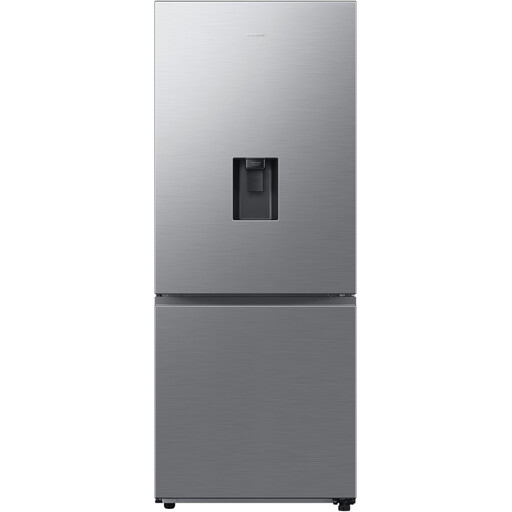 No image available
If you need room for both chilled groceries and frozen meal portions, check the fridge and freezer volumes individually before choosing this model.
The name lists a 75 cm width and 505 L total capacity. Confirm the freezer drawer arrangement, delivery access and door clearance for your kitchen.
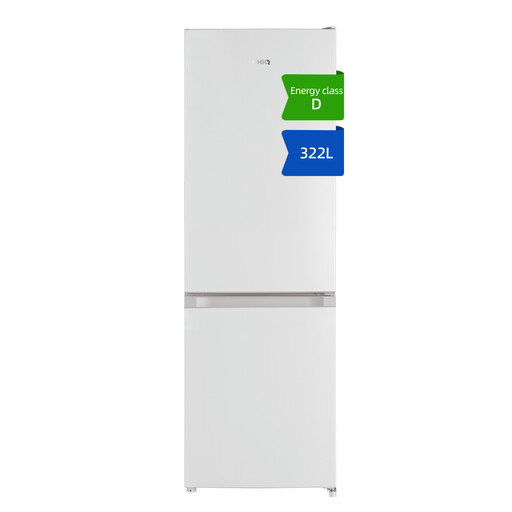 No image available
Consider this model if a freestanding appliance suits your kitchen and you freeze moderate quantities alongside chilled groceries.
The name lists a 60 cm width, 185 cm height and Total No Frost. Check the freezer litres and internal arrangement for your containers, plus ventilation and door clearance.
A 50/50 layout is worth considering if frozen vegetables and family meals need about as much storage as chilled food. If fresh groceries take more room, consider 60/40 or 70/30 instead; in every case, compare the actual freezer litres and drawer arrangement.
Divide the peas into smaller portions and label what you freeze, including the freezing date, so portions are easier to identify. GOV.UK gives portioning and labelling advice in its food-hygiene guidance for businesses; check that your chosen freezer has space for the containers or bags you intend to use.
No. Frost Free is intended to prevent frost build-up, while Low Frost generally reduces ice formation but may still leave occasional defrosting to do. Check the exact model’s specification rather than relying on a similar-sounding feature name.
Compare annual energy consumption together with capacity and the features you need, rather than using the rating letter alone. For new in-scope appliances sold in the UK, guidance from the Department for Energy Security and Net Zero and the Office for Product Safety and Standards covers the energy label and product information sheet at the point of sale; your running costs will also depend on use and your electricity tariff.
Check the cabinet housing, appliance depth, ventilation instructions and door-fixing arrangement as well as the external dimensions. An existing sliding-hinge or fixed-hinge setup needs to be compatible with the replacement appliance and kitchen furniture.