Fresh-veg meal planners
If you prepare carrot sticks and other vegetables ahead of family meals, look for a drawer you can reach easily and use for the containers you normally store.


For family meals that regularly include prepared carrot sticks, choose a fridge-freezer with a usable vegetable drawer and enough chilled space for ingredients and leftovers. Match the fridge-to-freezer split to your shopping habits, then check the appliance’s dimensions and installation requirements; a named freshness feature does not guarantee how long prepared vegetables will keep.
If you prepare carrot sticks and other vegetables ahead of family meals, look for a drawer you can reach easily and use for the containers you normally store.
If fresh ingredients, leftovers and frozen staples all need space after a larger shop, compare the chilled and frozen compartments separately. The total capacity alone will not tell you how that space is divided.
If you are replacing an appliance in a tight gap or behind a cabinet door, check dimensions, ventilation, door opening and cabinet compatibility before choosing a drawer or capacity.
Start with the space your fresh and frozen food needs, then rule out models that cannot be installed and used comfortably in your kitchen. Check produce-drawer features and ownership details on the exact model rather than relying on a range name.
| Concern | What to check | Who this matters to |
|---|---|---|
| Produce storage and access | Check usable vegetable-drawer space and whether the drawer opens fully in its intended position. Confirm humidity adjustment on the exact model if you want it. | If I prepare carrot sticks ahead of meals, I want a drawer where I can keep them easy to find without crowding other food. Around 33% of consumers put produce storage and access first. |
| Chilled and frozen space | Compare chilled and frozen litres separately, along with the shelf and drawer layout. A 70/30 split gives more space to the fridge than a 50/50 split. | When a weekly shop includes fresh ingredients, leftovers and frozen staples, I need a split that fits all three rather than just a large total volume. For around 27% of consumers, that storage balance comes first. |
| Kitchen fit | Measure the gap and check the chosen model’s ventilation and door-opening instructions. For an integrated model, confirm the aperture and cabinet-door arrangement. | With a limited gap or an existing cabinet door, I need to know the appliance will fit and its drawers will open. Kitchen compatibility is the primary concern for around 20% of consumers. |
| Energy, noise and upkeep | Compare annual kWh, noise in dB(A) and compartment volumes for the exact models. Check whether a frost-free feature is specified if freezer defrosting matters to you. | In a kitchen close to living space, I care about the listed noise level as well as energy use and defrosting work. Around 20% of consumers prioritise these ownership considerations. |
A family can run short of room for vegetables and leftovers even when an appliance has a large total capacity, if too much of that space is in the freezer.
Compare the stated chilled and frozen litres separately, then choose a split that reflects how much fresh and frozen food you normally keep.
A produce drawer, adjustable humidity and a brand’s named freshness system describe different features. None establishes a particular storage life for prepared carrot sticks.
Check the exact model’s drawer description and usable space. Treat freshness and vitamin-preservation statements as manufacturer claims, not a substitute for suitable food handling.
A fridge-freezer may fit the gap yet leave too little room for ventilation, door opening or access to its drawers.
Measure height, width and depth, then follow the selected model’s installation instructions for clearance and door swing. Check cabinet-door compatibility separately for integrated models.
Energy class alone does not describe an appliance’s annual energy-consumption figure, compartment sizes or listed noise level.
Compare those figures together on the labels and product information for the exact models on your shortlist.
Bosch is relevant if you want to compare models with its VitaFresh produce-storage system.
Beko is relevant if you are considering a fridge-freezer with a HarvestFresh crisper drawer.
Samsung is relevant to households comparing different fridge-freezer formats and capacities, including models in its SpaceMax range.
Liebherr is relevant if high-humidity fruit-and-vegetable storage is a priority.
These fridge-freezers offer different starting points for family food storage: freestanding and integrated designs, different fridge-to-freezer splits, and appliances with produce-related features. Compare each model’s usable drawer space and installation requirements with your own kitchen and meal routine.
 No image available
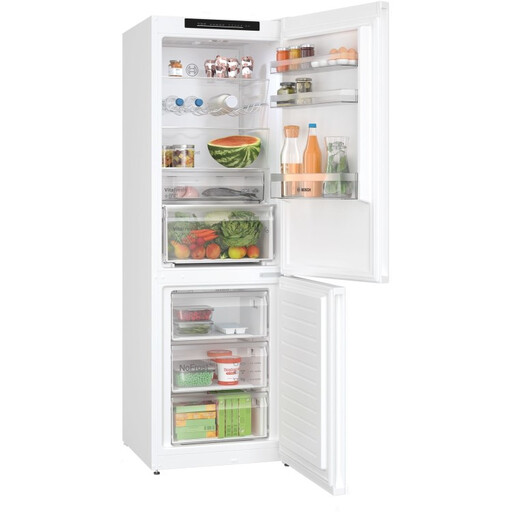
Consider this freestanding model if you want a fridge-led split for fresh family ingredients. Its listed features include NoFrost, a 186 cm height, 60 cm width and D energy class. Check that its produce drawers suit your containers and that the installation space meets the model’s instructions.
 No image available
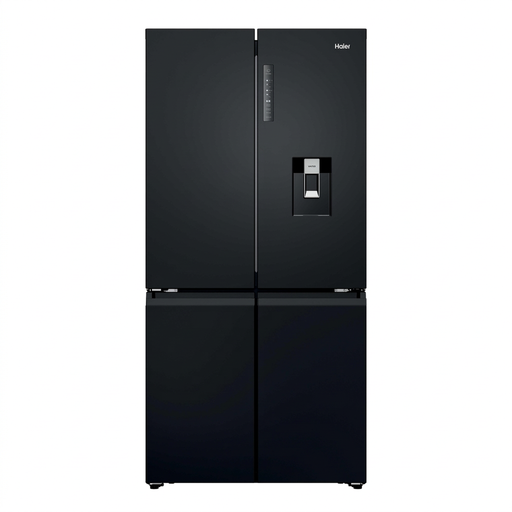
Consider this freestanding model when a larger family shop makes compartment layout a priority. The title lists a 649 l capacity; check how much of it is chilled space, how the vegetable drawers accommodate your containers and whether the appliance fits your kitchen.
 No image available
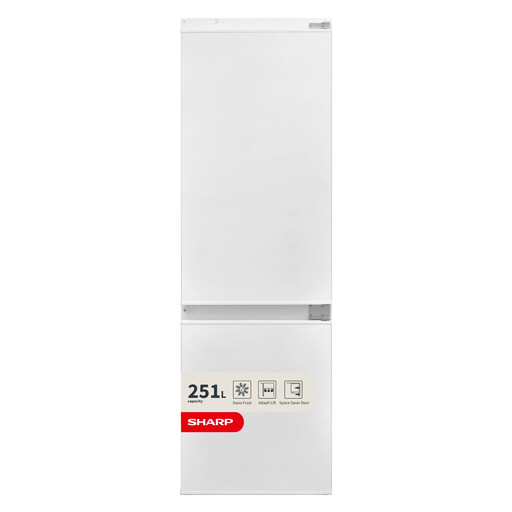
Consider this fridge-led model if your kitchen requires an integrated appliance. Its listed features include NanoFrost, a 177 × 54 cm size and E energy class. Confirm the housing, cabinet-door arrangement, clearances and usable crisper space before ordering.
 No image available
Consider this model if an integrated fit and a more even fresh-to-frozen split match your household. Its title lists 249 L total capacity and E energy class. Confirm the hinge and cabinet-door requirements before ordering: the supplied title and description use different hinge terms.
 No image available
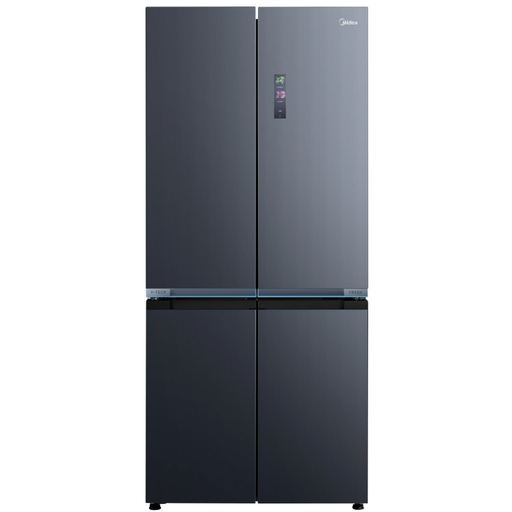
Consider this model if a larger fresh-and-frozen food shop calls for a four-door layout. Its title lists E energy class. If a separate vegetable crisper is important for prepared carrot sticks, check the internal layout and usable drawer size, as well as the installation clearances.
Keep the refrigerator appropriately cold: a Food Standards Agency research review refers to a recommended domestic fridge temperature of 4–5°C. Use the appliance controls and, if needed, a fridge thermometer to check its setting; a named produce drawer does not replace refrigeration.
No: a usable vegetable drawer with room for your covered container may meet your needs if you use the carrot sticks promptly. If humidity control is important to you, confirm that the exact model includes it; manufacturer freshness claims do not establish a storage duration for prepared carrots.
Compare annual energy consumption in kWh alongside energy class, chilled and frozen compartment volumes, and listed noise in dB(A). GOV.UK’s household refrigeration energy-label information identifies these model-specific fields; comparing them together gives more context than energy class alone.
Choose an integrated model when its housing, ventilation, hinge and cabinet-door requirements match your kitchen; otherwise, assess a freestanding model against the available floor space. For either type, check the exact model’s dimensions, required clearances and door-opening space before ordering.