Seasonal berry batch freezers
If several harvests need freezing each season, look for drawers that can accommodate sealed, labelled portions alongside the household’s usual frozen food.


Start with the space your berry portions and everyone else’s frozen food will need, rather than the appliance’s total capacity. A 50/50 fridge-freezer is a sensible layout to investigate for regular harvests; a 60/40 or 70/30 layout may suit a household that needs more room for fresh groceries. In either case, check the exact freezer volume and drawers, installation clearances and energy information; frost-free operation can ease shared maintenance but does not make up for insufficient space.
If several harvests need freezing each season, look for drawers that can accommodate sealed, labelled portions alongside the household’s usual frozen food.
When several people use the appliance, accessible portions and a manageable defrosting routine matter alongside storage capacity.
A fridge-freezer must fit the kitchen and delivery route as well as the household’s storage needs. Published noise and energy information can help narrow the choice between models that fit.
Choose the fridge-to-freezer layout around how often berries will compete with other frozen food, then compare the actual compartments and the space available in the kitchen.
Consider it when: Regular berry harvests and shared frozen food both need attention. A 50/50 split is described as having doors of equal height.
Trade-off: This layout gives less emphasis to fresh-food storage than a fridge-led split; equal-height doors do not tell you how many litres or usable drawers the freezer has.
Consider it when: Fresh groceries take priority and berry freezing is occasional. Bosch lists both layouts among its fridge-freezer options.
Trade-off: A fridge-led split leaves a smaller share of the appliance for freezing, so check whether its actual freezer drawers can take a harvest alongside other food.
| Concern | What to check when buying | Who this matters to |
|---|---|---|
| Usable freezer space | Compare frozen-compartment litres and the size and arrangement of the drawers, not just total appliance litres or the advertised split. | If I freeze several harvests, my labelled berry portions must fit without taking over everyone else’s frozen-food space. Around 33% of consumers put that freezer-space need first. |
| Shared maintenance | Check whether the exact model is frost-free and whether its freezer storage makes labelled portions easy to find. | When no one reliably takes responsibility for defrosting, I want a freezer that needs less manual maintenance. Roughly 25% of consumers make shared upkeep their primary concern. |
| Fit, noise and energy use | Check the delivery route, installation and door clearances, published noise figure, energy label and annual energy-use figure for the exact model. | In a tight kitchen, I need the appliance to fit without obstructing access, and I want to judge its ongoing noise and electricity use. About 25% of consumers prioritise those practical constraints. |
| Berry-freezing routine | Plan for sealed, dated portions and check how to set and monitor the freezer temperature; the Food Standards Agency recommends −18 °C for domestic freezers. | If several people share my berry harvest, I want portions they can identify and store correctly. Around 17% of consumers put that freezing routine first. |
Total litres include both compartments, so a large overall figure does not establish how much room is available for berries and shared frozen food.
Compare the exact model’s frozen-compartment volume and drawer layout. Treat the fridge-to-freezer split as a starting filter, not a substitute for those measurements.
Beko describes Frost Free on its CFG4601V as removing the need for manual freezer defrosting. That convenience does not establish the space available for labelled berry portions.
Check frost-free operation separately from freezer litres, drawer arrangement and the appliance’s fit in the kitchen.
A fridge-freezer also needs a clear route into the kitchen, the installation space specified for that model and enough room for its doors to open.
Measure the delivery route and final position, including sockets or pipework, then follow the manufacturer’s instructions for ventilation and door clearance. General measurement guidance is a starting point, not a replacement for model-specific instructions.
Buying more freezer space does not make unsealed or unlabelled portions easier to identify in a shared kitchen.
Prepare berries before freezing and follow NHS Borders’ advice to use sealed bags or lidded containers labelled with names and dates.
These brands provide examples of layouts and features worth comparing. Check specifications on the exact model rather than treating a feature on one appliance as standard across a range.
Relevant if you want to compare different fridge-to-freezer splits and then assess a model’s published freezer capacity.
Relevant if avoiding a manual-defrost task is important to the household.
Relevant if you are considering a bottom-freezer appliance with a large stated total capacity.
These freestanding fridge-freezers offer different appliance sizes and stated layouts for a shared kitchen. Use each listing as a starting point, then check freezer litres and internal drawer space against the berry portions and other food you intend to store.
 No image available
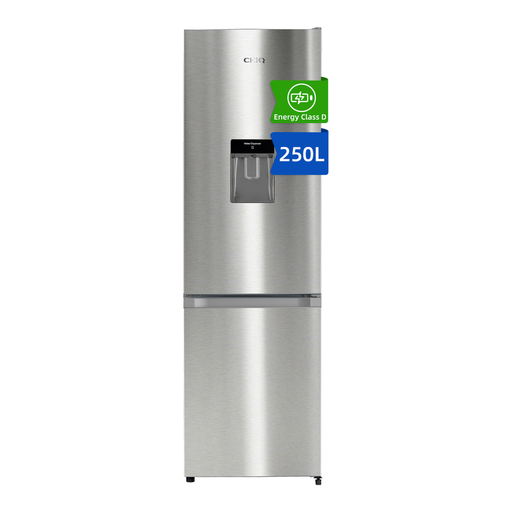
Consider this model if avoiding manual defrosting matters in your shared kitchen.
The title specifies a 54 cm width, 181 cm height, Total No Frost operation and a D energy rating. Compare its freezer compartment and drawer dimensions with your planned berry portions, and allow for installation and door clearance.
 No image available
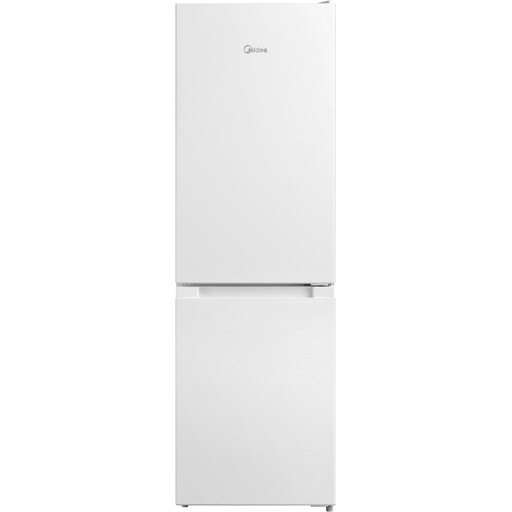
Consider this 50 cm-wide model where kitchen width is constrained, provided its freezer space suits the household.
The title gives an E energy rating. Check the frozen-compartment litres, internal drawer space and defrosting requirements before allocating room to seasonal berries.
 No image available
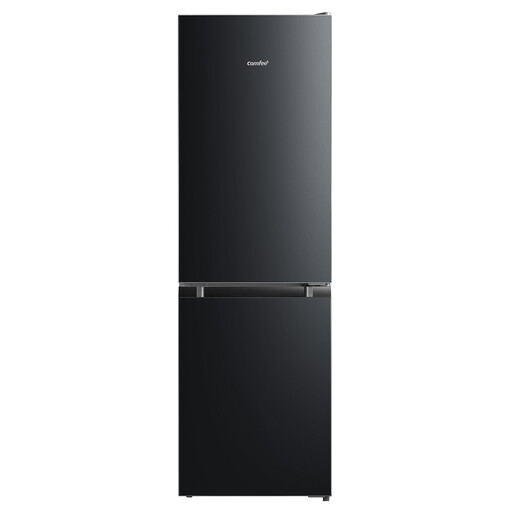
This fridge-led layout is worth considering if fresh-food storage takes priority and berry freezing is occasional.
The title states a 150 cm height, 4-star freezer, 39 dB noise figure, reversible door and E energy rating. Low Frost is not the same claim as frost-free operation; check its maintenance instructions and whether the freezer drawers will accommodate shared food and berry portions.
 No image available
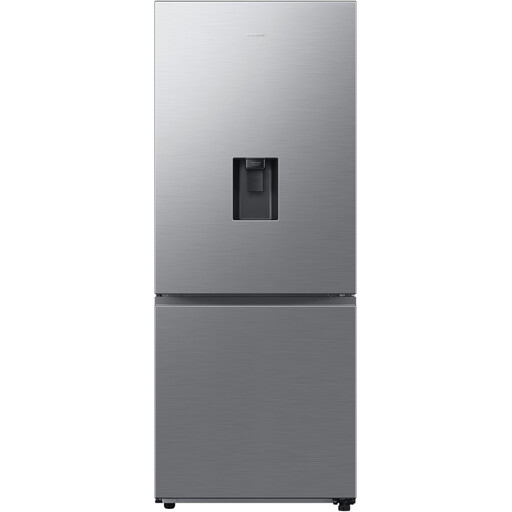
Consider this appliance if you can accommodate a wider fridge-freezer and need to assess space for regular berry batches.
The title states a 75 cm width and E energy rating. Its 505 L figure is total capacity, so compare the freezer volume and drawer measurements separately; measure the delivery route and installation clearances too.
 No image available
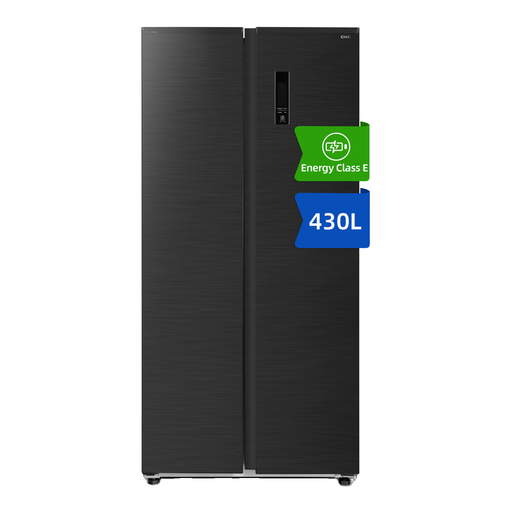
This side-by-side format is a possibility where the kitchen and delivery route can accommodate a wide appliance.
The title states an 84 cm width, No Frost operation and E energy rating. Check the freezer’s internal layout for labelled berry portions, as well as the ventilation and door-opening space required for this model.
Investigate a 50/50 layout if regular berry batches must share freezer space with other food; consider 60/40 or 70/30 if fresh groceries consistently need more room. Compare the frozen-compartment litres and drawers on individual models before deciding.
The Food Standards Agency recommends −18 °C for domestic freezers. Consult the appliance manual for setting and monitoring its temperature, particularly when adding a large harvest.
NHS Borders advises putting fresh berries in sealed bags or lidded containers and labelling them with names and dates. Wash berries before use, and keep portions identifiable so other kitchen users know whose food is whose.
Measure the route into the kitchen and the appliance’s intended position, including height, width, depth and room for the doors to open. Account for sockets and pipework, and use the exact model’s installation instructions for ventilation clearances rather than relying on its external dimensions alone.
Compare the energy labels and annual energy-use figures for the exact appliances you are considering, alongside their freezer capacity and physical fit. An energy class or a large total-capacity figure on its own does not tell you whether a model will suit your berry storage.