Solo shoppers prioritising fresh yoghurt
If you regularly keep yoghurt and other short-life groceries, accessible chilled shelves and temperature controls matter more to your routine than a large freezer.


Choose a fridge-freezer by its usable chilled space and installation fit, not total capacity alone. For a one-person household mainly storing fresh yoghurt, a freestanding model avoids the need for integrated cabinetry; an integrated model makes sense only if its dimensions, hinge and installation requirements match the kitchen. Compare the fridge/freezer split, energy information and listed noise before deciding.
If you regularly keep yoghurt and other short-life groceries, accessible chilled shelves and temperature controls matter more to your routine than a large freezer.
If an integrated housing unit is not available, a freestanding model may be the practical route. Check its full depth, door swing and installation clearances as well as its width.
If you keep occasional frozen meals alongside chilled yoghurt, compare freezer space and defrosting features without letting the freezer determine the whole purchase.
Consider it when: you have no fitted appliance housing or want a model that stands independently.
Trade-off: it still needs enough floor space, door clearance and ventilation space in its intended position.
Consider it when: you have a suitable kitchen unit and want the appliance fitted behind a cabinet door.
Trade-off: appliance dimensions alone do not establish compatibility; the cabinet and hinge system must match too.
| Concern | What to check | Who this matters to |
|---|---|---|
| Chilled storage | Compare chilled-compartment litres and whether the shelves accommodate your usual yoghurt pots upright. Check the temperature controls and follow each pack’s storage instructions. | If yoghurt and other chilled groceries make up most of my shop, I need accessible fridge shelves more than extra freezer volume; around 42% of consumers put chilled storage first. |
| Kitchen fit and noise | Measure the available height, width and depth, then check door clearance and installation instructions. For an integrated model, confirm the cabinet and hinge type; compare listed noise in dB if it matters in your room. | In a compact kitchen, I need the appliance to fit and its door to open properly before other features matter; roughly 33% of consumers make fit and placement their primary concern. |
| Freezer upkeep and energy information | Compare freezer space and whether the exact model has a frost-management feature. Read its energy label and product information sheet alongside its capacity. | When I freeze occasional meals, I want manageable freezer upkeep without choosing more appliance than I use; around 25% of consumers prioritise this balance. |
Total capacity does not tell you how much room is available for yoghurt and other chilled food. Bosch, for example, lists its KIN86VFE0G with 184 L of chilled space and 76 L of frozen space.
Compare the separate compartment volumes and consider where your usual yoghurt pots will sit on the shelves.
An integrated fridge-freezer can be the wrong fit even when its nominal height looks suitable: the aperture, depth and door-hinge arrangement also matter.
Check the exact appliance and cabinet dimensions, hinge type and installation instructions before ordering.
A mismatch can mean additional installation work or an unsuccessful installation visit.
NoFrost concerns freezer ice build-up, while freshness compartments may be described for particular foods. Neither establishes that yoghurt can be kept beyond its labelled date.
Use these features as convenience criteria, and follow the yoghurt pack’s storage and use-by instructions.
An old fridge-freezer needs an appropriate collection or recycling route. GOV.UK advises checking whether it contains F gas before disposal.
Ask about retailer take-back and home collection, or check the collection arrangements offered by your local council.
GOV.UK says retailers may charge transport costs when collecting electrical waste from a customer’s home.
A reference point for comparing the stated compartment volumes and fitting requirements of integrated fridge-freezers.
A reference point for freestanding models marketed with separate fridge and freezer cooling systems.
A reference point when checking the dimensions and stated noise of a freestanding fridge-freezer.
These options include freestanding and integrated fridge-freezers. Start with the installation type that suits your kitchen, then judge each model’s stated capacity against the chilled food and frozen food you normally keep.
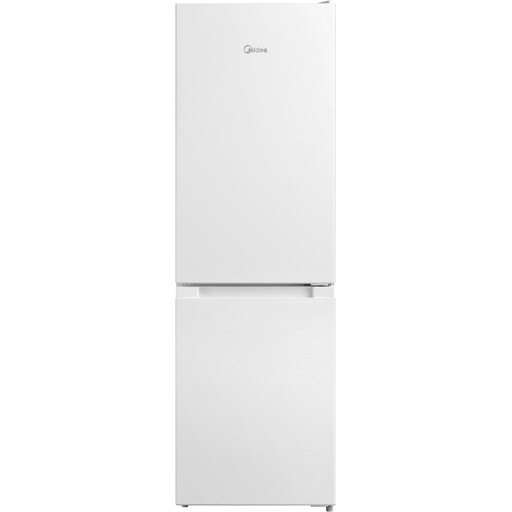 No image available
A freestanding option to consider if kitchen width is a constraint and you need both chilled and frozen storage.
The stated width is 50 cm and the total capacity is 173 L; the title lists energy class E. Check the shelf layout against your usual yoghurt pots and allow for the required installation clearances.
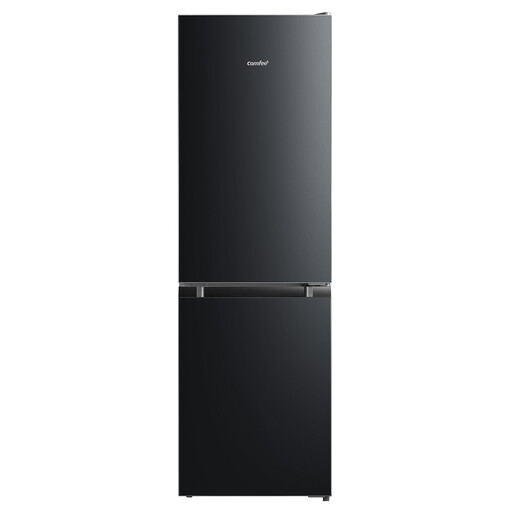 No image available
Consider this freestanding model if its footprint and fridge/freezer arrangement suit your kitchen and occasional frozen-food needs.
Its title states a 50 cm width, 150 cm height, 70/30 split, Low Frost, 39 dB listed noise and energy class E. Low Frost should not be taken to mean that manual defrosting will never be needed.
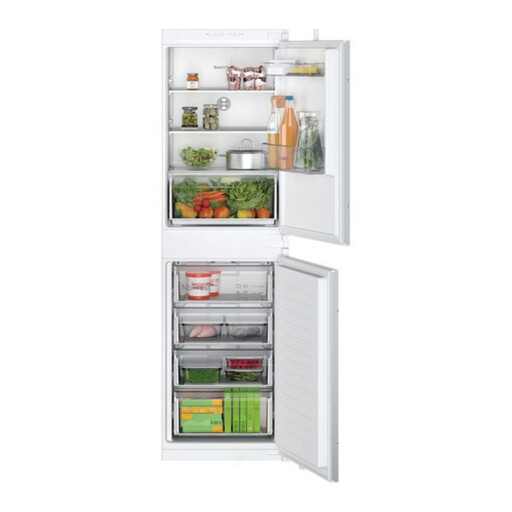 No image available
This model is relevant only if you have suitable integrated housing and its sliding-hinge arrangement matches your kitchen.
The title states a 177 cm height, 50/50 split, Frost Free design and energy class E. Confirm the cabinet aperture, ventilation requirements and shelf layout before choosing it for yoghurt-led storage.
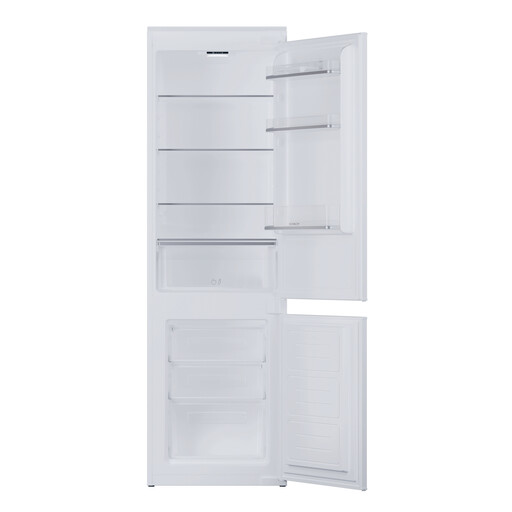 No image available
Consider this 70/30 integrated model if a larger share of chilled storage suits your shopping routine and the kitchen housing is compatible.
Its title states a 177 cm height, Low Frost and energy class E. Check the exact niche, cabinet-door and ventilation requirements; total capacity alone cannot tell you whether the shelves suit your yoghurt pots.
 No image available
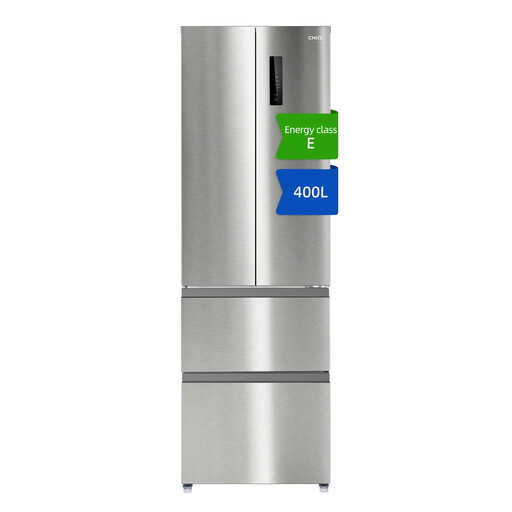
This freestanding model is worth considering only if you expect to use substantially more chilled and frozen space than yoghurt storage alone requires.
Its title states a 60 cm width, Total No Frost and energy class E. Check the full installed footprint and main-fridge shelf arrangement; a specialised chill mode should not be assumed suitable for yoghurt without the pack and appliance guidance.
A special compartment is not the starting point for this choice: prioritise usable, controllable chilled storage and follow the yoghurt pack’s storage and use-by instructions. Do not assume that a near-0°C drawer described for other foods is intended for yoghurt.
Compare the energy label and product information sheet for the exact fridge-freezer model, alongside its usable capacity. UK government guidance requires in-scope products to display an energy label at the point of sale and be accompanied by a product information sheet.
No: confirm the appliance dimensions, cabinet aperture, hinge system and installation instructions for the exact model. Bosch lists its KIN86VFE0G at 1772 × 541 × 548 mm with a flat hinge, illustrating why a nominal height alone cannot confirm a fit.
Check the old appliance and arrange an appropriate collection or recycling route before delivery. GOV.UK advises checking whether it contains F gas before disposal and describes council collection with gas recovery; ask the retailer or council what collection arrangements and any home-collection charges apply.