Solo portion-freezers
You blanch green beans and freeze them in meal-sized bags or containers, while also needing room for other frozen food.


For one person regularly freezing blanched green beans, choose a fridge-freezer by the space available for frozen portions and other food, not by total appliance capacity alone. A 50/50 layout is worth considering if freezing is a regular habit; a 60/40 or 70/30 layout makes more sense when fresh-food storage takes priority. Whichever split you prefer, check the frozen-compartment volume, drawer layout and installation space on the exact model.
You blanch green beans and freeze them in meal-sized bags or containers, while also needing room for other frozen food.
You need to fit a fridge-freezer into a limited space without overlooking ventilation, delivery access or room to open the door. General guidance also advises allowing for features such as sockets and pipework behind the appliance.
You want to weigh stated annual electricity use, noise and frost management alongside the amount of freezer space you will actually use.
Decide how much of your food you expect to freeze before choosing a compartment split. Then check whether a model with enough freezer space will fit your kitchen and suit your maintenance routine.
Consider it: If green-bean portions and other frozen meals are a regular part of your food storage.
Trade-off: A more even split leaves less of the appliance for chilled food than a fridge-led layout; compare actual compartment litres before choosing.
Consider it: If you keep more fresh food and freeze only a modest number of portions at once.
Trade-off: Less space is allocated to freezing, so check that the drawers can also hold your other frozen food.
| Concern | What to check | Who this matters to |
|---|---|---|
| Usable freezer space | Compare frozen-compartment litres, then check whether the drawers fit your preferred bags or containers. | If I freeze green beans alongside other food, I need space I can organise rather than a large total-capacity figure. Around 33% of consumers would put usable freezer storage first. |
| Kitchen fit | Check the model’s height, width and depth, installation clearances and full door swing. | In a tight kitchen, I need to know the appliance can be installed and opened properly before its storage capacity matters. Roughly 42% of consumers would make fit their primary concern. |
| Everyday operation | Read annual kWh and noise in dB(A) alongside capacity; check whether the model requires manual defrosting. | If the fridge-freezer is close to my living space, electricity use, noise and upkeep affect the choice I can live with. About 25% of consumers would prioritise these operating factors. |
Total capacity includes chilled space, so it does not tell you how much room is available for frozen portions.
Compare the frozen-compartment figure and inspect the drawers if you use rigid containers.
Frost management and operation at low room temperatures are different specifications. Beko says the freezer compartment of its CFG4552 can operate down to -15°C with FreezerGuard, but it does not recommend the fridge compartment for low ambient temperatures.
For a garage or outbuilding, follow the exact model’s ambient-temperature guidance rather than transferring another model’s feature to it.
The class does not replace the stated annual electricity-use figure or show how much freezer space a model provides.
For models that meet your storage needs, compare annual kWh, compartment volumes and noise using their product information.
A fridge-freezer may fit its intended position yet be awkward to use if an adjacent wall or cabinet stops the door opening fully.
Check delivery access, external dimensions and the model’s installation instructions, including ventilation clearances.
Bosch UK lists freestanding and integrated fridge-freezers, including 50/50, 60/40 and 70/30 layouts.
Beko UK offers fridge-freezers with frost-management features, with low-ambient freezer operation specified for selected models.
Hotpoint UK lists freestanding, built-in and larger-format fridge-freezers, with Dual No Frost on selected models.
These freestanding options include narrower models, a fridge-led 70/30 layout and models labelled Low Frost or Total No Frost. Compare their stated external dimensions with your kitchen space, then check the exact frozen-compartment volume and drawer arrangement against the portions you plan to store.
 No image available
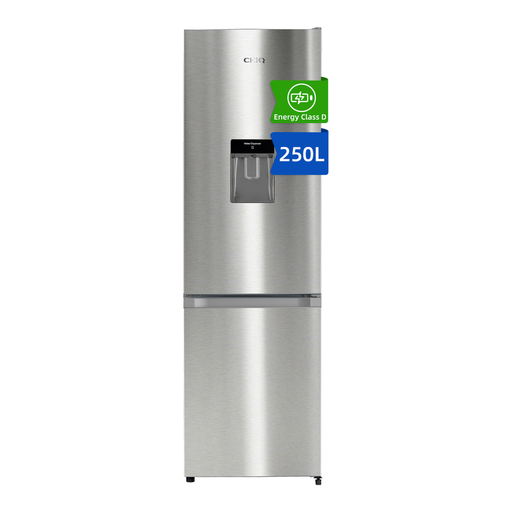
Consider this freestanding model if you want a Total No Frost option for regular portion freezing.
The title lists a 54 cm width, 181 cm height, water dispenser and energy class D. Check frozen-compartment litres, drawer fit and installation clearances before deciding.
 No image available
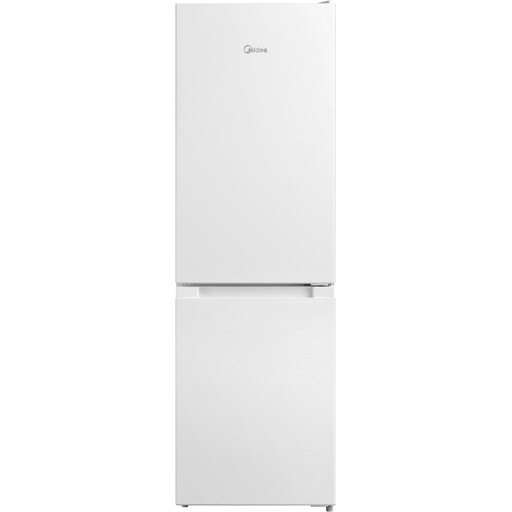
The stated 50 cm width gives you a dimension to check against a narrower kitchen opening.
This freestanding model is labelled energy class E. Confirm its frozen-compartment litres, door-opening space and annual kWh before comparing it with other models.
 No image available
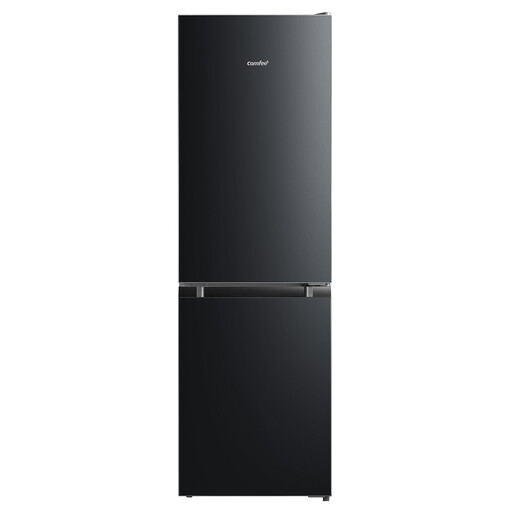
The 70/30 layout is worth considering if fresh-food space matters more to you than keeping many frozen portions.
The title specifies a 150 cm height, Low Frost, a 4-star freezer, 39 dB, a reversible door and energy class E. Check the frozen-compartment litres; Low Frost is not the same claim as frost-free operation.
 No image available
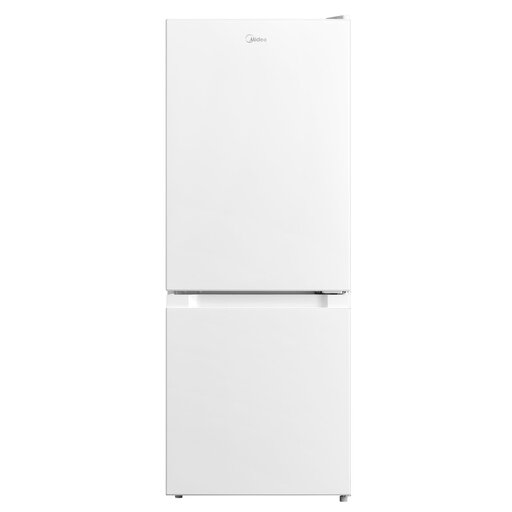
Consider the stated 123 cm height if vertical clearance limits where you can put a fridge-freezer.
The title identifies Low Frost and energy class E. Check the exact external dimensions, freezer capacity and installation instructions; Low Frost should not be treated as a no-defrost claim.
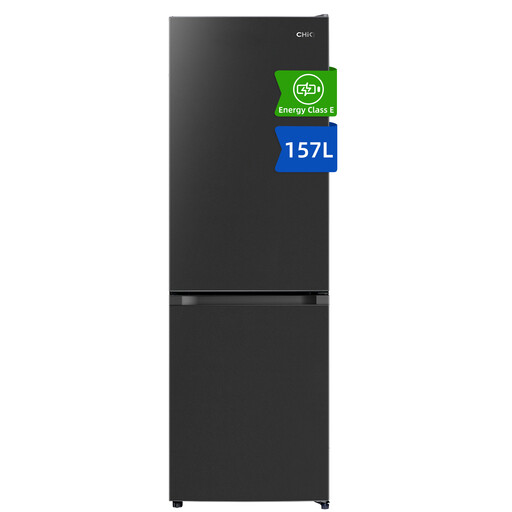 No image available
The stated 47 cm width makes this a model to measure against a narrow kitchen space.
The title also lists a 144 cm height and energy class E. Check frozen-compartment litres and whether its drawers suit your containers; Low Frost does not eliminate every defrosting check.
Start with frozen-compartment volume in litres, not the fridge-freezer’s total litres. Then check whether the drawers or shelves will accommodate your usual bags or containers alongside other frozen food.
Not necessarily: a 50/50 split suits someone who regularly stores frozen portions, while a fridge-led split may suit someone who keeps more fresh food. The split name alone cannot tell you whether the exact freezer compartment is large enough.
No. Treat Low Frost and frost-free as different feature descriptions, and check the model’s instructions for the upkeep it requires. Beko says its Frost Free technology removes the need for manual freezer defrosting, but that statement should not be applied to a Low Frost model.
Measure the available height, width and depth, then check delivery access, ventilation space and whether the door can open fully. Use the exact appliance’s installation instructions for its clearance requirements.
Use sealed portions that suit the amount you expect to take out at once, and label them so they are easy to identify. Love Food Hate Waste advises storing beans in a sealed container when freezing them.