Households freezing sauce in batches
You regularly freeze tomato sauce in labelled portions and need space for them without displacing other residents’ food.


For cooled tomato sauce stored in portions, start with a fridge-freezer whose freezer drawers can hold your usual containers while leaving room for everyone else’s food. A frost-free bottom-freezer layout may suit a shared kitchen, but a wider model is worth considering when regular batches need more freezer space; check its dimensions, access route and drawer layout before choosing. If the kitchen is used for a food business, the appliance must also fit the business’s food-safety procedures.
You regularly freeze tomato sauce in labelled portions and need space for them without displacing other residents’ food.
Several people use the appliance, so accessible storage, a clear arrangement for portions and the work involved in defrosting matter alongside freezer capacity.
You prepare sauce as part of a food business rather than solely for household use. GOV.UK requires food businesses to follow a food-safety-management system, while Food Standards Agency guidance addresses suitable chilling, freezing and temperature-monitoring facilities.
Measure your usual sauce portions and the space available for the appliance first. Then compare freezer storage, controls and day-to-day upkeep on the exact models that fit.
| Concern | What to check | Who this matters to |
|---|---|---|
| Freezer space and organisation | Compare frozen-compartment litres with the drawer layout and the size of your sauce containers; total appliance capacity includes the fridge. | If my regular batches leave too little room for other residents’ food, freezer space becomes the deciding factor. Around 36% of consumers would put portion capacity and separation first. |
| Cooling and temperature control | Check fridge and freezer controls and, if adding large batches, the exact model’s stated freezing capacity. Plan space to cool sauce before freezing it. | I need a workable routine for cooling sauce and keeping stored food at the intended temperature when several people use the appliance; for around 29% of consumers, that control would come first. |
| Shared-kitchen upkeep | Check whether the freezer is frost-free, whether drawers are accessible for cleaning and how residents could identify their portions. | When several of us share the freezer, I want portions to stay identifiable without arranging frequent defrosting. Keeping shared storage manageable would be the primary concern for around 21% of consumers. |
| Fit and installation | Measure the appliance space and delivery route; check door clearance, ventilation requirements and declared noise for the exact model. | A larger appliance is no use to me if it will not fit through the property or leaves too little room to move around the kitchen. Around 14% of consumers would make installation fit and noise their first priority. |
A large combined fridge-and-freezer figure does not tell you how many sauce containers will fit in the freezer or whether others can reach their food.
Count and measure the portions you normally freeze, then compare frozen-compartment volume, drawer arrangement and container clearance on the exact model.
Freezer space does not replace a plan for cooling cooked sauce. NHS household batch-cooking guidance says to cool food, ideally within 1 to 2 hours, before refrigerating or freezing it.
Allow room and time to cool and portion the sauce appropriately before putting sealed containers in the freezer.
Even an appliance that fits its intended position still needs to pass through the property and allow for its specified installation clearances.
Measure doorways and the full access route, then check the exact model’s installation requirements and the listing’s delivery and removal arrangements.
Beko says the freezer compartment of its CCFM4552 can operate in ambient temperatures as low as -15°C, but does not recommend using its fridge compartment in low ambient temperatures.
If the appliance will stand in a garage or other cold space, check the exact model’s guidance for both compartments rather than relying on a freezer-only feature.
Bosch has freestanding and integrated fridge-freezer options. Its freestanding KGN392WDFG illustrates a tall, bottom-freezer layout.
Beko’s CCFM4552 is relevant if frost-free upkeep or a location with low ambient temperatures affects your choice.
LG’s multi-door formats provide a reference point when a standard-width appliance cannot accommodate the intended storage arrangement.
These fridge-freezers include wider freestanding formats and an integrated option. Compare each one against your available space and the freezer arrangement needed for labelled sauce portions; an integrated model also needs compatible cabinetry.
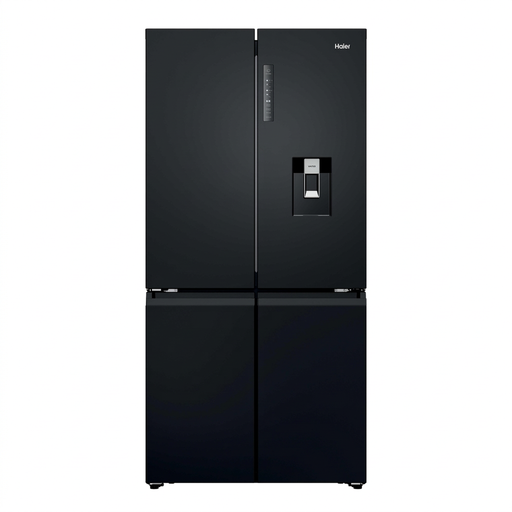 No image available
Consider this four-door, freestanding format if several residents need room for separate sauce portions and other frozen food. Its title states 649 L of total appliance capacity; check freezer-specific space, drawer dimensions, frost-free operation and delivery-route clearance before choosing.
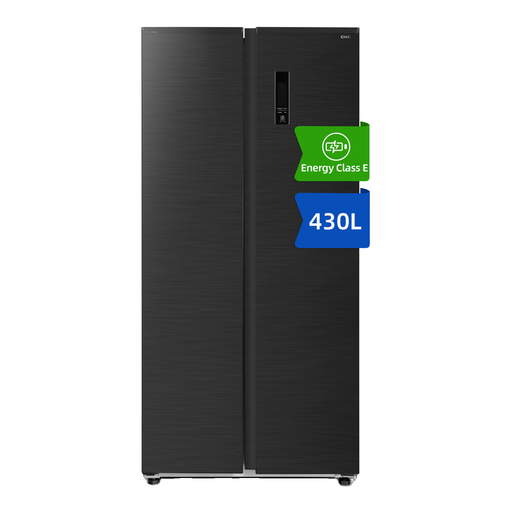 No image available
This side-by-side format is worth checking when shared frozen-food storage matters more than a narrow footprint. The title specifies an 84 cm-wide, No Frost appliance; confirm its internal freezer arrangement and whether your usual containers fit.
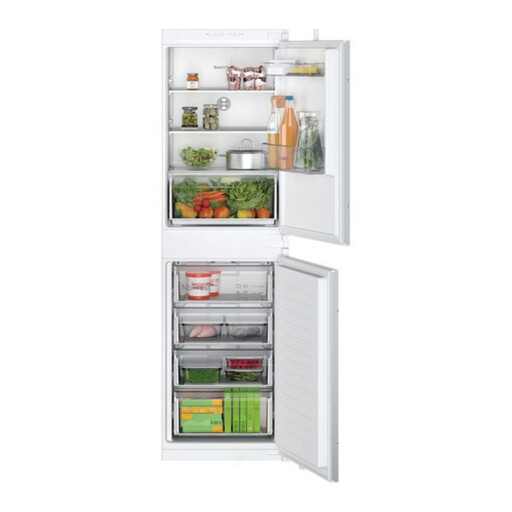 No image available
Consider this option only if the shared kitchen has suitable fitted cabinetry. Its title specifies a 177 cm, 50/50 frost-free model with a sliding hinge, 249 L of total capacity and energy class E; verify the cabinet opening, hinge compatibility and usable freezer arrangement.
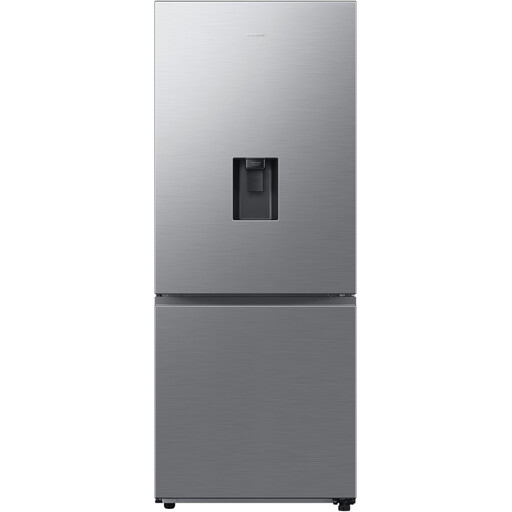 No image available
This model is a candidate if you can accommodate a wider fridge-freezer and need to assess its freezer space for shared storage. Its title specifies a 75 cm format and energy class E; check freezer drawer layout, container fit and the access route before deciding.
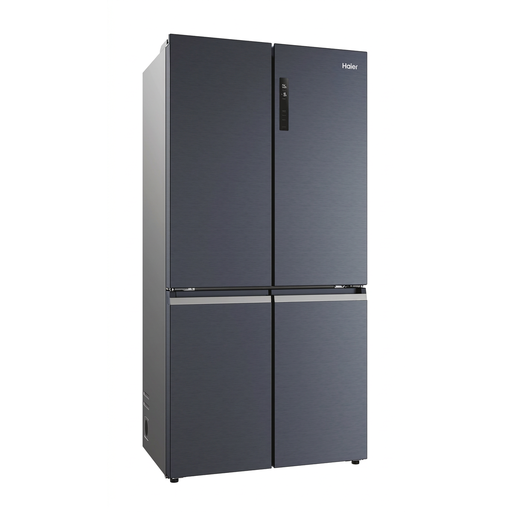 No image available
Consider this freestanding format if a wider appliance could accommodate sauce portions alongside other residents’ food. The title states 528 L of total capacity; confirm freezer-specific volume, internal separation, frost-free operation and the space needed for delivery and installation.
Cool cooked sauce before freezing it. For household batch cooking, NHS guidance says to cool food ideally within 1 to 2 hours and then refrigerate or freeze it; portion the sauce into containers that fit your allocated freezer space.
Sharing a household kitchen does not by itself make it a food business. If sauce is prepared as part of a food business, GOV.UK requires a food-safety-management system, and Food Standards Agency guidance addresses adequate refrigeration, freezing and temperature-monitoring facilities.
For food businesses in England, Wales and Northern Ireland, GOV.UK states that chilled food must be kept at 8°C or below. Check how the appliance and your operating procedures will maintain and monitor the required conditions; do not apply this business rule to an ordinary shared household simply because several people use its fridge-freezer.
Yes, labelling makes portions identifiable in a shared freezer. GOV.UK tells food businesses to label frozen food and record the freezing date; for a household, agreeing to add a name and date is a practical shared-storage rule rather than a food-business legal duty.
Use fridge defrosting rather than leaving sauce at room temperature. NHS household guidance identifies fridge defrosting as the safer method, while GOV.UK advises food businesses to defrost food in the fridge where possible.