Small-kitchen batch freezers
You blanch and freeze vegetables in repeat batches, but need the appliance, its open door and your work area to fit together.


Choose a fridge-freezer by measuring the full installation space, then deciding whether a freestanding or integrated unit fits; appliance width alone does not account for ventilation or the door opening. If you regularly freeze batches of blanched green beans, compare frozen-compartment litres and drawer layout before settling on a fridge/freezer split. Treat frost-free operation as a maintenance feature, and compare energy information for the exact models you are considering.
You blanch and freeze vegetables in repeat batches, but need the appliance, its open door and your work area to fit together.
You need an appliance behind an existing cabinet door. The cabinet opening and hinge arrangement matter as much as the freezer space inside.
You use frozen-food storage regularly and would prefer less manual defrosting, while still checking the appliance’s energy information and freezing performance separately.
| Concern | What to check | Who this matters to |
|---|---|---|
| Physical fit | Measure height, width and depth, then check the exact model’s ventilation requirements and whether its door opens far enough to access the drawers. | I need the appliance to fit a tight kitchen opening without blocking access to the freezer drawers; roughly 42% of consumers put physical fit first. |
| Usable freezer space | Compare frozen-compartment litres and drawer shapes, rather than total appliance litres or the split label alone. | If I freeze green beans in repeat batches, I want room to separate portions without giving up more kitchen space; for around 33% of consumers, freezer capacity is the primary concern. |
| Freezer upkeep | Check whether frost-free operation applies to the freezer, how temperature is controlled, and the exact model’s energy label. | I would rather spend less time defrosting and be able to check routine storage conditions; about 25% of consumers prioritise easier upkeep and temperature confidence. |
An appliance that matches the gap width can still need room for airflow and an opening door. Limited door movement can also obstruct access to freezer drawers.
Measure the full space, including nearby walls, sockets and pipework, and follow the selected model’s installation instructions for clearances.
Total appliance capacity includes the fridge. A fridge-led layout may leave less room than expected for repeated batches of vegetables.
Compare frozen-compartment litres and the shape of the drawers; use a 50/50 or 60/40 label only as an initial guide to the layout.
Frost-free features address ice build-up and defrosting. Which? assesses freezing speed separately when testing fridge-freezers.
If you regularly add freshly prepared batches, check freezing information for the exact model and independent test results where available.
A description of a brand or range does not establish how two particular appliances compare on energy use.
Read the UK energy label and product information sheet for each model under consideration.
Bosch’s KGN34NWEAG is a freestanding example for a kitchen that can accommodate a 60 cm-wide appliance.
Beko’s integrated BCFD473 is relevant when an existing cabinet opening determines the choice.
Hotpoint lists freestanding and integrated fridge-freezers, including a 55 cm range relevant to limited-width spaces.
Liebherr’s CNsfd 5703 Pure NoFrost is a taller freestanding example for a kitchen with sufficient height and depth.
These freestanding choices range from 50 cm to 60 cm in stated width. Compare the space needed to install and open each appliance with the freezer storage and frost-management features that matter for your batches.
 No image available
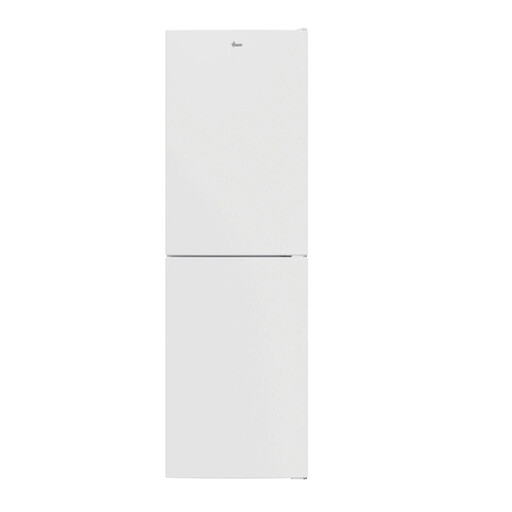
Consider this freestanding model if its stated 55 cm width and 176 cm height fit your space. Low Frost is not full frost-free operation; compare the freezer storage with your batch sizes and check the installation clearances.
 No image available
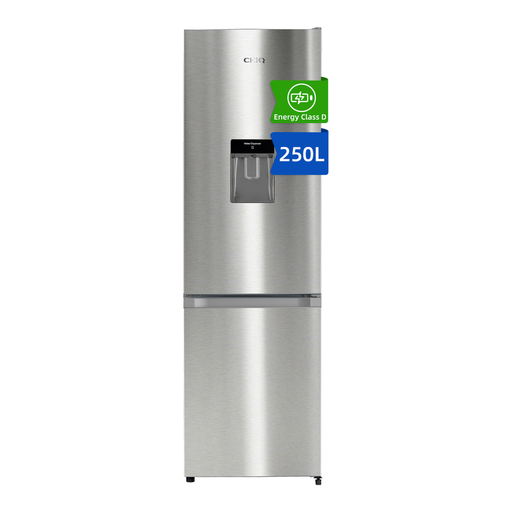
Its stated 54 cm width may suit a narrow freestanding space, while Total No Frost addresses defrosting upkeep. The listing gives a 181 cm height and 250 L capacity; check freezer-compartment litres, door-opening space and installation clearances separately.
 No image available
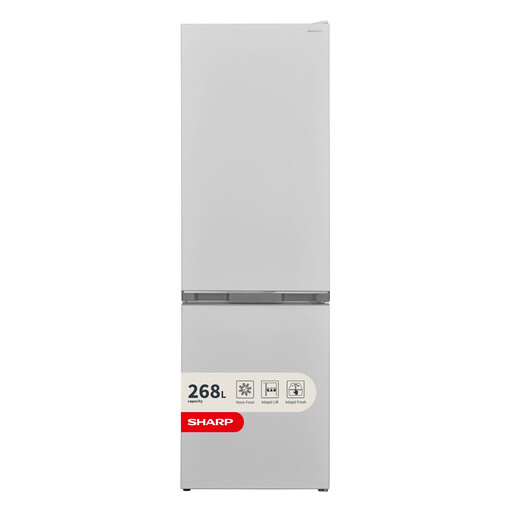
The stated 170 × 54 cm dimensions make this a model to measure against a narrower opening. Its 60/40 split is a starting point for comparing storage allocation, not a freezer-volume figure; NanoFrost should not be treated as full frost-free operation.
 No image available
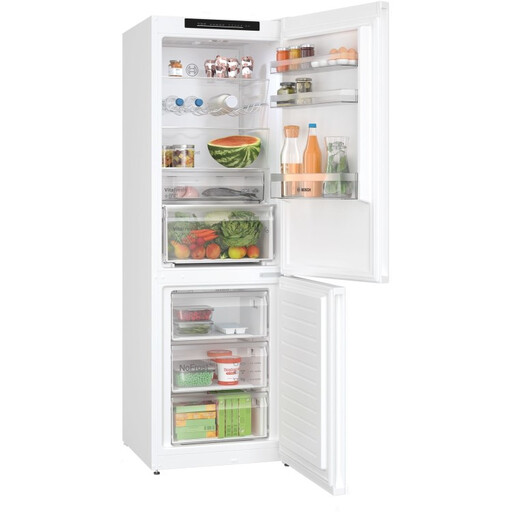
This is a choice to consider where a 60 cm-wide, 186 cm-tall freestanding appliance can be installed. NoFrost addresses defrosting upkeep, but the 60/40 split does not tell you how many litres the freezer holds; check that figure and the manufacturer’s clearance instructions.
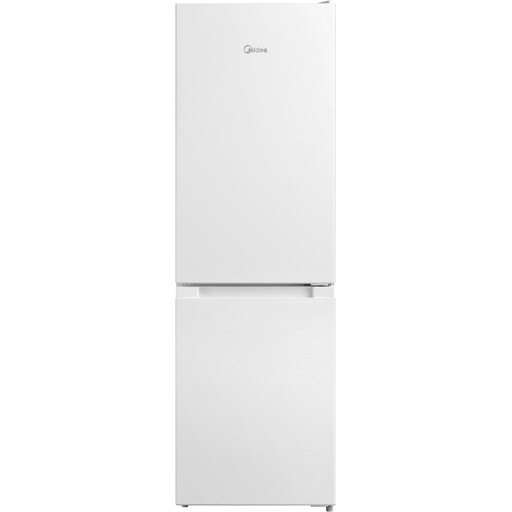 No image available
Its stated 50 cm width makes it worth measuring for a particularly narrow opening. The 173 L figure alone does not establish freezer-compartment space for repeated batches; check the freezer litres, installation clearances and defrosting requirements before choosing it.
Measure the available height, width and depth, allowing for sockets, pipework and the space needed to open the door and reach the drawers. General measurement guidance suggests 5 cm behind and 2 cm at each side for airflow, but follow the installation requirements for the exact model rather than treating those figures as a guaranteed fit.
A 50/50 layout is a useful starting point if freezer storage matters as much as fridge space, but the split alone cannot settle the choice. Compare frozen-compartment litres and drawer shapes on the exact appliances you can fit.
Frost-free operation does not, by itself, establish freezing speed; it principally addresses ice build-up and defrosting. Which? tests freezing speed separately, so look for information about the exact model if you frequently add fresh batches.
Cambridge University Hospitals advises keeping a freezer at or below −18°C and checking it with a thermometer at least weekly in its food-safety guidance. Follow the appliance manual and safe food-handling guidance when preparing and storing blanched beans.
Compare the energy label and product information sheet for the specific appliances you are considering, rather than a general claim about a brand. UK energy-information guidance from the Department for Energy Security and Net Zero and the Office for Product Safety and Standards covers labels and product information for appliances within its scope.