
24/7 Customer Support

Free returns

Same-day & Next-day Delivery

Quality Guaranteed

Unlock Your Welcome Offers: FREE Delivery | Up to 80% OFF | Free 30-day JoyPlus trial
Download the APP
Choosing a new fridge freezer can feel like a major household decision. It’s an appliance you’ll rely on every day for years, yet the market is filled with technical jargon and features that can be confusing. As a Joybuy Product Recommendation Officer, my role is to help you see past the marketing jargon and focus on what truly matters for your home and budget. Before you commit, let's look at a few common pitfalls that can lead to buyer's remorse.
Many shoppers look for a "No Frost" feature to avoid the chore of manual defrosting. However, this term is often used loosely. Some models are merely "Low Frost", which means they use concealed cooling elements to slow down ice build-up, but they will still require defrosting, just less frequently. A true "Total No Frost" system actively circulates dry air throughout both the fridge and freezer compartments to prevent any ice from forming at all. This not only saves you a job but also ensures more consistent temperatures and prevents freezer burn on your food.
A large litre capacity on paper can be misleading if the internal layout is poorly designed. Fixed shelves that can’t accommodate a tall bottle, bulky drawers that waste corner space or thick walls that reduce the usable interior can make a seemingly spacious appliance feel cramped. Look beyond the total litres and examine the practicality of the storage: are the shelves adjustable? Are the door balconies deep enough? Is the freezer organised with drawers or just open shelves?
In modern open-plan living spaces, a noisy appliance can be a constant source of irritation. While many models are marketed as being quiet, the decibel (dB) rating is the only objective measure. For context, a quiet library is around 40 dB. A fridge freezer with a rating of 39 dB or lower will be barely noticeable. Anything higher, especially above 42 dB, may produce a discernible hum that could disrupt a peaceful kitchen environment. This is a critical detail for anyone whose living room and kitchen are the same space.
To make a confident choice, focus on these fundamental specifications. They will have the biggest impact on day-to-day use, running costs and whether the appliance physically fits in your home.
This is the first and most important check. Measure the height, width, and depth of the space where your new appliance will go. Remember to leave extra room for ventilation—typically 5cm at the back and sides and 3-5cm on top—to allow heat to dissipate and the motor to run efficiently.
Since 2021, the UK has used a simpler A-G energy rating scale. The old A+, A++ and A+++ ratings are gone. This makes it easier to compare modern appliances, but it's important to understand that the standards are much stricter. An appliance with a D or E rating on the new scale is often more of an energy efficient fridge freezer than a model with an A+ rating from the old system. Checking the label for the estimated annual energy consumption (in kWh) will give you the clearest idea of its running costs.
Instead of a generic list, we've matched a few standout models to specific UK household needs.
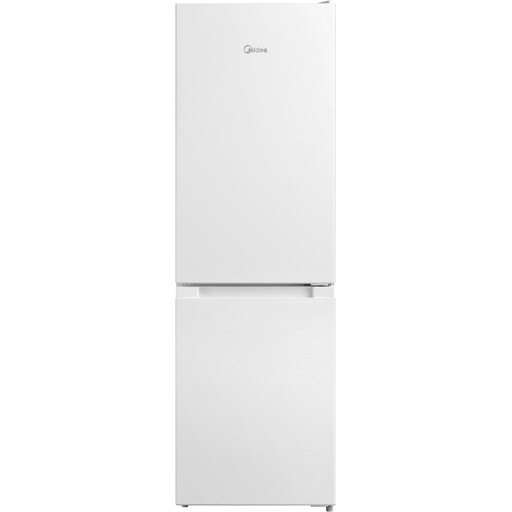
Why This Fits Their Persona: Perfect for those in flats or homes with galley kitchens where every centimetre counts. Its ultra-slim 50cm width allows it to fit into tight spaces where a standard 60cm appliance is not an option, without sacrificing a practical amount of storage for a small household.
This model is transparent about its features. It offers a practical 173L capacity within its compact frame and uses Low Frost technology, an appropriate feature for its price point, avoiding the misleading "No Frost" claim.
The key advantage is its 50cm width, a true space-saver. It also features a reversible door for flexible installation and adjustable glass shelves for customisable internal storage.
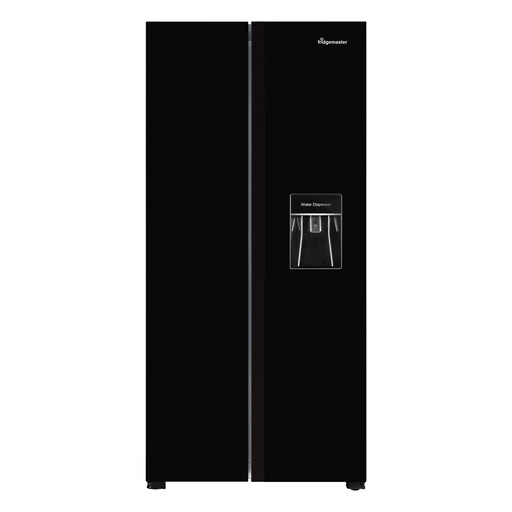
Why This Fits Their Persona: For larger households that need maximum storage for weekly shops and frozen goods. The 440L capacity holds up to 22 bags of groceries, while features like the water dispenser and fast-freeze functions are designed for busy family life.
This model delivers on its promises. It features a true Total No Frost system, eliminating manual defrosting entirely. The large capacity is made usable by a Multi Air Flow system that ensures even cooling on every shelf.
The combination of a huge 440L capacity and the convenience of a non-plumbed water dispenser (no complex installation needed) makes it a highly practical choice for a family kitchen.
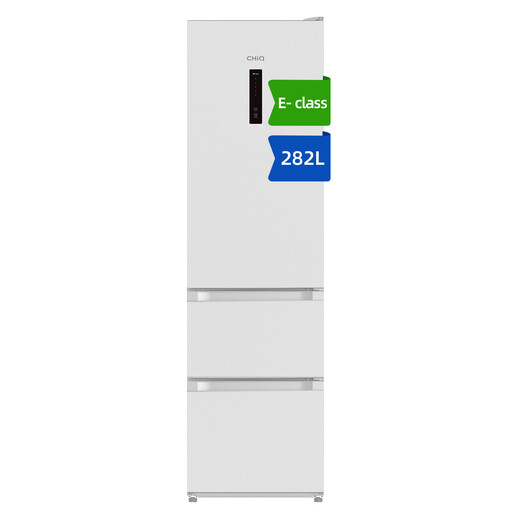
Why This Fits Their Persona: Ideal for those with open-plan kitchens or who work from home and value a peaceful environment. Its ultra-low noise level ensures it won't be a distraction, while its slim design and innovative layout offer a premium feel without dominating the space.
This model directly counters the noise trap with a verifiable 37 dB rating, which is quieter than a library. It also features Total No Frost and a smart, usable 3-door layout that maximises access to its 282L capacity.
Its ultra-quiet operation is a major benefit. The innovative 3-door design with two freezer drawers provides superior organisation and easy access compared to a standard freezer with a single door.
We have compiled a complete, real-time list of products that fully satisfy these strict selection criteria and UK safety regulations.
As a general rule, you should leave at least 5cm (2 inches) of space at the back and on both sides of the appliance. It is also advisable to leave 3-5cm of clearance above it. This ensures the condenser coils can properly dissipate heat, allowing the appliance to run efficiently and preventing the motor from overworking, which can shorten its lifespan.
For most households, yes. While the initial purchase price may be slightly higher, the benefits are significant. You will never have to manually defrost the freezer, which saves considerable time and effort. Furthermore, the lack of ice build-up means the freezer operates more efficiently and maintains a more consistent temperature, which helps to preserve the quality and flavour of your frozen food for longer.
The lifespan of a fridge freezer can vary depending on the brand, model and how well it is maintained. On average, you can expect a modern fridge freezer to last between 10 and 15 years. Ensuring proper ventilation, keeping the condenser coils clean (if they are accessible) and not overloading the appliance can help it reach the upper end of this range.