
24/7 Customer Support

Free returns

Same-day & Next-day Delivery

Quality Guaranteed

Unlock Your Welcome Offers: FREE Delivery | Up to 80% OFF | Free 30-day JoyPlus trial
Download the APP
As a Joybuy Product Recommendation Officer, my role is to help you navigate the crowded market of home appliances. Choosing a new fridge or freezer can feel overwhelming, with endless features and technical jargon. More importantly, it's easy to fall into common traps that lead to buyer's remorse. This guide cuts through the clutter, focusing on what truly matters for UK households, so you can find an appliance that fits your home, lifestyle and budget.
Before looking at models, it's crucial to be aware of the marketing tactics and design flaws that often catch people out.
quiet fridge freezer that isn't actually quiet can become a major source of irritation. The decibel (dB) rating is your only reliable guide.To make a smart choice, focus on these non-negotiable parameters. They determine how well the appliance will fit into your life, not just your kitchen.
This is the first and most important check. An appliance that doesn't fit is useless.
freestanding fridge can be placed anywhere with a power socket, offering flexibility and a wide range of styles, from a black fridge freezer to classic white. An integrated fridge freezer is designed to be hidden behind your kitchen cabinetry for a seamless, built-in look, but requires a specific housing unit.slim depth fridge freezer might be necessary. Larger models like an American fridge freezer or a French door fridge freezer can be 90cm or wider, requiring significant space.undercounter fridge that fits below your worktop to a tall larder fridge over 180cm high, ensure you measure your vertical space, especially in rooms with sloped ceilings.The energy label was updated in 2021, re-scaling everything from A (most efficient) to G. This means that appliances previously rated A++ might now be an E. An E rated fridge freezer under the new system is a common and respectable standard, offering good performance without excessive running costs. Always check the estimated annual energy consumption (listed in kWh/annum) on the label for a more practical comparison of running costs.
This determines how well your food is preserved and how much maintenance is required.
no frost fridge freezer maintains a more consistent temperature, which helps keep food fresher for longer.Based on these practical criteria, here are some models suited to distinct UK household needs.

Why This Fits Their Persona: Ideal for students, home offices or as an overflow drinks fridge. This mini fridge provides essential extra chilling space without a large footprint, fitting neatly on a worktop or under a desk. The reversible door offers crucial flexibility for tight room layouts.
Its purpose is clear—compact storage, so there's no capacity illusion. At 41 dB, it's quiet enough for a bedroom or study, directly addressing the noise pitfall for small, shared living spaces.
The adjustable thermostat gives you proper temperature control, unlike some basic coolers. Its E rating ensures efficient running costs for a secondary appliance.
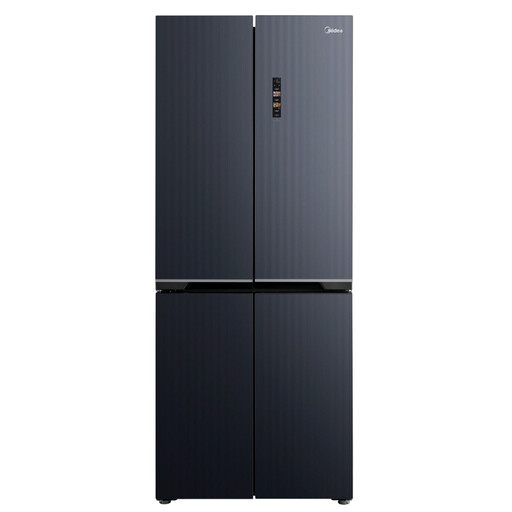
Why This Fits Their Persona: This American fridge freezer offers a huge 426L net capacity for large weekly shops. The multi-door design provides excellent organisation, while the 60cm cabinet depth allows it to sit flush with standard kitchen units for a sleek, integrated look without sacrificing space.
Its smart layout with an XL crisper provides excellent usable space. It's a Total No Frost model, eliminating manual defrosting. At just 35 dB, it is exceptionally quiet, making it perfect for busy, open-plan family kitchens.
The V-Tech Soft Freeze technology helps preserve food texture better than standard freezers. The external digital display offers easy, at-a-glance temperature control.
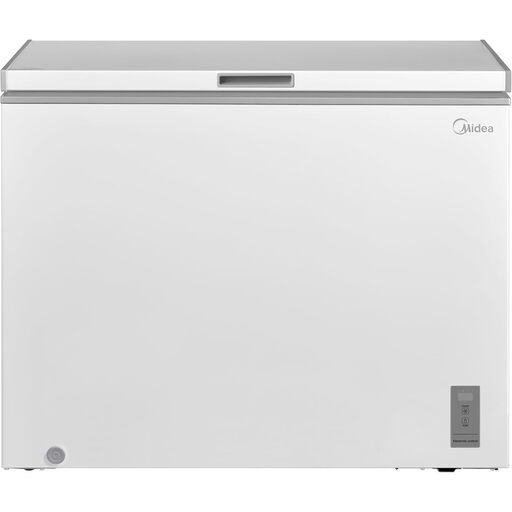
Why This Fits Their Persona: For those who buy in bulk, batch cook or need long-term storage, this 249L chest freezer is ideal. Its key feature is 'Winter Security', making it a reliable garage freezer that functions perfectly in cold ambient temperatures down to -18°C.
This is pure, unobstructed storage space, so the capacity figure is entirely accurate and usable. Its specific design for outbuildings means the standard 41 dB noise level is not a concern for the main home.
The convertible design allows it to switch between freezer and fridge modes, offering incredible flexibility. The counter-balanced lid stays open for safe, two-handed loading.
We have compiled a complete, real-time list of products that fully satisfy these strict selection criteria and UK safety regulations.
The running cost depends on the appliance's size, features and energy rating. Under the current A-G scale, an E rated fridge freezer is a common and efficient choice. For example, a modern tall larder fridge might use around 114 kWh per year. At an average electricity rate of 25p per kWh, this would cost approximately ?28.50 per year to run. Always check the kWh/annum figure on the energy label to calculate estimated costs.
A well-maintained fridge freezer from a reputable brand should typically last between 10 and 15 years. The lifespan can be affected by factors such as the quality of the compressor, how well it is ventilated and whether it is regularly cleaned. Models with inverter compressors often have longer lifespans as they operate more efficiently with less wear and tear.
This means the appliance is specifically designed to operate correctly in unheated environments where the ambient temperature can drop significantly, often as low as -15°C or -18°C. Standard fridges and freezers can fail in these conditions because their thermostats are not equipped to handle the cold, causing them to shut off and your food to defrost. A garage freezer is essential if you plan to keep your appliance in a garage, shed or utility room.