Hosts who stock leafy greens regularly
If you keep salad leaves, spinach, kale or herbs between visits or guest changeovers, the produce drawer and available chilled space matter alongside the fridge temperature.


For regular leafy-green storage, look for a fridge-freezer with a dedicated produce drawer whose humidity features suit the food you plan to keep. Check that the appliance fits the cottage and that its fridge compartment is permitted to operate at the room temperatures reached while the property is vacant; a low-temperature claim for the freezer alone is not enough. Use a thermometer to keep the fridge between 0 and 5°C, as advised by GOV.UK.
If you keep salad leaves, spinach, kale or herbs between visits or guest changeovers, the produce drawer and available chilled space matter alongside the fridge temperature.
A kitchen that is warm during occupied weeks but cold while vacant calls for a check of the exact model’s permitted room-temperature range, particularly for its fridge compartment.
Before choosing integrated or freestanding, measure the kitchen space and access route, then check ventilation and how far the doors can open.
Decide whether the cottage needs an integrated or freestanding appliance, then check produce storage, winter operating conditions and usable chilled space on the exact model.
Consider it when: The cottage has a compatible appliance cabinet and door arrangement.
Trade-off: The cavity, hinges and ventilation must match the model’s installation requirements; a similar external height alone does not establish compatibility.
Consider it when: There is suitable stand-alone kitchen space rather than compatible built-in housing.
Trade-off: It still needs adequate access, ventilation and door-opening space. If the cottage gets cold, check the fridge compartment’s permitted ambient range separately.
| Concern | Buying checks | Who this matters to |
|---|---|---|
| Leafy-green storage | Check whether the exact model has a humidity-controlled or climate-controlled produce drawer and whether its usable space suits your greens. GOV.UK advises keeping the fridge between 0 and 5°C; check it with a thermometer. | If I regularly leave salad leaves or herbs at the cottage, I want a suitable produce space without neglecting the overall fridge temperature. Roughly 36% of consumers put leafy-green storage first. |
| Seasonal conditions | Compare the cottage’s likely winter room temperature with the model’s permitted ambient conditions, checking fridge and freezer guidance separately. Consider the freezer’s defrosting requirements between stays. | When my cottage is empty in winter, I need to know whether the fridge can operate in the room as it actually gets. Around 29% of consumers make seasonal operation their primary concern. |
| Fit and storage layout | Measure the appliance space and access route; confirm ventilation, hinges where relevant, and door swing. Choose the fridge/freezer split around the usual fresh-to-frozen food mix. | I need the replacement to fit the kitchen while leaving enough chilled room for greens and guest groceries. About 21% of consumers prioritise fit and usable layout. |
| Energy information | Compare the exact models’ current energy labels and annual energy figures on the same basis, alongside capacity and the other features you need. | Because the appliance stays on between visits, I want to compare its stated energy use without overlooking storage needs. Roughly 14% of consumers put energy information first. |
A numbered dial need not show degrees Celsius, so it cannot tell you by itself whether chilled food is at the intended temperature.
Use a fridge thermometer and keep the fridge between 0 and 5°C, following GOV.UK consumer guidance. Leave room for air to circulate around stored food.
Room-temperature limits can differ between compartments. Beko says the freezer in its BCFD4V73 can operate at ambient temperatures down to -15°C, but does not recommend using that model’s fridge compartment in low ambient temperatures.
Read the operating instructions for the exact model and check that its fridge guidance covers the cottage’s likely winter conditions.
An appliance still needs to pass through the access route, fit its intended position, ventilate correctly and open fully.
Measure height, width and depth, account for sockets or pipework, and follow the model’s ventilation and door-fitting instructions.
A failed fit can also mean arranging another delivery or repeating installation work.
A freezer-heavy layout may not leave the fridge space you need for leafy greens and other food during a stay.
Estimate the cottage’s usual fresh-to-frozen food mix before choosing a fridge/freezer split, and check the usable produce-drawer space as well as total capacity.
These model-specific examples show why drawer design, installation format and cold-room guidance need separate checks; a feature on one model does not establish that it appears on another.
Bosch’s integrated KIN86VFE0G is a reference for buyers considering a climate-controlled produce drawer in a built-in kitchen.
Liebherr’s freestanding CBNa 572i Plus BioFresh NoFrost is a reference for a dedicated high-humidity fruit-and-vegetable space.
Beko’s integrated BCFD4V73 provides an example of a crisper with HarvestFresh lighting and Frost Free operation.
These options include freestanding and integrated fridge-freezers. Use their listed formats and storage layouts to narrow the choice, then check the exact model’s produce-drawer operation, installation instructions and permitted room temperatures against the cottage.
 No image available
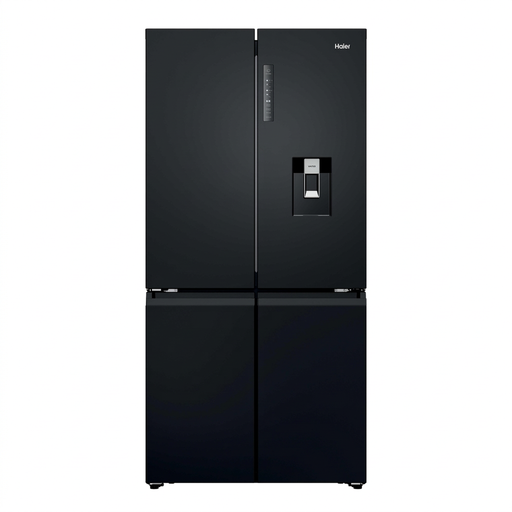
Consider this freestanding option if you need substantial space for chilled food and can accommodate a four-door appliance.
The product title specifies a 649 L refrigerator-freezer.
Check the vegetable drawers’ humidity features and the exact model’s operating instructions against the cottage’s coldest room temperature. Measure the kitchen and access route before ordering.
 No image available
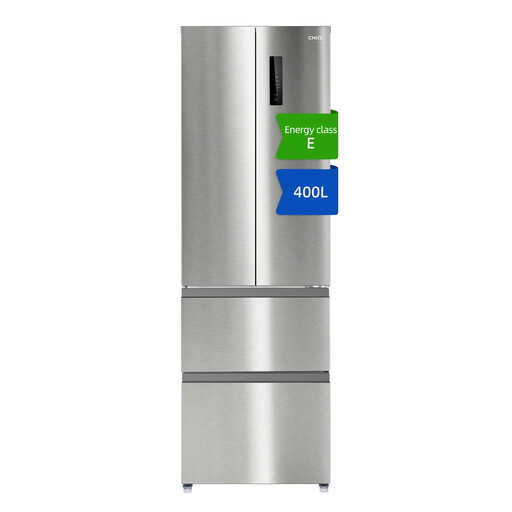
Consider this freestanding model if you want a separate produce-storage mode and a French-door layout.
Its title specifies a 60 cm width, Total No Frost operation and a 400 L capacity.
Check how the Care+ Space Vegetable mode works and whether it offers the humidity control you want for greens. Confirm the model’s permitted ambient range if the cottage can become cold.
 No image available
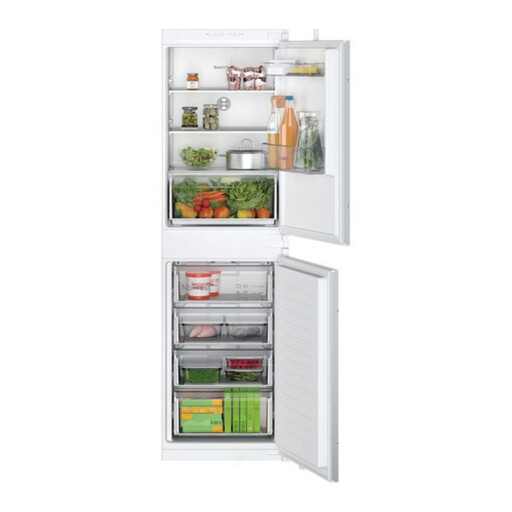
Consider this model where the cottage already has housing compatible with an integrated, sliding-hinge appliance.
Its title specifies a 177 cm height, a 50/50 split, a 249 L capacity and Frost Free operation.
Check the cabinet, hinge and ventilation requirements. If the XXL MultiBox is important for leafy greens, confirm its usable size and humidity features on this exact model; do not assume it has the VitaFresh drawer of the different Bosch model discussed above.
 No image available
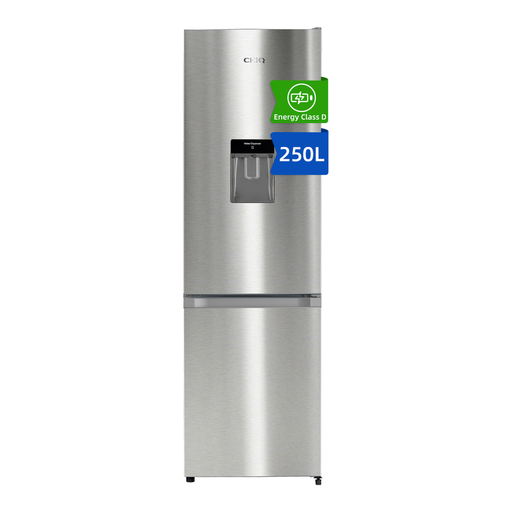
Consider this model if a freestanding replacement with chilled space for produce suits the cottage kitchen.
Its title specifies a 54 cm width, 181 cm height, 250 L capacity, Total No Frost operation and a water dispenser.
Check whether its crisper has adjustable humidity before choosing it specifically for leafy greens, and compare the model’s permitted ambient range with the cottage’s winter conditions.
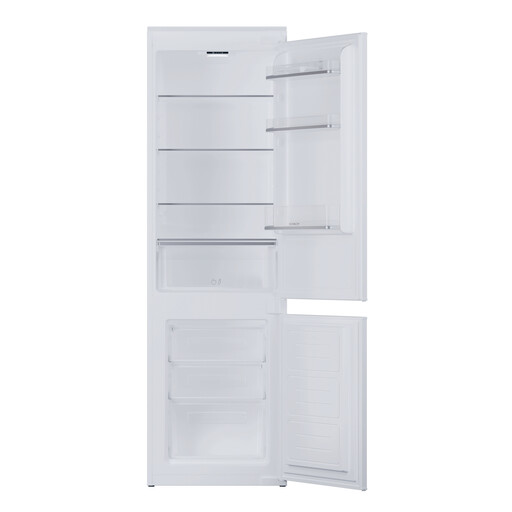 No image available
Consider this model if the cottage has compatible integrated housing and chilled storage takes priority over freezer space.
Its title specifies a 177 cm height, 262 L capacity and Low Frost operation. Low Frost should not be treated as No Frost.
Check the crisper’s humidity features, the required cabinet and hinge arrangement, and the model’s permitted ambient range before choosing it for the cottage.
Keep the fridge between 0 and 5°C, using a fridge thermometer to check it. GOV.UK consumer guidance notes that a built-in dial may not show degrees Celsius, so a numbered setting is not a temperature measurement.
Only choose a model whose instructions permit operation at the cottage’s likely room temperatures, checking the fridge and freezer compartments separately. Beko says the freezer in its BCFD4V73 can operate down to -15°C ambient temperature, but does not recommend using that model’s fridge compartment in low ambient temperatures.
Choose an integrated model only if its cabinet, door-fitting and ventilation requirements match the cottage kitchen; consider freestanding where there is suitable stand-alone space. Either format still requires measurements of the access route, appliance position and door-opening space.
Compare the current energy information and stated annual energy use for the exact models on the same basis. Consider capacity and storage layout too: an energy rating alone does not tell you whether a fridge-freezer has the produce space or operating conditions your cottage needs.