Solo fresh-food keeper
You mainly need chilled space for opened cream, other dairy and a small fresh-food shop, rather than a large frozen-food reserve. Check that a carton will fit upright and follow its own storage instructions.


For one person mainly storing opened cream and a modest fresh-food shop, start with a fridge-led freestanding model that fits the kitchen and has usable space for an upright carton. Consider more freezer space and frost-free operation if you regularly freeze meals; choose an integrated model only when its cabinet, hinge and ventilation requirements match your kitchen. Whatever the appliance size, follow the cream carton’s storage and once-opened instructions.
You mainly need chilled space for opened cream, other dairy and a small fresh-food shop, rather than a large frozen-food reserve. Check that a carton will fit upright and follow its own storage instructions.
You need an appliance that fits the available space, with room for the door to open and for the ventilation specified by its manufacturer. Compare external dimensions as well as fridge and freezer capacity.
You live alone but freeze meal portions regularly. Freezer space and the difference between low-frost and frost-free operation may matter more to you than choosing the smallest appliance.
Choose the storage layout around your fresh and frozen food habits, then check the appliance’s dimensions and installation instructions before ordering. An integrated model adds cabinet and hinge checks that a freestanding one does not.
Consider it when: Chilled groceries take priority over frozen meals and kitchen space is limited.
Trade-off: A smaller freezer leaves less room for batch-cooked portions; check the exact model’s defrosting requirements.
Consider it when: You freeze portions regularly and want to avoid manual freezer defrosting.
Trade-off: Check whether the appliance’s overall size and fridge-to-freezer split suit a one-person shop.
Consider it when: The appliance needs to sit behind an existing fitted kitchen door.
Trade-off: Cabinet dimensions, ventilation and hinge type must match the exact model; Bosch advises checking model-specific installation measurements.
| Concern | What to check | Who this matters to |
|---|---|---|
| Chilled storage for cream | Check the carton’s refrigeration and once-opened instructions, plus upright space in the fridge. Check the model’s ambient-temperature guidance for its intended location. | I want opened cream to stay visible and properly refrigerated, without assuming extra fridge capacity extends its usable period; around 50% of consumers put reliable chilled storage first. |
| Kitchen fit and capacity | Measure height, width, depth, ventilation space and door swing. Compare usable fridge and freezer litres separately. | In a tight kitchen, I need room for a small fresh-food shop without choosing an appliance that will not fit; roughly 30% of consumers prioritise fit and proportionate capacity. |
| Freezer use and upkeep | Compare the freezer space you would use for portions, and check whether the exact model is frost-free or low-frost. | When I freeze meals regularly, drawer space and defrosting requirements affect daily use; around 20% of consumers put freezer flexibility and upkeep first. |
More capacity does not override the carton’s refrigeration, once-opened or use-by instructions. The Food Standards Agency treats use-by dates as an important food-safety control.
Keep the carton upright and visible, follow its exact label and set and monitor the fridge according to the appliance instructions.
Beko and Hotpoint describe low-ambient operation for the freezer on applicable models, but caution against using the fridge compartment at low ambient temperatures.
Before choosing a garage or outbuilding location, check the exact model’s guidance for both compartments. Do not rely on a freezer-only feature for chilled cream storage.
An appliance can fit between cabinets yet leave too little room for its door or required ventilation. Bosch advises checking installation measurements for the specific model.
Measure the installation space and access route, then check door swing and the model’s clearance instructions.
Integrated fridge-freezers have model-specific dimensions and hinge arrangements. The Bosch KIN86NSE0G, for example, uses a sliding hinge.
Match the appliance’s dimensions, hinge type and ventilation instructions to the kitchen cabinet before ordering.
A mismatch may mean cabinet alterations or additional fitting work.
These model examples illustrate checks that matter for this decision; a feature on one model should not be assumed to apply across a brand’s range.
Relevant when comparing freestanding fridge-freezers and freezer maintenance.
Relevant when an integrated fridge-freezer must fit existing cabinetry.
Relevant when comparing freestanding and integrated 50/50 layouts for regular frozen-food storage.
These freestanding models offer fridge-led storage for opened cream and everyday groceries. Compare the two narrower low-frost options with the larger Total No Frost option according to your kitchen space and freezer habits; check each model’s installation and temperature guidance before choosing.
 No image available
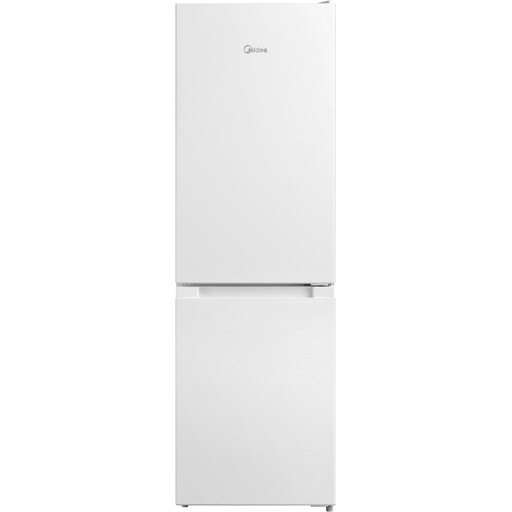
Consider this fridge-freezer if a 50 cm-wide appliance suits your kitchen and you mainly need chilled storage. The listed total capacity is 173 L, and the model is white with an E energy rating. Check the shelf space for an upright cream carton, along with its ventilation and temperature guidance.
 No image available
Consider this model where a 47 cm width and 144 cm height suit a restricted space. It is a white freestanding fridge-freezer with a listed 157 L total capacity, Low Frost feature and E energy rating. Low Frost is not the same as frost-free: check its defrosting instructions, carton space and installation clearances.
 No image available
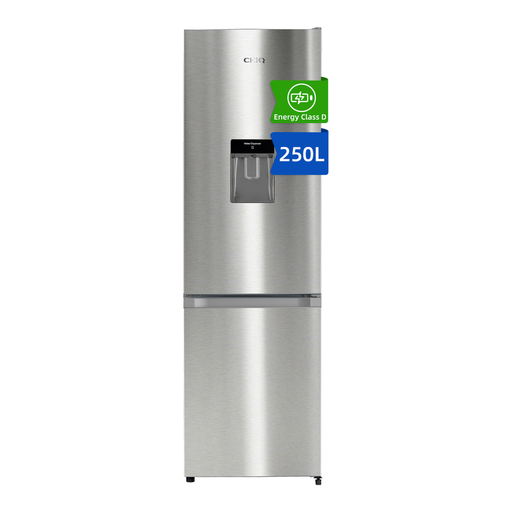
Consider the larger capacity if you also need room for regular frozen-food storage. This freestanding model is listed as 54 cm wide and 181 cm tall, with Total No Frost, a water dispenser and a D energy rating. Measure the full installation space and check whether 250 L suits your shopping habits and the model’s temperature guidance.
Follow the cream carton’s storage instructions and check the appliance’s temperature guidance. Food Standards Agency research refers to 4–5°C as a recommended domestic refrigerator temperature; the carton’s own once-opened and use-by directions still apply.
No: extra capacity does not extend the carton’s stated once-opened period or override its use-by date. Follow the product label and keep the carton properly refrigerated.
A 50/50 split is worth considering if you regularly freeze meal portions or buy frozen food. If fresh groceries and opened dairy take priority, compare fridge-led layouts instead; The compact LOGIK L50BW23 example has 121 L of fridge space and 52 L of freezer space.
Check the exact model’s guidance for both compartments before placing it there. Beko and Hotpoint caution that freezer features designed for low ambient temperatures do not make the fridge compartment suitable for the same conditions, which matters when storing opened cream.
For an in-scope fridge-freezer sold in Great Britain, look for the energy label at the point of sale, including online, as described by GOV.UK. Compare the displayed energy information alongside appliance capacity rather than using the letter class alone to choose between different-sized models.