One person freezing bread and batch meals
If you keep sliced bread alongside prepared meals or frozen staples, look at usable freezer drawers as well as the balance between chilled and frozen space.


For one person, choose by the space you need for a loaf alongside your usual frozen food, not by total appliance capacity alone. A 50/50 split is worth considering if you regularly freeze meals and staples as well as bread; a fridge-led 70/30 split may suit you if you freeze only a loaf and need more chilled space. Check the drawer layout, kitchen fit and annual electricity use before deciding, especially if you need an integrated model.
If you keep sliced bread alongside prepared meals or frozen staples, look at usable freezer drawers as well as the balance between chilled and frozen space.
If space is tight, check the appliance dimensions, required ventilation and door-opening clearance before comparing freezer layouts. The freezer still needs room for the bread you normally keep.
If the fridge-freezer must sit behind an existing cabinet door, confirm the housing dimensions and door-fitting system. Then compare freezer space and whether the frost-management system matches the amount of defrosting work you are willing to do.
Start with a place the appliance can fit, then judge whether its freezer drawers accommodate your bread and other food. Compare electricity use and defrosting requirements among models that meet those needs.
| Concern | What to check | Who this matters to |
|---|---|---|
| Usable freezer space | Compare freezer litres and drawer layout; check whether your usual loaf bag fits alongside other frozen food. | I freeze sliced bread alongside meals and want to keep the loaf separate without crushing it; around 42% of consumers would put usable freezer organisation first. |
| Kitchen fit | Measure the available space and door clearance. For an integrated model, match the cabinet niche and door-fitting system to its installation instructions. | A tight kitchen or existing cabinet limits where I can place the appliance, and its door still needs to open properly; roughly 33% of consumers would prioritise fit and installation. |
| Electricity use and upkeep | Compare annual kWh for suitable-size models, then check whether the freezer is frost-free or may need manual defrosting. | My fridge-freezer runs continuously, so electricity use and time spent defrosting matter to me; about 25% of consumers would make running demands and upkeep their primary concern. |
Total capacity does not tell you whether a sliced loaf will fit in a freezer drawer with your other food.
Compare frozen-compartment litres and drawer arrangements, then check drawer measurements or layout images against the loaf bags you buy.
Energy Saving Trust advises looking beyond the A-to-G rating: the annual kWh figure shows the labelled electricity use, while appliance size also matters.
Once you have ruled out unsuitable sizes and layouts, compare annual kWh between fridge-freezers of a similar type and capacity.
An integrated fridge-freezer needs a compatible housing and door mechanism; external appliance dimensions alone do not establish that it will fit.
Measure the cabinet niche and compare its fittings, ventilation requirements and door clearance with the exact model’s installation instructions.
Electrolux describes LowFrost as making manual freezer defrosting easier, whereas Beko says its Frost Free system removes the need for manual freezer defrosting.
If avoiding manual defrosting matters to you, check the exact model’s freezer specification rather than relying on a similar-sounding feature name.
These brands offer relevant fridge-freezer configurations, but suitability depends on the specifications and installation requirements of the individual model.
Worth considering if you are comparing frost-free models or need to check an integrated model’s operating conditions.
Its published integrated-model specifications allow a closer comparison of freezer space, drawer arrangements and frost management.
Bosch UK lists 70/30, 60/40 and 50/50 fridge-freezer splits, with freestanding and built-in options.
These integrated and freestanding fridge-freezers offer different ways to make room for sliced bread. Compare their stated size and configuration with your kitchen and usual frozen food; check drawer fit, installation requirements and annual kWh for the model you choose.
 No image available
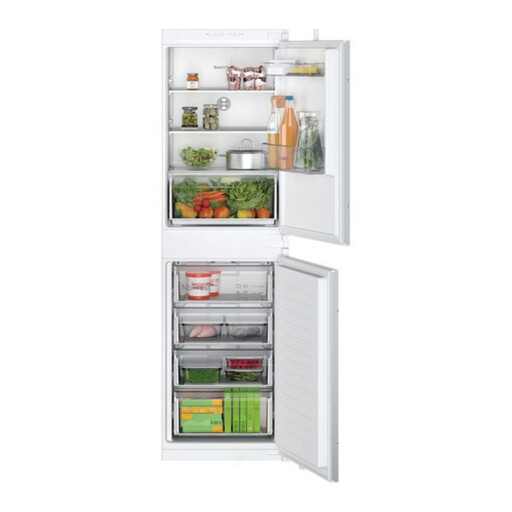
Consider this model if you have an integrated housing and want a 50/50 split for bread and other frozen food.
The product name specifies Frost Free, a sliding hinge, 249 L total capacity and an E energy rating. Check cabinet compatibility, freezer-drawer dimensions and annual kWh before choosing.
 No image available
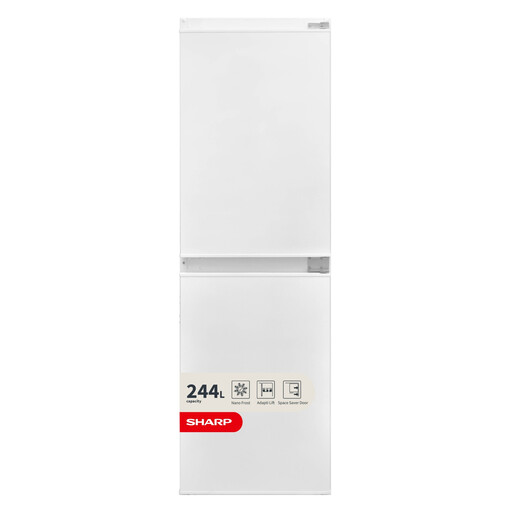
The 50/50 configuration is a choice to assess if you regularly freeze bread alongside other food and have a suitable fitted cabinet.
The product name specifies NanoFrost, a 177 × 54 cm size and an E energy rating. Check the installation instructions, usable drawer dimensions, annual kWh and manual-defrost requirements.
 No image available
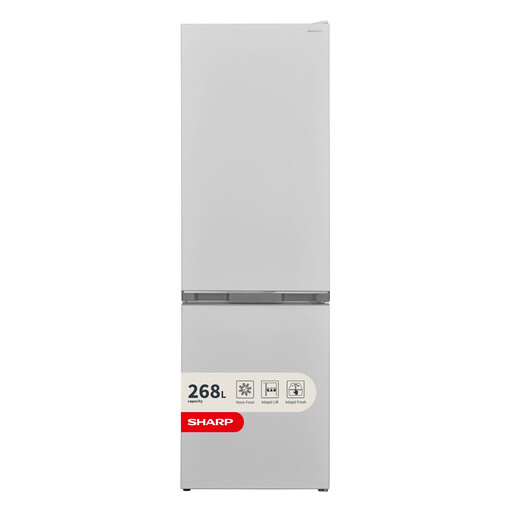
The 60/40 split is worth considering if you freeze bread and other staples but also need substantial chilled-food space.
The product name specifies NanoFrost, a 170 × 54 cm size and an E energy rating. Check bread-bag fit, ventilation and door clearance, annual kWh and defrosting instructions.
 No image available
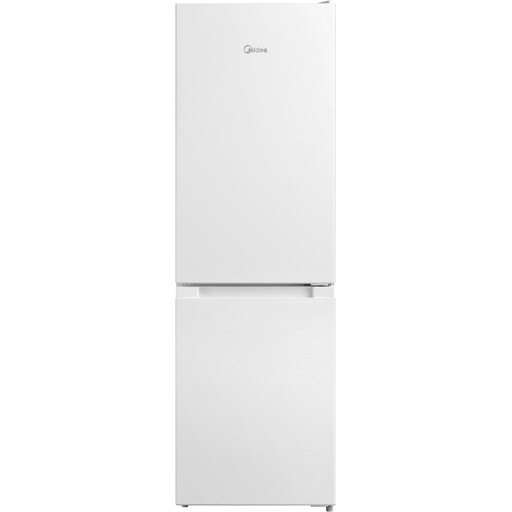
Consider its stated width if kitchen space is limited, then check whether its freezer drawers accommodate the bread and other food you keep.
The product name specifies a 50 cm width, 173 L total capacity and an E energy rating. Check the freezer layout, ventilation clearance and annual kWh for this model.
 No image available
If you prefer pull-out freezer drawers and want to reduce manual defrosting, compare this model’s freezer layout with the amount of bread and other food you store.
The product name specifies a 54 cm width, No Frost, three doors, freezer drawers and an E energy rating. Check the frozen-compartment capacity, drawer dimensions, annual kWh and placement clearances.
Not necessarily: start with a drawer that fits your usual loaf bag, then allow for the meals and staples you also freeze. If you need little other frozen storage, extra freezer capacity may add appliance size without helping your routine; Energy Saving Trust advises comparing annual kWh rather than relying on the energy-rating letter alone.
A 50/50 split makes more sense when frozen bread is part of a broader frozen-food routine; a 70/30 split may suit you if a loaf is your main frozen item and you need more chilled space. Bosch UK also lists 60/40 options, which are worth comparing when neither balance matches what you store.
Prioritise it if avoiding manual freezer defrosting matters to you, not as a guarantee about bread quality. Beko says its Frost Free system removes the need for manual freezer defrosting; Electrolux describes LowFrost on the LNA6LE18S as making that task easier rather than eliminating it.
Match the exact model to your cabinet niche, door-fitting mechanism, ventilation instructions and door-opening space before ordering. Electrolux specifies sliding fittings for its cited integrated models, but that does not establish the fitting system of another model.
Compare annual kWh alongside the A-to-G class once you have identified models of the right size and installation type. Energy Saving Trust explains that the letter offers a quick efficiency comparison but does not tell you exactly how much electricity an appliance uses; the label also provides information such as capacity and noise.