People cooking portions for one
If you refrigerate some cooked vegetables and freeze the rest, look at the space available for covered containers and individual frozen portions, not just the advertised total capacity.


Choose a fridge-freezer that fits your kitchen and has usable shelves for covered cooked-vegetable portions, plus enough freezer space for the portions you will not eat soon. A freestanding model allows more flexibility over placement; an integrated model needs a matching cabinet opening and door system. Check the exact appliance’s layout, dimensions and energy information before deciding whether frost-free operation matters to you.
If you refrigerate some cooked vegetables and freeze the rest, look at the space available for covered containers and individual frozen portions, not just the advertised total capacity.
Measure where the appliance will stand and the route it must travel to get there. For an integrated model, the cabinet opening and door arrangement also need to match.
If you frequently freeze single portions, accessible freezer drawers and the amount of defrosting you are willing to do may matter more than features intended for fresh produce.
For one person storing cooked vegetables, settle the freestanding-versus-integrated question before comparing storage layouts. Frost-free operation is a separate feature to check on either type.
Consider it when: You have no fitted cabinet opening or want more flexibility if you move.
Trade-off: The appliance remains visible, and even a narrow model needs adequate space for its full depth and door opening.
Consider it when: You have a fitted-kitchen opening and want the appliance behind a matching cabinet door.
Trade-off: Both the opening and the cabinet-door system must suit the exact model, making a later move less straightforward.
| Concern | What to check | Who this matters to |
|---|---|---|
| Kitchen fit and usable space | Measure the location and delivery route; for integrated models, match the cabinet opening and door system. | If my kitchen space is tight, I need to know the appliance will fit before comparing features. Around 36% of consumers would put kitchen fit first. |
| Cooked-portion organisation | Check usable shelf height and depth against your covered containers, and look at how easily you can reach them. | I keep several prepared portions chilled and do not want containers hidden behind other food. Container organisation would come first for around 29% of consumers. |
| Freezing and maintenance | Compare freezer-drawer space for individual portions and check whether the exact model is frost-free or Low Frost. | When I cook more than I can use soon, I need somewhere practical to freeze separate portions. Roughly 21% of consumers would prioritise freezing and freezer upkeep. |
| Energy information and noise | Compare the exact models’ energy labels and product information sheets; check their declared noise levels. | In a small or open-plan home, I pay particular attention to running information and appliance noise. For around 14% of consumers, those would be the primary concern. |
Total litres cannot tell you whether your usual covered containers fit on a shelf or whether the freezer drawers suit individual portions.
Measure the containers you use, then compare shelf clearances, compartment volumes and drawer layout on the exact model.
Features such as VitaFresh, HarvestFresh and EasyFresh are described for fresh fruit and vegetables; they are not a substitute for cooling and storing cooked portions appropriately.
Prioritise space for covered containers. Treat a produce drawer as a separate consideration if you also store fresh vegetables.
Two similar-looking integrated fridge-freezers can require different cabinet openings or door-assembly systems.
Compare the exact manual with your measured cabinet and existing door arrangement, and check the delivery route before ordering.
An energy-class letter alone does not describe a fridge-freezer’s compartment sizes, storage layout or noise.
Read the energy label and product information sheet for each exact model alongside its dimensions and usable storage.
Bosch has both integrated and freestanding fridge-freezers relevant to comparing kitchen fit and the balance of chilled and frozen space.
Beko’s CNG4793V is a freestanding model to consider if you are comparing freezer operation with features aimed at fresh produce.
Liebherr has integrated and freestanding models with specified produce-storage and no-frost features.
Samsung’s integrated BRB70F26DES0EU is relevant when checking the dimensions of a fitted-kitchen appliance.
These freestanding and integrated fridge-freezers offer different ways to make room for chilled cooked-vegetable portions and food to freeze. Compare each model’s actual shelf and freezer space with your containers and kitchen measurements.
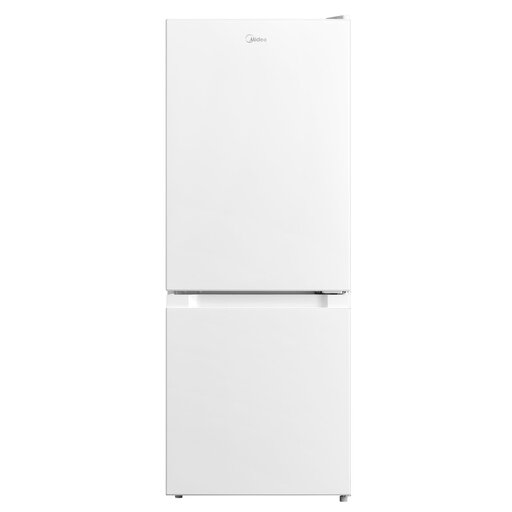 No image available
Consider this freestanding model if a shorter appliance may suit your kitchen and you need both chilled and frozen storage.
The title specifies Low Frost, not frost-free operation. Check that your covered containers fit the shelves and that the freezer space suits the portions you plan to keep.
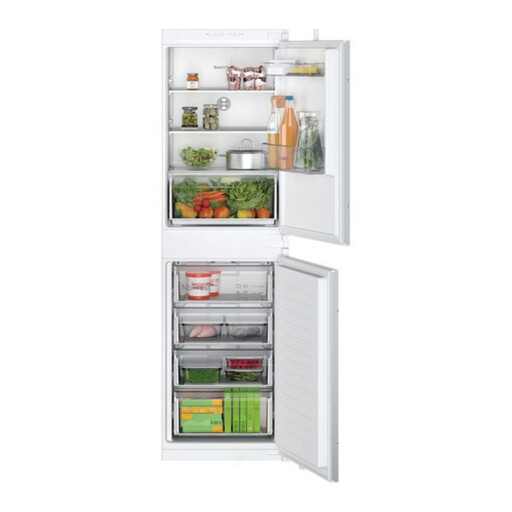 No image available
Consider this integrated model if you have a fitted-kitchen opening and want space for both chilled and frozen portions.
Its title specifies a 50/50 split, frost-free operation and a sliding hinge. Confirm the required cabinet opening and door compatibility, as well as usable shelf space, before ordering.
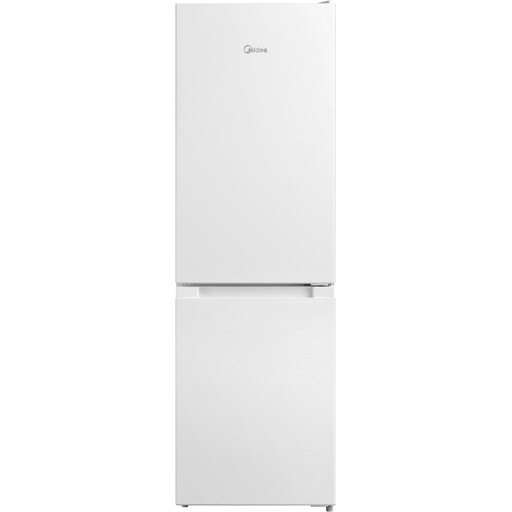 No image available
Its stated 50 cm width makes this model worth checking for a narrow freestanding position where you also need to freeze portions.
Confirm its full dimensions, the space needed around it and whether your covered containers fit inside before choosing it.
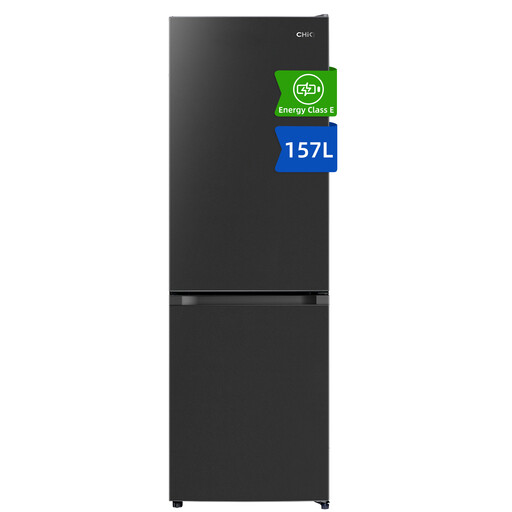 No image available
This freestanding model is a candidate for a narrow kitchen position if you need separate chilled and frozen storage.
Its title states a 47 cm width and 144 cm height. Low Frost does not mean frost-free, and you should check usable shelf clearances against your containers.
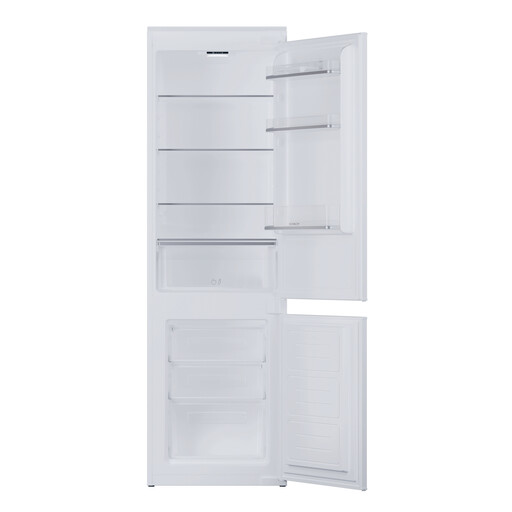 No image available
Consider this integrated model if you expect to keep more food chilled than frozen and have a compatible fitted-kitchen opening.
The title specifies a 70/30 split and Low Frost operation. Match the cabinet and door requirements to your kitchen, then check the shelf clearances and freezer-drawer layout for your portions.
For baby food, the NHS advises cooling it ideally within one to two hours, then refrigerating or freezing it; use refrigerated portions within two days. This guidance is specific to baby food rather than a storage-time claim for any fridge-freezer.
No special fresh-produce drawer is necessary just because you store cooked vegetables. Prioritise room for covered containers; consider produce-focused features separately if you also keep fresh fruit and vegetables.
Compare the energy label and product information sheet for each exact fridge-freezer model alongside its capacity. The Department for Energy Security and Net Zero and the Office for Product Safety and Standards identify these documents as required information for products within the scope of UK energy-labelling rules.
Check the cabinet-opening dimensions, the appliance dimensions and the required door-assembly system against your existing kitchen. Door requirements differ by model: Bosch specifies a flat hinge for the KIN86VFE0G, while the Bosch KIN85NSE0G product title specifies a sliding hinge.
Frost-free operation is worth considering if you freeze individual portions regularly and want to avoid manual defrosting. If you freeze food less often, assess kitchen fit, container space and freezer-drawer layout first; check the exact model because Low Frost and frost-free are different descriptions.