Solo portion-freezers
If you cook sauce for one and freeze several meals at a time, focus on freezer drawers or shelves that will hold your containers, alongside enough fridge space for everyday food.


For one person freezing pasta sauce in meal-sized portions, choose by the freezer compartment’s capacity and layout, not the appliance’s total litres or its 50/50 label. A compact fridge-freezer may suit modest batches and a small kitchen; if you freeze larger batches or want to avoid manual defrosting, compare frost-free models while checking that they still leave enough fridge space. Cool the sauce in small portions before freezing it, and keep the freezer around −18°C, as advised by GOV.UK.
If you cook sauce for one and freeze several meals at a time, focus on freezer drawers or shelves that will hold your containers, alongside enough fridge space for everyday food.
When floor space is limited, check the appliance’s full dimensions and door clearance as carefully as its fridge and freezer capacities.
If you would rather avoid manual defrosting, look for a frost-free feature on the exact model, then compare its freezer capacity and energy label.
Start with the space your portions need, then check safe temperature control, kitchen fit and whether frost-free convenience matters to you. A 50/50 label alone does not tell you how much usable freezer storage a model provides.
| Concern | What to check | Who this matters to |
|---|---|---|
| Freezer space and layout | Compare frozen-compartment litres and drawer or shelf shapes with the containers you plan to use. | If I regularly freeze several meals, I need to fit and retrieve separate sauce portions without choosing by total appliance capacity alone. Around 36% of consumers put organised freezer space first. |
| Cooling and temperature | Check the temperature controls and whether you can verify that the freezer stays around −18°C; cool sauce in small portions before freezing it. | When I save homemade sauce, safe cooling and a suitable freezer temperature matter more to me than extra features. Around 29% of consumers make food handling and temperature their primary concern. |
| Kitchen fit and storage balance | Measure height, width, depth and door clearance; compare the stated fridge and freezer litres. | In a small kitchen, I need room for both the appliance and fresh ingredients, not just a larger freezer. Around 21% of consumers prioritise fit and storage balance. |
| Defrosting and energy use | Check the exact model’s frost-free feature and compare energy-label information for suitably sized appliances. | If I want less defrosting work, I still need to consider the electricity use of the appliance I choose. Around 14% of consumers put maintenance and ongoing energy use first. |
Total capacity includes the fridge, and a 50/50 label does not show whether your sauce containers fit the freezer drawers.
Compare frozen-compartment litres and drawer dimensions, then measure the kitchen space before ordering.
The appliance cannot make up for poor cooling practice. GOV.UK advises cooling cooked food in small portions, placing it in the fridge within one to two hours and freezing homemade leftovers as soon as possible.
Let portions cool promptly before refrigerating and freezing them; aim to keep the freezer around −18°C.
Frost-free addresses ice build-up, but it does not establish how much electricity a particular fridge-freezer uses.
Use the energy label to compare suitably sized models, including their energy use, compartment capacities and noise information, as described by Energy Saving Trust.
Suitability for low ambient temperatures is model-specific. Beko says the freezer compartment of its CFG4501 can operate in ambient temperatures down to −15°C, but does not recommend using that model’s fridge compartment at low ambient temperatures.
If the appliance will stand outside a heated kitchen, check the exact model’s ambient-temperature conditions for both compartments.
A reference point for frost-free models and model-specific outbuilding features.
A reference point for comparing published specifications of individual NoFrost fridge-freezers.
A reference point for relatively narrow, tall fridge-freezers with a bottom freezer.
These freestanding fridge-freezers offer different overall sizes and widths for storing single portions. Compare the space each model gives your sauce containers, as well as its fit in your kitchen; total capacity is not a substitute for freezer-compartment capacity.
 No image available
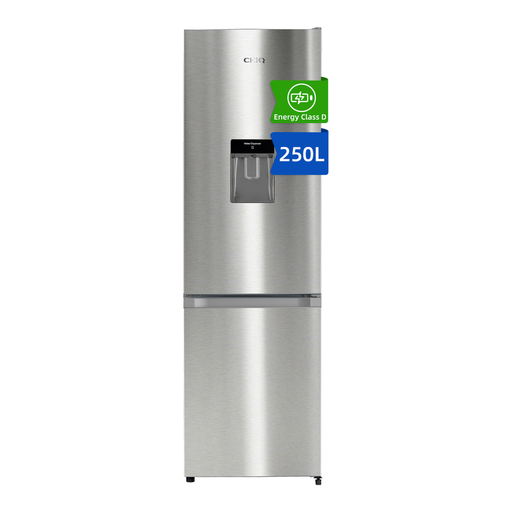
Consider this model if you want a frost-free fridge-freezer for portion storage and have room for its 181 cm height.
Its stated width is 54 cm; it has a water dispenser and a D energy rating. The 250L figure is total capacity, so check the freezer compartment’s capacity, container fit and temperature capability before choosing it.
 No image available
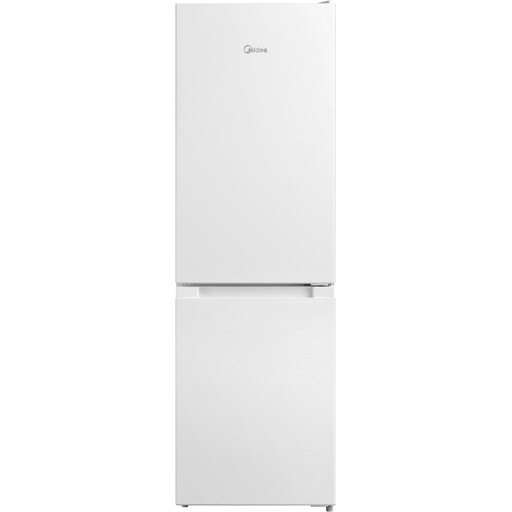
Its 50 cm stated width makes this a model to check if kitchen width is your main constraint.
The 173L figure is total capacity, and the model has an E energy rating. Check its freezer capacity, drawer fit, defrost method and temperature capability against your portion-freezing plans.
 No image available
Consider this model if you want a No Frost design, but establish how much freezer space your sauce portions would actually have.
It is stated as 54 cm wide, with freezer drawers and an E energy rating. Its 282L figure is total capacity; check freezer-compartment capacity, container fit, full installation dimensions and temperature capability.
No. GOV.UK advises cooling cooked food in smaller portions, putting it in the fridge within one to two hours and freezing homemade leftovers as soon as possible; do not load the appliance with hot or warm sauce.
Aim for around −18°C, in line with GOV.UK guidance. Use the appliance controls as instructed and check the temperature with an appropriate thermometer when needed.
It can be enough if its freezer compartment fits the number and size of portions you expect to store while leaving adequate fridge space. Compare the exact compartment litres and drawer layout rather than relying on the 50/50 label.
Frost-free is worth considering if avoiding manual defrosting matters to you, but it does not determine whether your containers will fit or replace safe cooling. Check the model’s freezer capacity and energy label alongside the feature.