Guests and owners storing fresh produce
If radishes and other vegetables need to last through a short stay or between cottage handovers, focus on refrigerator temperature, a usable produce drawer and a storage routine that limits moisture loss.


For fresh radishes, choose a fridge-freezer with a usable produce drawer and check that its refrigerator compartment can be kept below 5°C; bag the roots and remove their leafy tops if storing them beyond the same day. A freestanding model allows more flexibility when replacing an appliance, while an integrated model must match the existing cabinet and door fitting. If the appliance will stand in a cold outbuilding, check the instructions for the fridge compartment separately from any freezer-protection claim.
If radishes and other vegetables need to last through a short stay or between cottage handovers, focus on refrigerator temperature, a usable produce drawer and a storage routine that limits moisture loss.
An integrated fridge-freezer needs to match the existing cabinet opening and door-fitting system. Check those details before choosing a model for its vegetable drawer or freezer features.
A utility room or garage can expose an appliance to low ambient temperatures. Check whether the exact model is suitable for refrigerating fresh food there, not just whether its freezer can operate in the cold.
Start with a location and installation type that will work in the cottage, then check the produce drawer, refrigerator temperature and the space needed for other food.
| Concern | What to check | Who this matters to |
|---|---|---|
| Keeping radishes crisp | Look for a vegetable drawer intended for produce, room for bagged radishes and controls that allow you to check the actual fridge temperature. Love Food Hate Waste advises storing most fruit and vegetables below 5°C. | If radishes must last through a stay, I need cold storage that limits moisture loss without freezing the roots. Around 36% of consumers put produce freshness first. |
| Installation and location | For a fitted kitchen, compare the cabinet opening and door system with the installation instructions. For a cold outbuilding, check the model’s separate guidance for refrigerator and freezer operation. | When replacing a fitted unit or using a cold utility space, I need an appliance that will fit and refrigerate food in that location. For around 29% of consumers, suitability for the cottage comes first. |
| Space and layout | Compare chilled capacity, drawer access and exterior dimensions; check the delivery route as well as the intended position. | If I stock the cottage for several guests, I need accessible chilled space for produce alongside other food. Around 21% of consumers prioritise capacity and organisation. |
| Running and upkeep | Compare the exact model’s energy label, product information, noise figure and freezer-defrost system. NoFrost and Low Frost describe different approaches to ice build-up. | When the appliance stays on between visits, I want to compare its declared running information and the freezer work it may require. Upkeep and running information come first for around 14% of consumers. |
A large total capacity does not tell you whether there is a convenient place for bagged radishes. Exposed roots or attached leaves can contribute to moisture loss during storage.
Check the drawer layout, bag the radishes and remove their leafy tops if they will not be eaten the same day.
Hotpoint describes FreezerProtect operation down to -15°C for the HPKH 1261 S4UK, but also advises against using its fridge compartment at low ambient temperatures. That distinction matters when the purpose is to refrigerate radishes.
Read the exact model’s ambient-temperature instructions for both compartments before placing it in an unheated garage or outbuilding.
The cabinet opening, ventilation requirements and sliding- or fixed-door fitting also determine whether an integrated fridge-freezer can be installed.
Measure the opening in three dimensions and compare the existing door arrangement with the model’s installation documentation.
An energy class does not establish cabinet fit, produce-drawer design, noise level or suitability for a cold outbuilding.
Compare the exact models’ product information alongside their dimensions, drawer layout and installation instructions.
Bosch offers freestanding and integrated fridge-freezers with produce-focused storage in selected models.
Selected Liebherr fridge-freezers have an enclosed EasyFresh produce compartment.
AEG offers integrated models for fitted kitchens, including one with a humidity-managed vegetable drawer.
Selected Hotpoint freestanding models combine a fresh-food drawer with features intended for particular outbuilding conditions.
Samsung’s RB38C605DB1 is a capacity- and connectivity-focused freestanding option to assess alongside produce-storage needs.
These options include freestanding fridge-freezers and one fully integrated model for a fitted cottage kitchen. Compare the intended produce storage and temperature controls for each, and check cabinet compatibility before choosing the integrated model.
 No image available
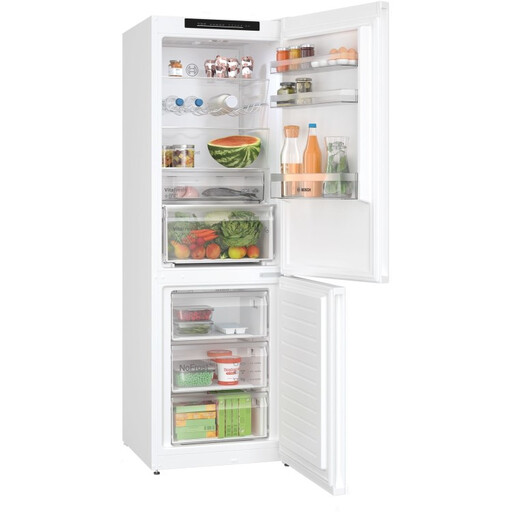
Consider this freestanding model if a separate place for cottage produce and less freezer defrosting are priorities. Its stated format is 186 cm tall and 60 cm wide, with NoFrost and a D energy class. Check the produce-drawer arrangement and whether the fridge can be kept below 5°C.
 No image available
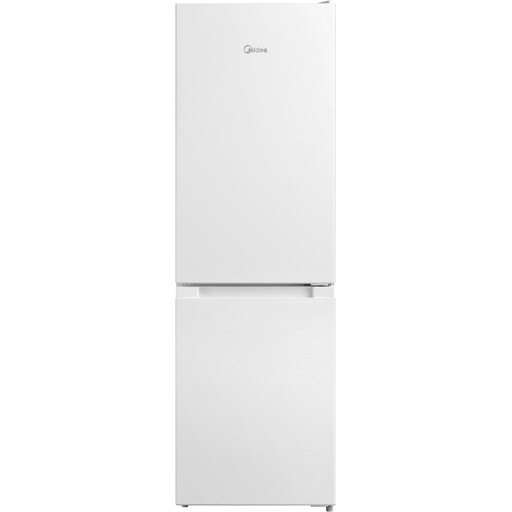
This model is worth considering for a narrower cottage kitchen where produce needs a separate storage place. Its stated width is 50 cm and its energy class is E. Confirm the drawer arrangement, ventilation clearances and ability to keep the fridge below 5°C.
 No image available
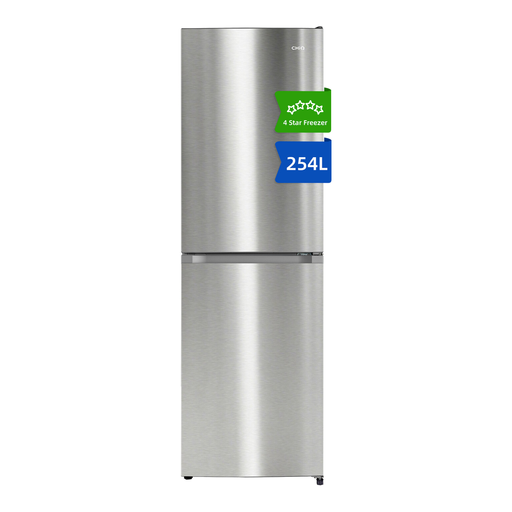
Consider this freestanding option when the cottage layout calls for a 54 cm-wide appliance and room for produce. The stated height is 176 cm, while Low Frost describes its freezer system rather than eliminating defrosting. Check usable fridge space, the produce drawer and refrigerator temperature for the exact model.
 No image available
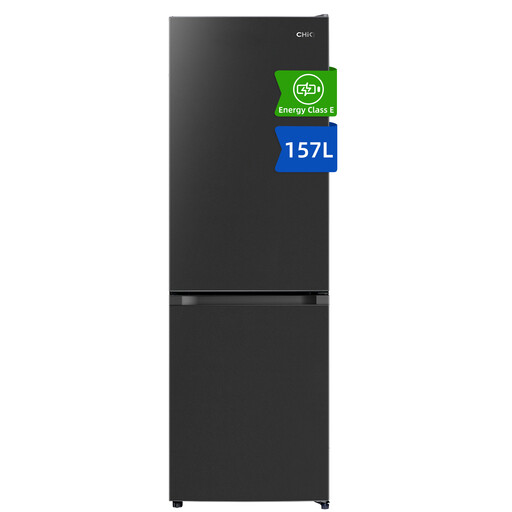
This freestanding model may suit a narrow cottage kitchen where a separate vegetable space is useful. It is listed as 47 cm wide and 144 cm tall, with Low Frost freezer operation. Allow for freezer defrosting and check both the drawer design and refrigerator temperature before relying on it for radishes.
 No image available
Consider this model when replacing an appliance in a fitted cottage kitchen and keeping a dedicated place for vegetables matters. It is listed as fully integrated, with a fixed hinge, a 50/50 split and an E energy class. Match the cabinet opening, ventilation and door fitting to its installation instructions; also check its drawer arrangement and refrigerator temperature.
Keep the refrigerator below 5°C for fresh radishes, following Love Food Hate Waste’s guidance for most fruit and vegetables. Check the actual compartment temperature if the controls do not display it, and do not let the roots freeze.
Yes, if the radishes will be stored beyond the same day: remove the leafy tops and bag the roots before putting them in the fridge. Michigan State University Extension says most varieties can keep for up to two weeks when refrigerated, but that is not a guaranteed storage period for every batch.
Not necessarily: use a drawer identified for vegetables where available, and make sure the radishes do not freeze. A speciality drawer intended for other foods should not be treated as a produce drawer solely because its stated temperature is near 0°C.
Only when the exact model’s instructions permit fridge-compartment use at the temperatures expected there. Hotpoint’s FreezerProtect claim for the HPKH 1261 S4UK extends down to -15°C, but Hotpoint also advises against using that model’s fridge compartment at low ambient temperatures; freezer protection alone is not enough for fresh radishes.