Batch-cookers sharing freezer drawers
If you freeze individual portions of cooked food, look for space where labelled containers can be kept separate. Total appliance capacity does not tell you how much room those portions will have.


Choose a fridge-freezer by checking how much freezer space each person can use, whether labelled portions will fit in its drawers and whether the appliance fits the kitchen. Compare frozen-compartment litres, annual energy consumption, noise and installation dimensions rather than total capacity alone. Frost-free operation can reduce defrosting work, but cooked mashed potato still needs prompt cooling and portioning before freezing.
If you freeze individual portions of cooked food, look for space where labelled containers can be kept separate. Total appliance capacity does not tell you how much room those portions will have.
When several people use one freezer, accessible drawers and an agreed labelling system can make portions easier to identify. The Food Standards Agency and Food Standards Scotland have documented different approaches to allocating food storage among UK students.
A fridge-freezer has to fit the kitchen and delivery route as well as provide useful frozen storage. Compare its exact dimensions with frozen-compartment volume, annual energy consumption and noise information.
Start with safe handling and enough allocated freezer room for the people sharing it, then check physical fit and day-to-day running information. The concerns below describe consumers choosing an appliance for cooled mashed potato in a shared kitchen.
| Concern | What to check | Who this matters to |
|---|---|---|
| Safe leftover storage | Check freezer temperature controls and room for small, sealed portions; use a thermometer where the temperature is not clear. | If I am freezing cooked mashed potato, I need to cool and portion it promptly before it goes into the freezer. Around 36% of consumers put safe leftover storage first. |
| Shared freezer space | Compare frozen-compartment litres and whether the drawers accommodate each person’s labelled containers. | When several of us store food separately, I need to retrieve my portions without moving everyone else’s. Freezer organisation comes first for around 29% of consumers. |
| Kitchen fit | Measure the appliance bay and delivery route, then check the exact model’s clearance requirements. | Extra freezer room is little use to me if the appliance cannot pass through the doorway or fit its allotted space. Around 21% of consumers prioritise physical fit. |
| Running and upkeep | Read annual kWh and noise figures, and check whether the model is frost-free. | I want to understand ongoing electricity use and avoid a defrosting job that nobody in the house takes on. Those running and upkeep considerations come first for around 14% of consumers. |
A large fridge-freezer can still leave too little room for several people’s frozen portions.
Compare frozen-compartment litres and drawer layout before total litres. Bosch GB lists 107 L of frozen volume for KGN34NWEAG; Haier UK lists 147 L for HFKR5718DNMM.
Frost-free describes ice management, not how cooked food should be cooled. GOV.UK’s home food guidance advises cooling cooked food promptly and placing it in the fridge within one to two hours.
Divide mashed potato into smaller portions to help it cool, label the containers and freeze it promptly after cooling. Aim to keep the freezer around -18°C.
The researched Bosch KGN34NWEAG is 600 mm wide, while Haier UK lists the HFKR5718DNMM at 700 mm wide. Width alone does not establish whether either model can be installed.
Measure the kitchen space and delivery route, then check the exact model’s depth, height, door swing and installation clearances.
Unlabelled portions can be difficult to identify or retrieve when several people use the same drawers.
Check whether the layout allows clear separation, and agree a simple name-and-date labelling system for frozen portions.
The freestanding KGN34NWEAG is a model-specific reference for a 600 mm-wide fridge-freezer.
The HFKR5718DNMM illustrates a wider, multi-door format for a household considering more dedicated freezer room.
The CCFM4552 is a reference for buyers considering frost-free upkeep; its low-ambient feature addresses a different location from a typical indoor shared kitchen.
These models include wider appliances to consider when several people need freezer storage, alongside a 600 mm-wide Bosch option. Check each model’s installation requirements and freezer layout against your kitchen and portion containers.
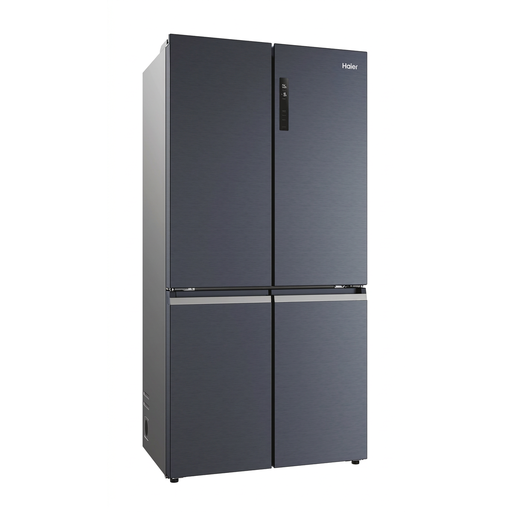 No image available
Consider this freestanding fridge-freezer if several sharers need freezer storage and there is room for a wide appliance.
The product name specifies 528 L total capacity. Measure the kitchen and delivery route, and check the freezer temperature arrangement in the model documentation before using it for leftovers.
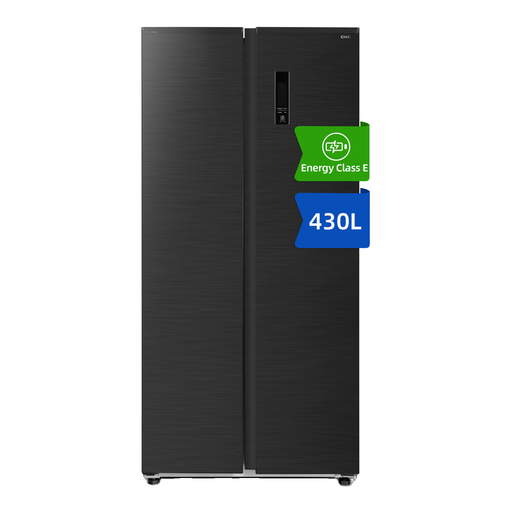 No image available
The side-by-side format is worth considering if the shared kitchen has space for a wider appliance and residents want to organise frozen portions.
The product name specifies No Frost and an E energy rating. Check the delivery route, annual kWh figure and freezer temperature arrangement before comparing it with other models.
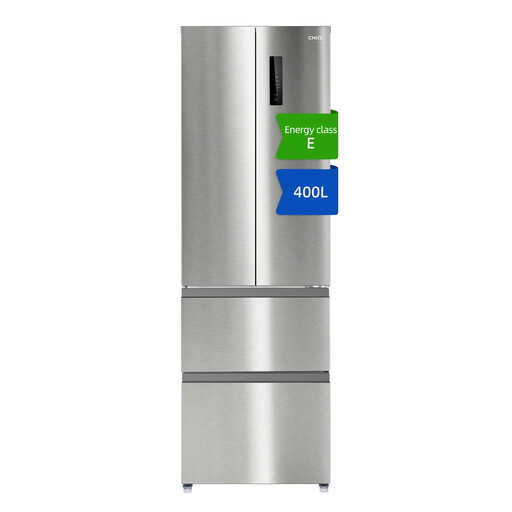 No image available
This French-door model is an option to examine when a 60 cm width matters but the household still needs to assess how its freezer space will be shared.
The product name specifies Total No Frost and an E energy rating. Check the full installation dimensions, annual kWh figure and freezer temperature arrangement.
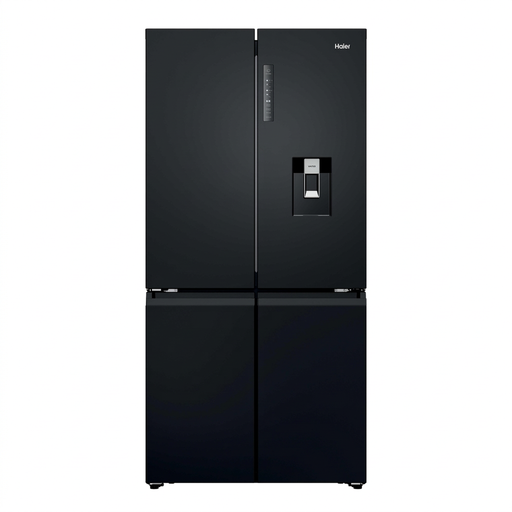 No image available
Consider this freestanding four-door fridge-freezer only after confirming that a large-format appliance suits the shared kitchen and its delivery route.
The product name specifies 649 L total capacity, which is not the freezer volume. Check the frozen-compartment layout, frost-free specification and freezer temperature arrangement for this exact model.
 No image available
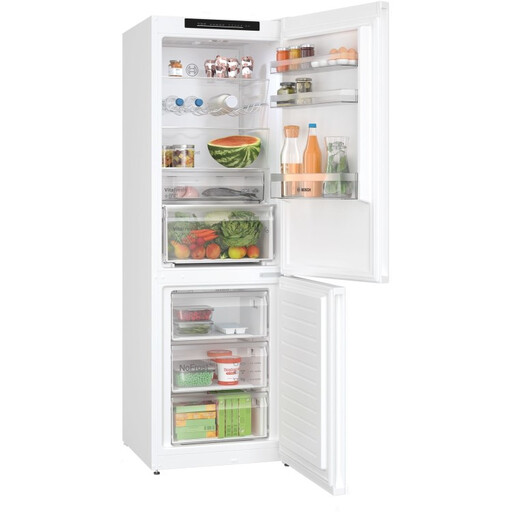
This freestanding model is worth checking when the kitchen calls for a 60 cm-wide fridge-freezer rather than a wider format.
The product name specifies a 186 cm height, NoFrost and a D energy rating. Check its freezer drawer space against the household’s portions, plus annual kWh and the freezer temperature arrangement.
Yes, if it has been cooled promptly. GOV.UK’s home food guidance advises putting cooked food in the fridge within one to two hours; smaller portions cool more quickly. Freeze the portions as soon as possible after cooling and follow any relevant storage instructions.
GOV.UK’s domestic food guidance advises keeping the fridge between 0 and 5°C and the freezer around -18°C. Check actual temperatures with a suitable thermometer rather than assuming a control setting reflects the temperature inside.
Not necessarily, but a layout that lets residents separate and label portions can make shared storage easier to manage. Food Standards Agency and Food Standards Scotland research into UK students describes both allocated storage and storing food wherever space is available; check whether the drawers suit your household’s containers and arrangements.
Compare each suitable model’s annual energy consumption in kWh alongside its frozen-compartment volume. The UK household refrigeration energy-label information identifies both figures; multiplying annual kWh by your own electricity unit rate gives a way to assess running costs without relying on the energy class alone.