What matters when choosing?
Start with the available space and the group’s balance of chilled versus frozen food; then check whether the shelf layout and day-to-day upkeep will work for everyone using the kitchen.
Freestanding fridge-freezer
Consider it when: The kitchen has no fixed appliance housing and the group needs accessible chilled and frozen storage.
Allow for: Its full footprint, delivery route and the installation clearances in the model’s instructions.
Integrated fridge-freezer
Consider it when: You are replacing an appliance in a compatible fitted housing.
Allow for: Model-specific hinges, cabinet dimensions, ventilation and fitting requirements.
Wide or American-style fridge-freezer
Consider it when: The group needs space for substantial shared food storage and the room can accommodate a wider appliance.
Allow for: Kitchen width and access through doorways; extra volume does not replace orderly storage or temperature checks.
| Concern |
What to check |
Who this matters to |
| Temperature and door use |
Check for usable temperature controls, room for a thermometer and, if doors may be left ajar, a door-open alarm. Food Standards Scotland advises keeping a fridge between 0°C and 5°C and checking it with a thermometer. |
If the door is opened repeatedly, I want to notice when it is left open and know the stored food is cold enough. Around 33% of consumers put temperature and door use first. |
| Container space |
Measure the group’s lidded containers and assess usable shelf positions and the fridge/freezer split, not just total volume. |
When several people store pasta portions, I need a reachable place for my container without stacking food too tightly. For around 27% of consumers, organised container space is the primary concern. |
| Fit and installation |
Measure the appliance space and delivery path. For an integrated model, match the housing, hinges and ventilation instructions. |
If I am replacing a fitted appliance or working with a narrow kitchen, it has to fit before its other features matter. Fit comes first for around 20% of consumers. |
| Noise, frost and energy use |
Compare the exact models’ declared noise, frost-free features and annual kWh figures, alongside their type and usable capacity. |
In a kitchen used by several people, I want an appliance whose noise and freezer upkeep we can live with. Around 20% of consumers chiefly prioritise these day-to-day considerations. |
Joybuy fridge-freezers for shared kitchens
These freestanding choices cover narrower kitchens as well as rooms that can take a wider fridge-freezer. Compare their stated dimensions and capacity with your containers and installation space; an integrated replacement needs separate cabinet and hinge checks.
 No image available
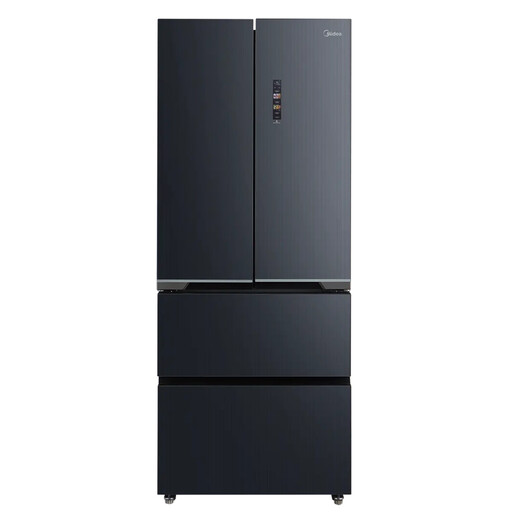
Midea MDRF600BIE70 435 L French-door fridge-freezer
Consider this wider format if several people need shared chilled and frozen storage and the kitchen has room for it.
The product name states 435 L total capacity, Total No Frost, 75 cm width, 60 cm depth and an E energy rating. Check the full installation dimensions and whether the shelves suit your containers.
View on Joybuy
 No image available
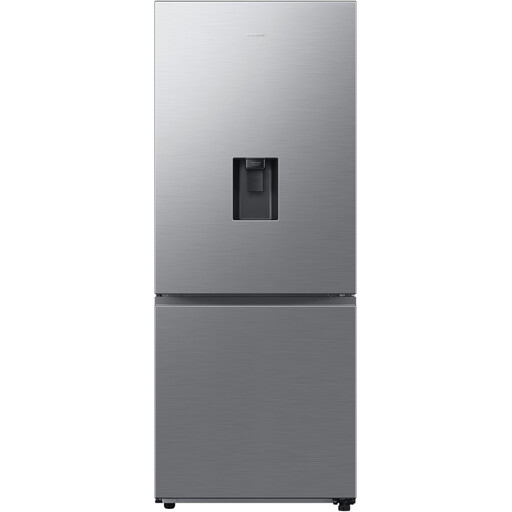
Samsung RB50DG632ES9EU 505 L fridge-freezer
This is a larger-capacity option to assess when several kitchen users need storage and there is space for a wide appliance.
The product name gives 505 L total capacity, a 75 cm width and an E energy rating. Check the full footprint, the fridge/freezer split and the shelf arrangement against the group’s needs.
View on Joybuy
 No image available
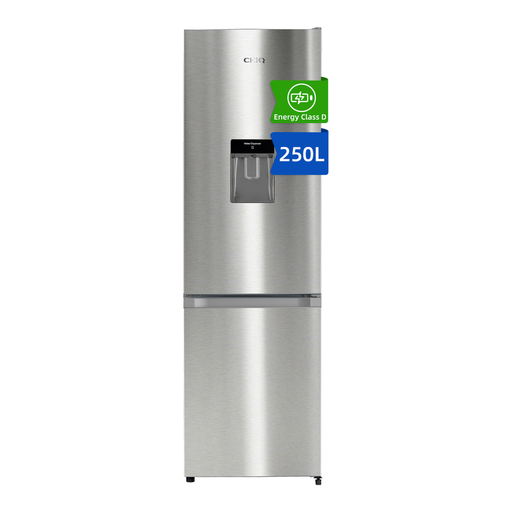
CHiQ JKR250WDSSD 250 L fridge-freezer with water dispenser
Its narrower stated width makes it worth assessing where kitchen floor space is limited, provided the interior accommodates everyone’s containers.
The product name lists 54 cm width, 181 cm height, Total No Frost and a D energy rating. Measure the installation space and check the interior layout before choosing it.
View on Joybuy
 No image available
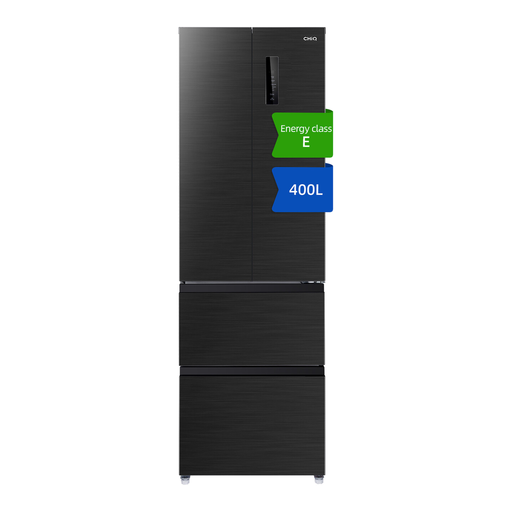
CHiQ JKR420WGE 400 L French-door fridge-freezer
Consider the French-door layout if the group wants separate chilled and frozen areas but must still account for the appliance’s full size.
The product name states 400 L total capacity, 60 cm width, Total No Frost and an E energy rating. Check usable shelf space, installation clearance and delivery access.
View on Joybuy
 No image available
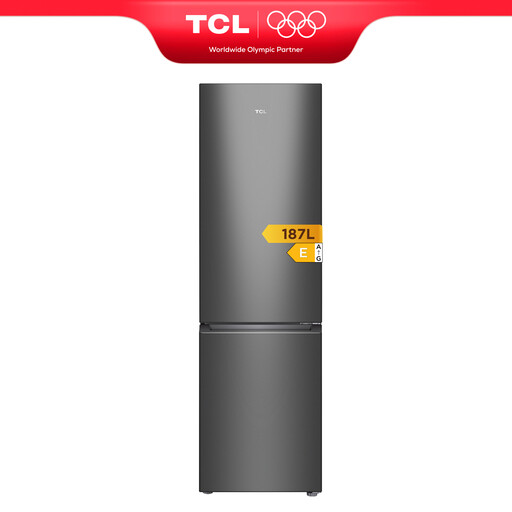
TCL RF366BSE0 282 L freestanding fridge-freezer
This narrower appliance is an option to assess when the shared kitchen cannot accommodate a wide fridge-freezer.
The product name states 55 cm width, 183 cm height, 282 L total capacity, Total No Frost and an E energy rating. Confirm the chilled-to-frozen space split and whether the shelves hold your containers.
View on Joybuy
Questions about storage and selection
What temperature should a shared fridge be for cooked pasta?
Keep the fridge between 0°C and 5°C and check it with a thermometer, as Food Standards Scotland advises. A control-dial number is not a substitute for checking the temperature where food is stored.
Where should cooked pasta go in a shared fridge?
Store cooled pasta in covered, labelled portions in a defined ready-to-eat food area. Food Standards Scotland identifies top or middle shelves for covered leftovers and bottom shelves for raw meat and fish; GOV.UK advises refrigerating cooked food within one to two hours.
Does a frost-free fridge-freezer take care of food-safety checks?
No. Frost-free operation concerns freezer upkeep; it does not establish the temperature inside a frequently used shared fridge. Continue to check the fridge with a thermometer and refrigerate cooked portions promptly.
Does the same legal fridge-temperature rule apply to every shared kitchen?
No: a private household share is not automatically a food business. GOV.UK states that keeping chilled food at 8°C or below is a legal requirement for food businesses in England, Wales and Northern Ireland. If food is prepared or supplied as part of a business, check the rules applicable to that operation; for household storage, Food Standards Scotland advises a fridge temperature of 0°C to 5°C.
How can I compare energy information between fridge-freezers?
Compare the declared annual kWh figures and energy labels for models of similar type and usable capacity. UK government energy-label guidance explains that a lower kWh figure indicates less stated electricity use; keep the appliances’ size and storage layout in view when choosing between them.


