Shared-kitchen batch cooks
If you freeze several portions at a time, the freezer needs space for your containers without blocking drawers used by other residents. The usable freezer layout matters more than the appliance’s headline capacity.


Choose usable freezer space and a layout that leaves room for other residents’ food, rather than relying on total appliance capacity. A 50/50 fridge-freezer is a starting point when chilled and frozen storage needs are roughly balanced; choose an integrated model only if its housing and door fittings are compatible. Whichever appliance you choose, cool and portion cooked compote promptly before freezing it.
If you freeze several portions at a time, the freezer needs space for your containers without blocking drawers used by other residents. The usable freezer layout matters more than the appliance’s headline capacity.
If the fridge-freezer sits inside a cabinet, check the housing and furniture-door fixing before comparing storage features. A suitable freezer compartment will not help if the replacement cannot be installed.
If cooked portions go into the freezer regularly, consider how the household will manage defrosting and organise newly added food. A named fast-freeze function is an additional feature to assess after the compote has cooled.
Settle the kitchen fit and the space residents need for chilled and frozen food, then compare freezer compartments and the routine for cooling and storing each batch. The Food Standards Agency advises cooling cooked food and putting it in the fridge within one to two hours, cooling warm dishes before freezing, and keeping a home freezer around −18°C.
| Concern | What to check | Who this matters to |
|---|---|---|
| Cooling and freezer temperature | Plan space for smaller portions to cool promptly; check the freezer controls and its temperature with an appliance thermometer. | If I freeze cooked compote regularly, I need a cooling routine that does not rely on the freezer to chill a hot batch. Around 36% of consumers put safe cooling and freezing first. |
| Usable freezer capacity | Compare frozen-compartment litres and whether your containers fit the drawers; do not use total capacity as a substitute. | When several residents share frozen storage, I need room for my portions without taking over their space. Freezer capacity is the main concern for around 29% of consumers. |
| Shared-space organisation | Look at drawer separation and plan shallow, date-labelled portions that can be identified and retrieved. | I want to find my compote without moving other people’s food or losing track of when I froze it. Around 21% of consumers give organisation priority. |
| Installation and upkeep | Check access, ventilation and door clearance; for built-in models, confirm cabinet and hinge compatibility. Distinguish low-frost from frost-free. | If the appliance must fit an existing cabinet, or nobody has clear responsibility for defrosting, those constraints shape my choice. They come first for around 14% of consumers. |
Total litres include chilled space, so they cannot tell you how much room remains for compote and other residents’ frozen food.
Compare the exact model’s frozen-compartment volume and drawer layout, then check your intended containers against the drawer dimensions.
A freezer function does not replace prompt cooling of cooked food. The Food Standards Agency advises cooling cooked food before freezing it.
Divide compote into smaller, shallow portions and follow the cooling guidance before loading them into the freezer; treat fast-freeze mode as a separate appliance feature.
A built-in fridge-freezer must suit its housing and the way the furniture door attaches. Matching the visible gap alone does not establish that fit.
Check housing height, width and depth, ventilation allowances, the access route and whether the door fixing uses sliding or fixed hinges.
Frost-free addresses defrosting maintenance, not freezer capacity, installation fit or the cooling routine for cooked compote.
Confirm usable storage and placement before weighing maintenance features. If considering Beko’s CFG4582 for a cold outbuilding, note Beko’s warning against using its fridge compartment at low ambient temperatures.
The freestanding CFG4582 line is a reference for households weighing frost-free maintenance and placement in a cooler space.
The freestanding KGN33NLEAG provides a specification reference for comparing freezer volume with overall appliance dimensions.
The freestanding RB34C600ESA/EU is relevant when overall capacity and a named freezing function are being considered.
The integrated HPKH 1262B4 UK offers a model-specific reference for a fitted 50/50 replacement.
These fridge-freezers offer integrated and freestanding starting points for organising cooled compote alongside other residents’ food. Compare each appliance’s fit and usable freezer layout before choosing; their total capacities alone do not establish container space.
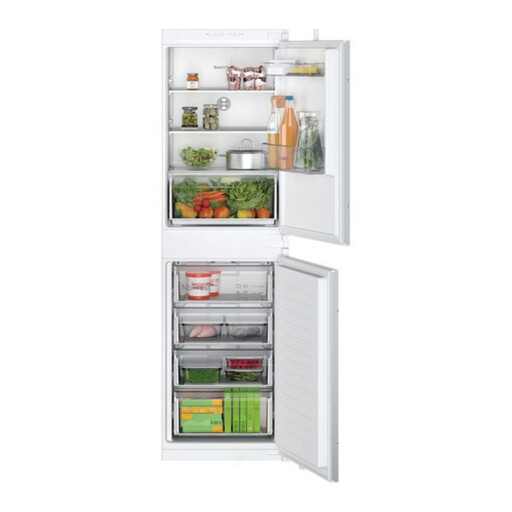 No image available
Consider this for a fitted-kitchen replacement only after checking the cabinet and furniture-door fixing.
The product title specifies a 177 cm appliance, 249 L total capacity, frost-free operation, a sliding hinge and an E energy rating.
Check the freezer’s usable volume and drawer dimensions for your portions, along with its temperature controls and installation requirements.
 No image available
This is an integrated option to assess when a roughly balanced fridge and freezer split suits the shared kitchen.
The product title specifies a static fridge-freezer with an E energy rating.
Confirm cabinet and door-fixing compatibility, usable freezer space, temperature controls and the expected defrosting routine before choosing it.
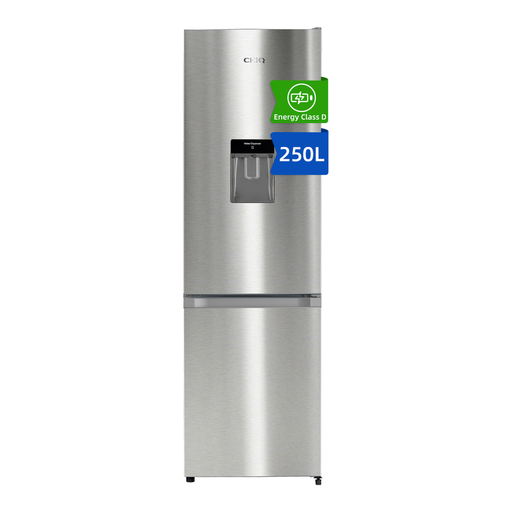 No image available
Consider this freestanding model if avoiding manual defrosting is important and its freezer layout suits the space shared with other residents.
The product title specifies a 54 cm width, 181 cm height, 250 L total capacity, a water dispenser and a D energy rating.
Check freezer volume and drawer dimensions rather than judging portion space from the total capacity; also confirm door clearance, ventilation and temperature controls.
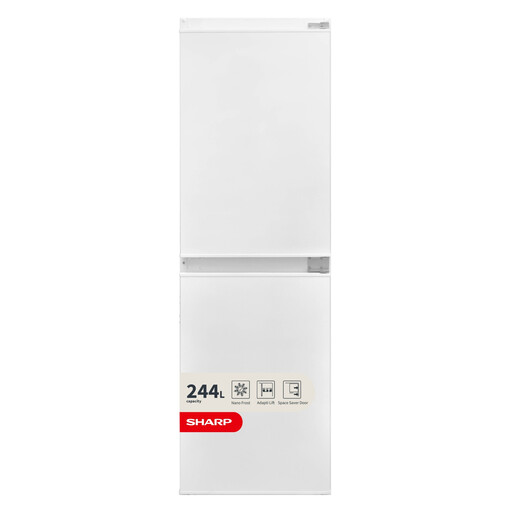 No image available
This fitted-kitchen option is worth comparing if you need a 50/50 layout and can confirm the housing and door fixing.
The product title specifies a 177 × 54 cm format, NanoFrost and an E energy rating. Do not assume NanoFrost eliminates manual defrosting.
Check the frozen-compartment layout, temperature controls and exact cabinet requirements for this model.
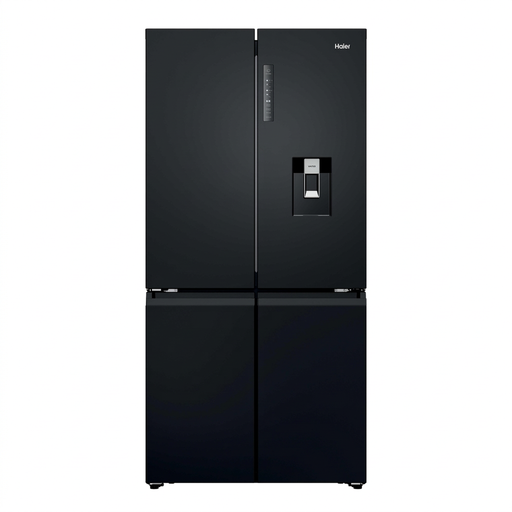 No image available
Consider this freestanding format only if the shared kitchen has room for the appliance and its doors to open.
The product title specifies four doors and 649 L total capacity, which does not by itself establish how much freezer space your compote can use.
Compare the frozen-compartment volume and drawer dimensions with your containers, and check the temperature controls, access route and ventilation requirements.
Cool it before freezing rather than relying on the freezer to chill a hot batch. The Food Standards Agency advises cooling cooked food at room temperature and placing it in the fridge within one to two hours; divide the compote into smaller, shallow portions to help it cool promptly.
For home freezing, the Food Standards Agency advises a freezer temperature of around −18°C. Follow the appliance instructions and use an appliance thermometer to check the temperature, particularly in a shared freezer that is opened frequently.
A 50/50 split is a useful starting point if residents need roughly comparable chilled and frozen storage; a fridge-led split may suit a household that stores more fresh food. Check the exact model’s frozen-compartment litres and whether its drawers fit the planned portions, because the split label does not guarantee equal usable space.
Arrange an appropriate electrical-appliance collection or take-back option before the replacement arrives. UK waste electrical and electronic equipment arrangements cover appliances of this kind, according to the Office for Product Safety and Standards and the Department for Environment, Food & Rural Affairs; check the available retailer or local-council service for your address.