Choose by usable freezer space and drawer layout, not the appliance’s total capacity alone. A freestanding combi can suit a smaller shared kitchen if its freezer holds everyone’s labelled portions; a larger multi-door model needs more room, while an integrated model must match the existing cabinet. Check access, ventilation, noise and energy information before deciding.
Who needs to consider shared storage?
Shared-kitchen batch freezers
People who regularly blanch and portion vegetables or cook ahead need freezer space where labelled containers remain accessible alongside other residents’ food. Research by the Food Standards Agency and Food Standards Scotland on UK students’ fridge storage illustrates why an agreed allocation can matter in a shared kitchen; check whether the freezer can accommodate one.
Space-constrained sharers
In a narrow kitchen or fitted cabinet run, the available width is only part of the fit check. Depth, ventilation space and the room needed to open doors and pull out drawers can determine whether an appliance works there.
Low-maintenance, energy-conscious sharers
People who want less manual defrosting should check the exact model’s frost-management system. To compare electricity use, look at product-specific energy information as well as capacity, rather than relying on the energy-class letter alone.
What matters when choosing?
Start with the freezer allocation your household needs, then choose an appliance format that fits the kitchen. The concern table focuses on consumers’ primary needs when freezing labelled portions of blanched carrots in a shared kitchen.
Freestanding combi
Consider it when: a conventional freestanding appliance fits and the freezer has enough accessible space for regular portions.
Trade-off: CDA Appliances describes 50/50 and 70/30 layouts in its range; giving more of the appliance to the freezer leaves less room for fresh food. Compare the exact model’s compartment volumes.
Larger multi-door or American-style model
Consider it when: several residents freeze portions regularly and there is room to access the appliance’s doors and storage areas.
Trade-off: a larger format needs a suitable footprint and access route. Compare its annual energy information with the amount of storage the household will use.
Integrated fridge-freezer
Consider it when: an existing appliance housing requires an integrated replacement.
Trade-off: the niche and hinge arrangement must match, and the freezer compartment still needs to meet the household’s portion-storage needs.
| Concern |
What to check |
Who this matters to |
| Usable freezer organisation |
Compare the exact model’s frozen-compartment volume and check whether its drawers accommodate your labelled containers or bags. |
I want to find my carrot portions without moving everyone else’s food; around 42% of consumers put identifiable freezer storage first. |
| Kitchen fit, access and noise |
Measure the space and delivery route, then check required ventilation, full door and drawer opening, and the stated noise figure if nearby rooms are affected. |
If doors or drawers cannot open properly beside a wall, the extra capacity will be little use to me; roughly 33% of consumers prioritise fit and access. |
| Defrosting and electricity use |
Check whether the exact model is frost-free or Low Frost, and compare its energy label and annual energy information alongside its capacity. |
I would rather avoid frequent defrosting and choose a size the household will use; about 25% of consumers make upkeep and electricity use their primary concern. |
What is easy to overlook?
-
Choosing by total capacity alone
Total appliance litres do not tell you how much freezer space is available or whether several residents can reach their labelled portions.
Compare frozen-compartment litres and drawer dimensions for the exact model. Agree on a labelled drawer or basket if that arrangement suits the household.
-
Measuring the slot but not the opening space
An appliance can fit between cabinets yet leave too little space for ventilation or for doors and drawers to open fully.
Measure height, width, depth and the delivery route, then follow the model’s installation instructions for clearances and door opening.
-
Putting a large warm batch straight into a crowded freezer
Large portions are harder to cool promptly and can be awkward to place among other residents’ food.
Use clean, shallow containers or bags and label the contents and date. NHS food-safety guidance advises cooling food as quickly as possible, ideally within one to two hours, before putting it in the fridge or freezer.
-
Comparing energy-class letters without appliance size
An energy-class letter alone does not show how much electricity a particular fridge-freezer uses each year. Energy Saving Trust advises using the label’s energy information when comparing appliances.
Read the annual energy figure alongside chilled and frozen capacity, and compare models that could meet the household’s storage needs.
Brands to consider
These model examples are reference points for capacity, format and features; check specifications for the particular appliance you are considering.
Bosch
Bosch has freestanding and integrated models that illustrate how freezer volume and installation requirements can differ.
- Bosch Home UK lists 89 litres of frozen-compartment volume for the freestanding KGN36NWEAG and 76 litres for the integrated KIN86NSE0G.
- The integrated KIN86NSE0G needs a compatible housing and hinge arrangement; neither model’s freezer volume alone confirms that your portion containers will fit.
Beko
Beko models provide examples of frost-free operation and larger-format freezer storage.
- Beko says its CFG4552 Frost Free system removes the need for manual freezer defrosting. It lists 142 litres of freezer volume for the larger GN14790.
- The GN14790 is listed as 70.3 cm wide; measure the installation space and check the exact model’s internal layout before choosing it for shared portions.
LG
LG’s UK size guide is a starting point for considering tall, multi-door and American-style layouts.
- The guide describes tall fridge-freezers as vertical designs and presents multi-door and American-style formats as options when more capacity is needed.
- Format descriptions do not establish the freezer volume, drawer layout or fit of an individual model; compare those details separately.
Joybuy product choices
These freestanding choices include wider multi-door or side-by-side appliances and narrower fridge-freezers. For labelled carrot portions, compare the freezer compartment and its internal arrangement before using total capacity to narrow the choice.
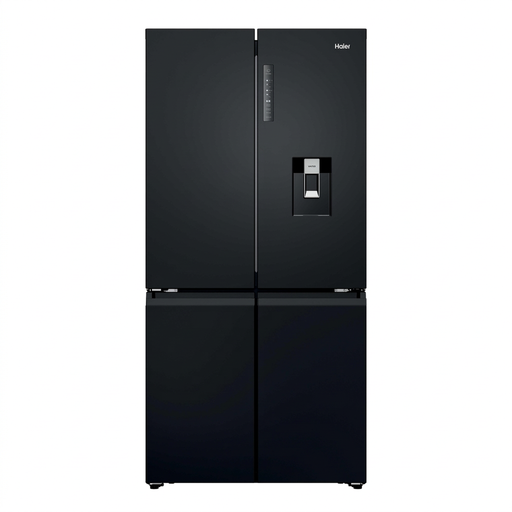 Image unavailable
Haier Cube 90 Series 3 HCR39F19EWPT(UK), 649 L
Consider this freestanding model if several residents need frozen-food space and the kitchen can accommodate a four-door appliance.
The product name states 649 L total capacity and a black finish. Check its frozen-compartment volume, drawer dimensions, installation clearances and door-opening space against your plans.
View on Joybuy
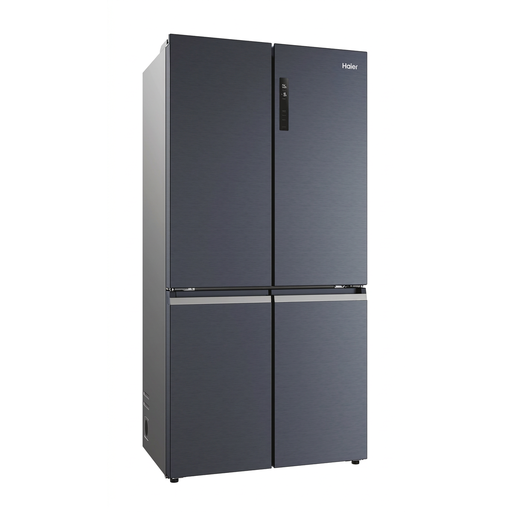 Image unavailable
Haier Cube 90 Series 5 HCR5919ENMB, 528 L
Consider this freestanding model if a larger appliance is feasible and the household wants to allocate freezer space between residents.
The product name states 528 L total capacity and a black-steel finish. Confirm the freezer compartment’s dimensions, internal arrangement and full door-opening clearance before choosing it.
View on Joybuy
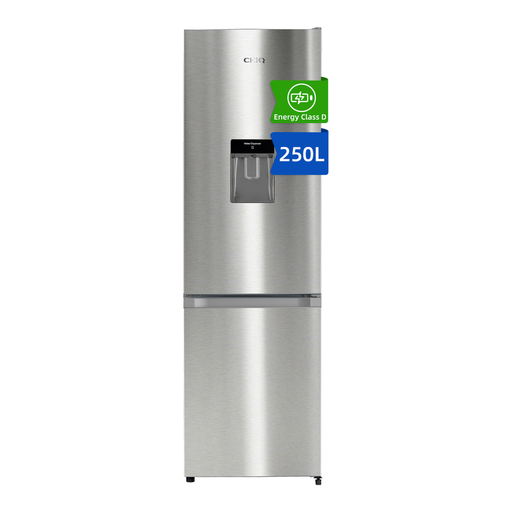 Image unavailable
CHiQ JKR250WDSSD, 54 cm, 250 L
Consider this freestanding model where appliance width is constrained, provided its freezer compartment can hold the household’s labelled portions.
The product name states a 54 cm width, 250 L total capacity, Total No Frost, a water dispenser and a D energy class. Check drawer fit, installation clearance and annual energy information for the exact model.
View on Joybuy
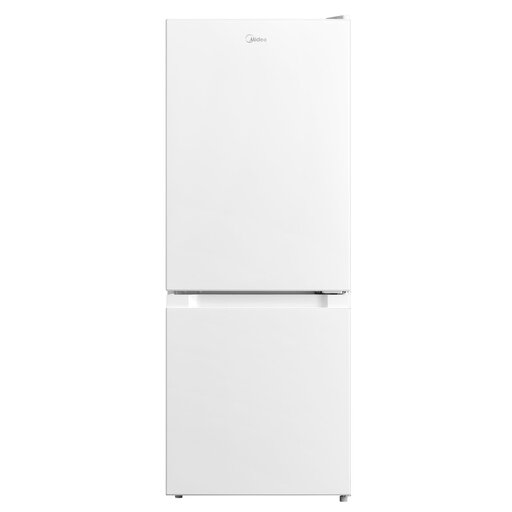 Image unavailable
Midea MDRB202FGE01 Low Frost fridge-freezer
Consider this model if a compact appliance is needed and its freezer compartment has enough room for the portions residents plan to store.
The product name describes it as approximately 123 cm high, with Low Frost and an E energy class. Low Frost should not be treated as frost-free; check defrosting instructions, freezer dimensions and annual energy information.
View on Joybuy
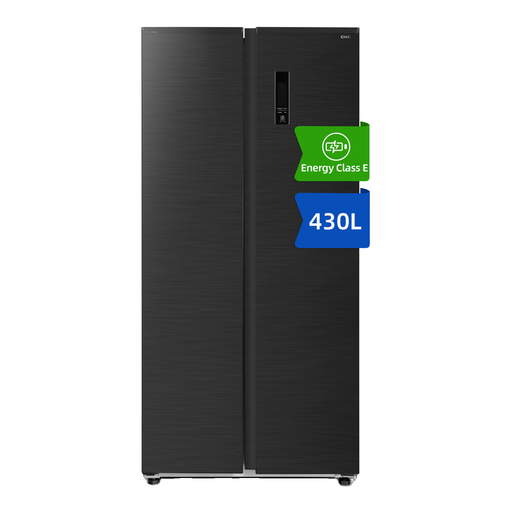 Image unavailable
CHiQ JKR433WGE side-by-side fridge-freezer, 430 L
Consider this side-by-side format if several residents need freezer space and the kitchen has room for a wider appliance.
The product name states 430 L total capacity, an 84 cm width, No Frost and an E energy class. Check how the freezer is divided, along with door clearance and annual energy information.
View on Joybuy
Common questions
Is a 50/50 or 70/30 fridge-freezer more useful for frozen carrot portions?
Choose by the actual freezer compartment and drawer layout: a 50/50 split allocates a larger proportion to freezing than a 70/30 split, which favours fresh-food space. CDA Appliances describes both layouts, but the usable frozen-compartment volume must be checked for each model.
How should I portion blanched carrots before freezing them?
Put them in clean, shallow, labelled portions and cool them promptly before freezing. NHS food-safety guidance advises cooling food as quickly as possible, ideally within one to two hours; in a shared appliance, keep the dated portions clear of spills and other residents’ food.
Does Low Frost mean I will not have to defrost the freezer?
No: Low Frost and frost-free are different descriptions, so check the exact model’s defrosting instructions. Beko says the Frost Free system on its CFG4552 removes the need for manual freezer defrosting; that statement should not be extended to a Low Frost model.
Which energy information helps when comparing fridge-freezers?
Compare the product-specific annual energy figure and capacity alongside the A-to-G class. Energy Saving Trust notes that appliance energy information also includes noise and performance details; for a shared kitchen, check those figures for models with enough freezer space rather than choosing by the class letter alone.


