Small-kitchen leftover planners
If you portion cooked pasta regularly, look for accessible chilled shelf space as well as a place the appliance can fit. The Food Standards Agency advises keeping the fridge at 0–5°C.


Choose a fridge-freezer that fits its floor space or existing cabinet, allows the required ventilation and has usable chilled shelf space for covered pasta portions. A slim freestanding model suits a narrow floor gap, while an integrated model needs a compatible cabinet and door system. Whichever format you choose, check that you can keep the fridge at 0–5°C, as advised by the Food Standards Agency.
If you portion cooked pasta regularly, look for accessible chilled shelf space as well as a place the appliance can fit. The Food Standards Agency advises keeping the fridge at 0–5°C.
A standalone replacement still needs room for its doors to open and for the ventilation specified by its manufacturer. Which? advises allowing for air circulation when measuring a freestanding model.
An integrated fridge-freezer must match the existing housing, door-hinge arrangement and installation requirements. Which? describes integrated models as appliances designed to sit behind fitted kitchen doors.
Limited worktop space does not by itself call for a smaller appliance: a fridge-freezer normally occupies floor space or an existing cabinet opening. Choose the installation format, then check the space available for covered leftovers.
Consider it when: You need a standalone appliance for a narrow floor gap and can accommodate its full dimensions and required clearances.
Trade-off: A narrow width does not establish how much shelf space remains or whether the depth and open door will fit.
Consider it when: You have a suitable fitted cabinet and want the appliance behind its kitchen door.
Trade-off: The exact housing, hinge system and ventilation arrangement must match the appliance.
Consider it when: The floor gap can take a wider appliance and chilled shelf space matters more than minimising width.
Trade-off: Greater stated capacity is useful only if the appliance fits and its shelves accommodate your containers.
| Concern | What to check | Who this matters to |
|---|---|---|
| Installation fit | Measure width, height, depth and door-opening space; compare them with the exact model and its required ventilation clearance. | I need the appliance to fit my narrow kitchen without blocking access when its door opens. Around 36% of consumers put installation fit first. |
| Chilled leftover space | Check shelf positions and clear depth for covered portions, and how you will verify a fridge temperature of 0–5°C. | If I regularly save cooked pasta, I need somewhere accessible to put covered portions while keeping them properly chilled. For around 29% of consumers, that is the primary concern. |
| Freezer organisation | Compare the fridge/freezer split and whether the drawers accommodate portioned containers or bags. | When I cook more than I can eat within two days, I need to organise portions in the freezer. Around 21% of consumers would prioritise that need. |
| Energy information | Read the exact model’s energy label and product information alongside its size and storage layout. | I want to compare energy information before choosing an appliance that runs continuously. This is the main concern for around 14% of consumers. |
A stated capacity cannot tell you whether the appliance, its open door and its ventilation clearance fit the available space. Which? notes that freestanding models may need extra room for air circulation.
Measure the complete gap, then check the exact model’s dimensions and installation instructions.
According to the Food Standards Agency, cooked food should be cooled and refrigerated within one to two hours, and the fridge should be kept at 0–5°C. Leftovers should be eaten within 48 hours or frozen.
Allow room for shallow covered portions, check the fridge with a thermometer and plan freezer space for portions you will not eat within that period.
Integrated appliances are intended for fitted cabinetry; the cabinet opening and door system determine whether a particular model can be installed.
Check the exact housing dimensions, hinge arrangement and ventilation instructions before choosing one.
An incompatible housing or hinge arrangement may require cabinet alterations or additional installation work.
An energy rating does not tell you whether an appliance fits or has enough usable chilled space for your containers.
Compare the exact models’ energy information alongside their dimensions and compartment layouts.
These brands appear in the fridge-freezer listings across different installation formats. Choose by the specifications of an individual model, not by its brand name alone.
The listings include Bosch freestanding and integrated fridge-freezers.
The listings include freestanding and integrated Haier options.
An integrated fridge-freezer appears among the listings.
An integrated 70/30 fridge-freezer appears in the listings.
An integrated fridge-freezer with a sliding-door hinge is listed.
These models cover narrow freestanding fridge-freezers and one integrated option for an existing fitted cabinet. Compare their stated widths or installation format with your space, then check the shelf layout and operating instructions for storing leftovers.
 No image available
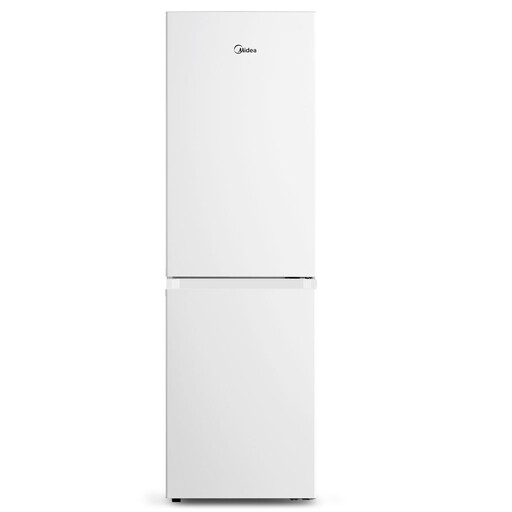
Consider this freestanding model if you have a relatively narrow floor gap and want chilled and frozen compartments.
The title states a 55cm width and Total No Frost cooling. Confirm the full installation dimensions, capacity and energy label for this exact model before ordering; check its instructions and use a thermometer to verify a fridge temperature of 0–5°C.
 No image available
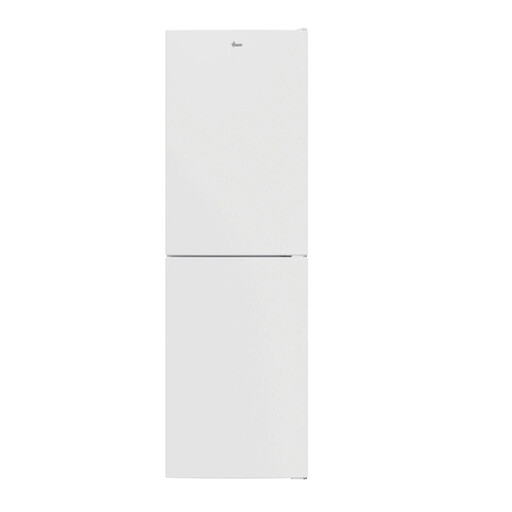
Consider this freestanding model when you need separate chilled and frozen storage in a narrow gap.
Its title states a 55cm width, 176cm height and Low Frost cooling; Low Frost should not be treated as no-defrost cooling. Confirm the exact width and ventilation clearance, and verify that the fridge operates at 0–5°C with a thermometer.
 No image available
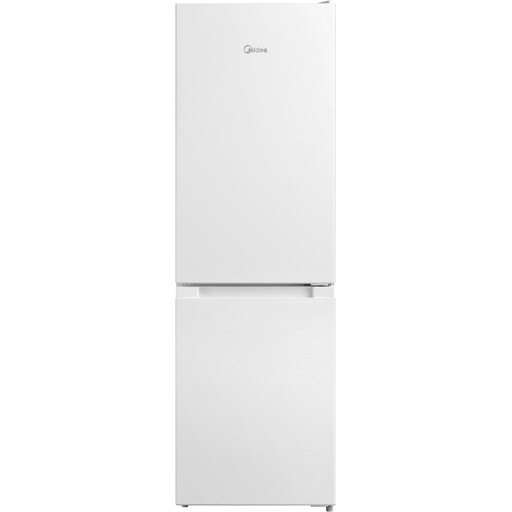
Consider this freestanding model if the available floor gap calls for a narrower stated width.
The title states 50cm width and 173L capacity. Confirm the exact dimensions and required clearance, then check whether its chilled shelves fit your containers; use a thermometer to verify 0–5°C.
 No image available
Consider this freestanding model when width is particularly constrained, provided its shelf space meets your needs.
The title states a 47cm width, 144cm height and Low Frost cooling. Check container fit, door and ventilation clearance, and the exact defrosting instructions; verify the fridge temperature with a thermometer.
 No image available
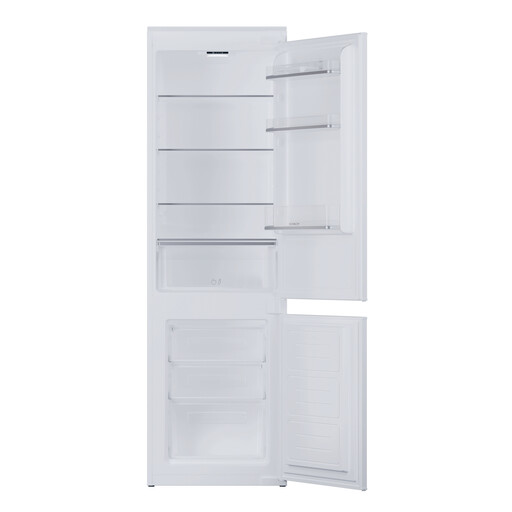
Consider this model only if you have an existing fitted cabinet that suits its installation requirements.
The title states a 70/30 compartment split, 262L capacity and Low Frost cooling. Confirm the cabinet opening, sliding-door hinge arrangement, ventilation and shelf layout for the exact installation; check the fridge temperature with a thermometer.
Eat refrigerated cooked pasta within 48 hours or freeze it if you will not eat it in that time, following the Food Standards Agency’s guidance for leftovers. Cool cooked food and refrigerate it within one to two hours; appearance or smell alone does not establish that it is safe.
Keep the fridge at 0–5°C, as advised by the Food Standards Agency. Use a fridge thermometer to check the temperature rather than relying on the dial setting alone.
No: a fridge-freezer normally uses a floor gap or an integrated cabinet, not the worktop. Measure that space, the door-opening area and the ventilation clearance required for the exact model before choosing a size.
Only if you have a suitable fitted housing and can match the integrated appliance’s cabinet, hinge and ventilation requirements. An integrated model is designed to sit behind a kitchen door, so it should not be treated as a direct fit for an empty floor gap.