Families who freeze in batches
If sliced bread shares the freezer with meal portions and everyday staples, look beyond total appliance capacity. Freezer volume and storage layout will matter when several items need to fit at once.


Start with a 50/50 fridge-freezer if sliced bread, meal portions and other frozen food regularly compete for space; a 60/40 or 70/30 split makes more sense when fresh groceries take priority. The split is only a shortlist tool: compare the exact freezer volume and storage layout, then check the appliance dimensions and any frost-free or outbuilding claims for the model you intend to buy.
If sliced bread shares the freezer with meal portions and everyday staples, look beyond total appliance capacity. Freezer volume and storage layout will matter when several items need to fit at once.
If you store plenty of fresh ingredients as well as some frozen meals and bread, a 50/50 split is a starting point, not an automatic choice. Compare the chilled and frozen volumes separately.
A narrow kitchen, an integrated cabinet or a planned outbuilding location can determine which models are practical. Check dimensions and, for an outbuilding, the exact model’s stated ambient-temperature conditions.
Work out how much bread and other food you normally need to freeze at the same time, then use the fridge-freezer split to narrow the choice before checking each model’s actual compartments.
| Concern | What to check | Who this matters to |
|---|---|---|
| Freezer space and organisation | Compare frozen-compartment litres with your usual overlapping load of bread, meals and staples; inspect the storage arrangement for the exact model. | If I freeze several loaves alongside family meals, I need space that lets me retrieve bread without moving everything else. Around 42% of consumers might put usable freezer space first. |
| Fresh and frozen balance | Use 50/50, 60/40 or 70/30 as an initial split, then compare the actual chilled and frozen volumes. | When fresh ingredients fill most of my weekly shop, I still want room for some frozen bread without giving up too much fridge space; roughly 25% of consumers might make that balance their main concern. |
| Frost-related maintenance | Check whether the exact model lists Frost Free, No Frost or Total No Frost; the label does not tell you its freezer capacity. | I use the freezer often and would rather avoid manual defrosting that interrupts access to stored food. For about 25% of consumers, that convenience might come first. |
| Fit and placement | Measure the appliance space and delivery route. For an outbuilding, check the model’s ambient-temperature statement for both compartments. | If the appliance has to fit an existing cabinet or stand in an outbuilding, its location could rule it out regardless of capacity; around 8% of consumers might put placement first. |
A large overall figure does not show how much space is available for frozen bread and meals. Bosch, for example, lists its KGN362WDFG with 218 L of chilled volume and 103 L of frozen volume.
Compare frozen-compartment litres separately and check whether the storage layout suits the food you freeze together.
The split describes the relative allocation of fridge and freezer space, not identical usable volumes or internal layouts across models.
Use the ratio to shortlist appliances, then compare each model’s compartment figures and storage arrangement.
Frost-free operation and low-ambient capability are different features. Beko and Hotpoint describe selected freezer compartments that can operate at ambient temperatures down to -15°C, while cautioning against using the fridge compartment at low ambient temperatures.
Before choosing an appliance for an outbuilding, read the exact model’s placement conditions for both compartments.
An appliance that fits its intended position may still be difficult to get through doors or corridors. Integrated models also need to suit the cabinet opening.
Measure the installation space and delivery route, allowing for the packaged appliance where relevant.
Bosch lists 50/50, 60/40 and 70/30 fridge-freezer layouts, making its range relevant when comparing how much space goes to fresh and frozen food.
Beko is relevant when frost-free maintenance or an outbuilding location is part of the decision.
Hotpoint offers 50/50 fridge-freezers for households considering broadly balanced fresh and frozen storage.
Samsung is relevant if an integrated fridge-freezer must fit an existing kitchen cabinet.
These fridge-freezers offer different overall sizes and layouts to consider for storing sliced bread alongside family food. Compare each one’s freezer arrangement with what you need to store, as well as the space available in your kitchen.
 No image available
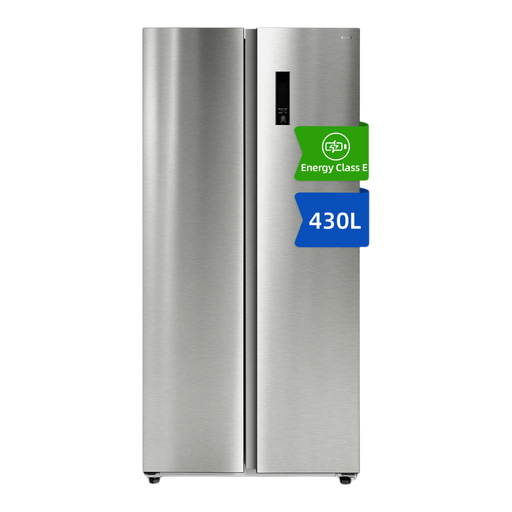
Consider this side-by-side format if you are comparing freezer access with room for family groceries; check whether its internal storage fits your bread and meal containers.
The listed width is 84 cm. The model is described as No Frost, stainless steel and energy class E.
 No image available
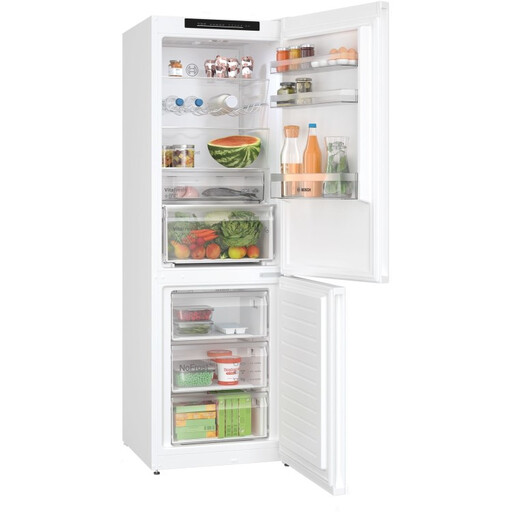
Consider this fridge-led layout if fresh groceries take priority but you still need to freeze bread and meals; check whether its freezer arrangement fits your usual load.
Bosch lists 218 L of chilled volume and 103 L of frozen volume for this model. It is a white, freestanding NoFrost model listed as 186 cm high, 60 cm wide and energy class D.
 No image available
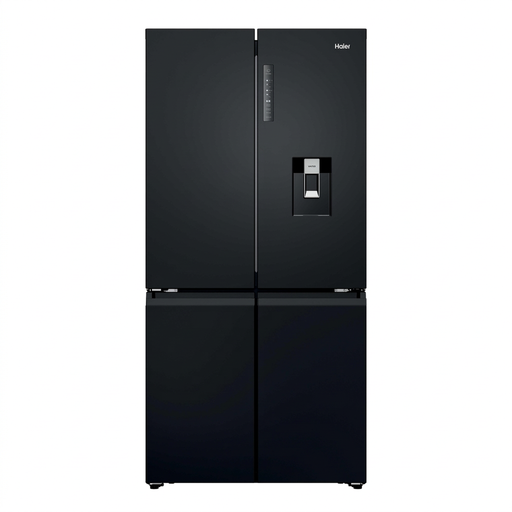
Consider this four-door format if you want to assess a larger appliance for family food storage; check the freezer arrangement against your bread and meal containers.
It is listed as a black, freestanding 649 L model. Check the exact defrost system if avoiding manual defrosting is important to you.
 No image available
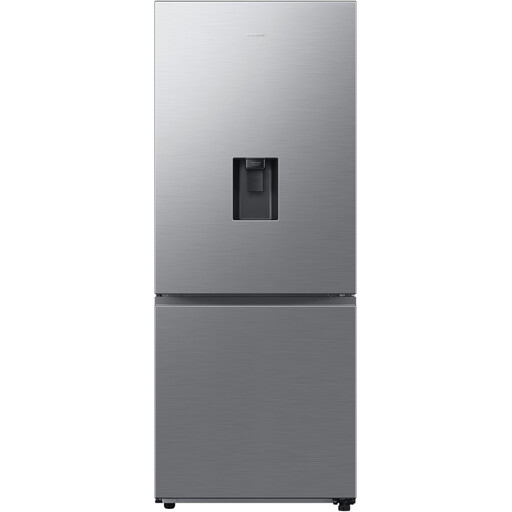
Consider this model if you are comparing space for fresh groceries with regular frozen storage; inspect its freezer layout for bread and meal portions.
The silver model is listed with a 75 cm width and energy class E. Confirm the exact dimensions against both your kitchen space and delivery route.
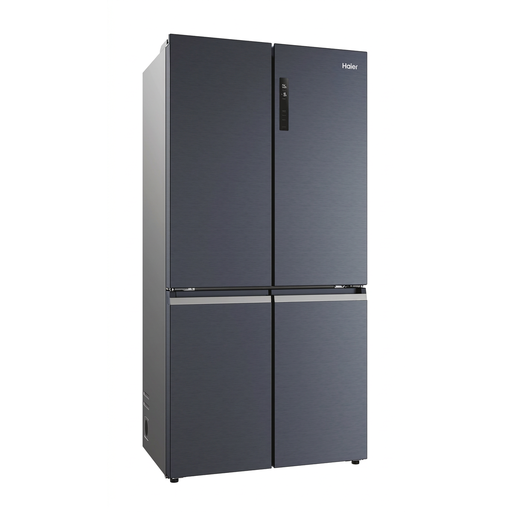 No image available
Consider this freestanding model if you are comparing larger appliances for bread, meals and chilled groceries; inspect the freezer storage arrangement before deciding.
It is listed as a 528 L model in black steel. Check its dimensions against the intended space and the route into your home.
A 50/50 split is a sensible starting point when bread, meal portions and other frozen staples are regular purchases. If fresh ingredients need more room, consider a 60/40 or 70/30 split instead; Bosch and Hotpoint describe these ratios as fridge-to-freezer allocations, so compare the exact compartment volumes before choosing.
Frost-free operation matters if you want to reduce manual freezer defrosting, but it does not tell you whether bread and meal portions will fit. Beko describes Frost Free as automatically defrosting the freezer; check the feature and storage layout on the exact model you are considering.
Only choose one for an outbuilding after checking the exact model’s ambient-temperature conditions for both compartments. Beko and Hotpoint describe selected freezer compartments capable of operating down to -15°C ambient temperature, but caution against using the fridge compartment at low ambient temperatures.
Measure the intended appliance space and the route through doors, corridors and lifts, including room for the packaged appliance where relevant. For an integrated fridge-freezer, compare the cabinet opening with the exact model’s installation requirements as well as its exterior dimensions.
Check the energy label for the exact fridge-freezer and sales destination rather than assuming models in the same range have the same rating. UK guidance from the Department for Energy Security and Net Zero and the Office for Product Safety and Standards says products within the labelling rules must have an accurate printed energy label and display an energy label at the point of sale; requirements can differ between Great Britain and Northern Ireland.