
24/7 Customer Support

Free returns

Same-day & Next-day Delivery

Quality Guaranteed

Unlock Your Welcome Offers: FREE Delivery | Up to 80% OFF | Free 30-day JoyPlus trial
Download the APP
Choosing a new fridge freezer can feel overwhelming. With endless features, sizes and energy labels to decipher, it is easy to make a purchase you later regret. As a Joybuy Product Recommendation Officer, my role is to help you navigate the market and focus on what truly matters for your household. Before you spend your hard-earned money, be aware of these common pitfalls that catch out many UK buyers.
Many people buy a secondary freezer for their garage or outbuilding, only to find it stops working during a cold snap. Most standard freezers are only designed to operate in ambient temperatures above 10°C. When the temperature in your unheated garage drops below this, the compressor can switch off, causing your food to thaw. Don't just take a marketing claim at face value; look for models that explicitly state they are a garage freezer or have "Winter Security," specifying they can function correctly in temperatures as low as -15°C.
A large litre number on a specification sheet looks impressive, but it doesn't always translate to practical storage. The "gross capacity" often quoted includes every nook and cranny, while "net capacity" is the actual space for your food. More importantly, the layout is key. A deep chest freezer might offer huge volume but can become a jumble of items, whereas a tall freezer with multiple drawers allows for much better organisation, even if the total litre count is slightly lower.
Since 2021, the UK has used a simpler A-G energy rating system. An old appliance with an A+ rating is not as efficient as it sounds. Under the new scale, that same appliance might only be an F or G. A cheaper freezer with a poor energy rating can cost you significantly more in electricity bills over its lifespan. Prioritising an energy efficient freezer with a good rating on the new scale (typically C, D or E for this category) is a smarter long-term investment.
To ensure your new appliance meets your needs, focus on these three fundamental parameters.
The physical style of the freezer dictates how it fits into your home and lifestyle.
This is a major factor in the appliance's ongoing maintenance.
If your appliance will be in or near a living area, its noise level is crucial. This is measured in decibels (dB). A quiet fridge freezer is generally considered to be one that operates at 40dB or below—roughly the sound level of a library. Inverter compressors are often quieter and more efficient than traditional ones.
We have analysed the specifications of various models to match them with common UK household needs, helping you bypass the marketing jargon and find a practical fit.

Why This Fits Their Persona: This compact under counter freezer is ideal for smaller kitchens or flats where floor space is at a premium. It provides 85 litres of well-organised storage without a large footprint, perfect for a couple or as a secondary freezer.
Its 85L net capacity is a clear measure of usable space and its quiet 39dB operation is perfect for open-plan living, avoiding the disturbance of a noisy appliance in a small home.
Space-saving design: Fits neatly under a standard worktop. Flexible installation: The reversible door allows it to adapt to any kitchen layout.
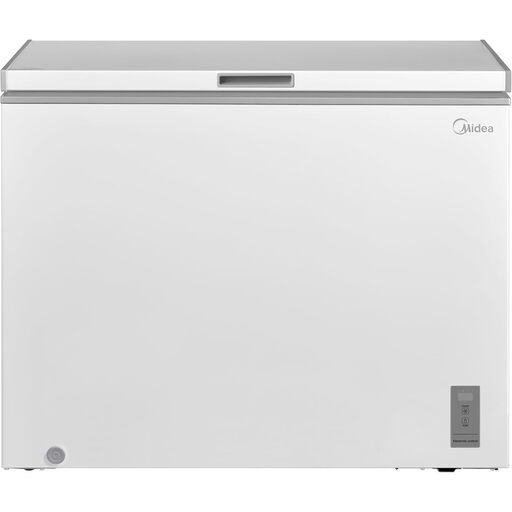
Why This Fits Their Persona: With a generous 249-litre capacity, this chest freezer is built for stocking up. It's an excellent choice for large families who buy groceries in bulk or need to store seasonal produce.
It directly solves the "garage ready" problem. Engineered with Winter Security, it is guaranteed to operate reliably in unheated outbuildings with ambient temperatures down to -18°C.
Garage Safe: Works perfectly in cold UK garages. Convertible: Can be switched to a refrigerator mode, offering great flexibility for parties or seasonal needs.
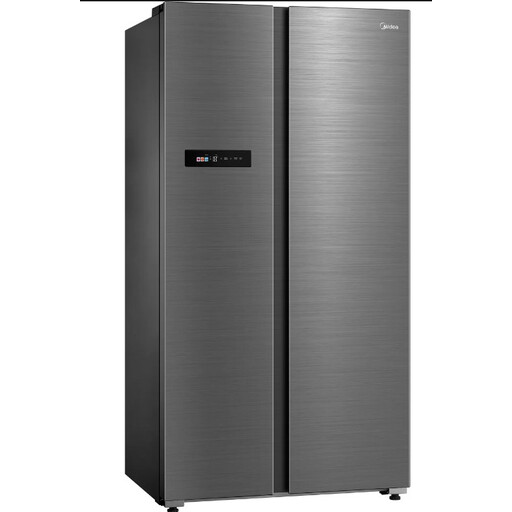
Why This Fits Their Persona: For those designing a modern, high-capacity kitchen, this sleek stainless steel American fridge freezer is a centrepiece. Its colossal 592-litre capacity is perfect for large families and those who love to entertain.
It avoids the hidden running cost trap with an excellent C energy rating, which is highly efficient for such a large appliance. Total No Frost technology ensures all 592L of space remains usable.
High Energy Efficiency: A C rating keeps running costs low. Very Quiet Operation: At just 37dB, it is exceptionally quiet for its size, making it ideal for open-plan kitchens.
We have compiled a complete, real-time list of products that fully satisfy these strict selection criteria and UK safety regulations.
No, most standard freezers are not designed to function correctly in the low temperatures of an unheated UK garage during winter. You must choose a model specifically advertised as a garage freezer or one that is rated to work in low ambient temperatures (e.g., down to -15°C). Failure to do so can result in the freezer shutting down and your food spoiling.
The running cost depends on the freezer's energy efficiency rating, its size and your electricity tariff. Look for the annual energy consumption figure (in kWh/year) on the energy label. You can multiply this number by the price you pay per kWh to get an estimated annual cost. Choosing a model with a better energy rating (closer to 'A') will result in lower running costs.
A manual defrost freezer requires you to turn it off periodically to melt the ice that builds up inside. A frost free freezer uses a fan to circulate air, preventing ice from forming. While frost-free models offer greater convenience, manual defrost units are often simpler, can be quieter and may offer more consistent temperatures as there is no defrost cycle.