Regular stock batch cook
If you make several portions at once, look for freezer drawers or shelves that accommodate your containers while leaving enough chilled space for daily ingredients.


Choose a fridge-freezer by the usable freezer layout and the size of your stock portions, rather than its total capacity alone. Check that the appliance fits your kitchen while leaving enough fridge space for everyday food; frost-free operation is worth considering if you want to avoid manual defrosting. Cool and portion stock before freezing it, and aim to keep the freezer around −18°C, in line with UK government food-safety guidance.
If you make several portions at once, look for freezer drawers or shelves that accommodate your containers while leaving enough chilled space for daily ingredients.
If your kitchen has a narrow opening or an existing integrated-appliance space, check external dimensions, cabinet requirements and whether the doors can open far enough to use the drawers.
If you want to avoid manual defrosting, consider a frost-free model, but compare its freezer layout and model-specific energy information too.
Start with the freezer compartment and your usual portion containers. Then check how you will cool the stock, whether the appliance fits, and how its upkeep and electricity use compare.
| Concern | What to check | Who this matters to |
|---|---|---|
| Usable freezer space | Compare frozen-compartment litres separately from total capacity, then check whether the drawers or shelves take your usual shallow containers. | If I freeze stock regularly, I need room for several labelled portions without giving up all my fresh-food space; around 36% of consumers put usable freezer space first. |
| Temperature and cooling | Check the temperature controls and the model instructions. Cool stock and divide it into smaller portions before freezing; UK government guidance says a freezer should be around −18°C. | When I add a batch of stock, I want to cool it properly before storage and keep frozen food at an appropriate temperature. Around 29% of consumers make this their primary concern. |
| Kitchen fit | Measure the opening and route into the home, and allow for door and drawer clearance. For an integrated model, check the required cabinet and hinge arrangement. | If the appliance has to fit an existing space, capacity is useful only if I can install and open it properly; for around 21% of consumers, physical fit comes first. |
| Defrosting and electricity use | Confirm whether the exact model is frost-free, then compare its energy label and product information sheet. | If I use the freezer throughout the year, I would rather know what upkeep it needs and how much electricity the model is stated to use; around 14% of consumers prioritise these checks. |
A large combined figure can still leave too little freezer space, or drawers that do not suit your stock containers.
Compare the frozen-compartment capacity and inspect the drawer or shelf layout against the portions you normally make.
A fridge-freezer does not replace cooling stock before it goes into frozen storage. UK government guidance recommends dividing warm food into smaller portions to help it cool quickly.
Cool and portion the stock before freezing it; do not choose an appliance on the assumption that a hot stockpot can go straight in.
Ambient-temperature capability depends on the exact model and compartment. Beko says the freezer compartment of selected FreezerGuard models can operate at ambient temperatures down to −15°C, but does not recommend using their fridge compartment in low ambient temperatures.
For a garage or outbuilding, read the specific model’s installation and ambient-temperature guidance before buying.
Frost-free and other feature labels do not provide a like-for-like measure of electricity consumption.
Compare the exact models’ energy labels and product information sheets alongside their capacities and dimensions.
Bosch offers freestanding and integrated fridge-freezers with different fridge-to-freezer storage splits.
Beko offers freestanding and integrated fridge-freezers, including frost-free products and selected FreezerGuard models.
Samsung’s RB34C652DWW is a 341 L fridge-freezer for shoppers comparing stated total capacity with usable storage.
These fridge-freezers include freestanding choices and an integrated model. Match the installation format to your kitchen, then check the freezer compartment against your usual stock portions.
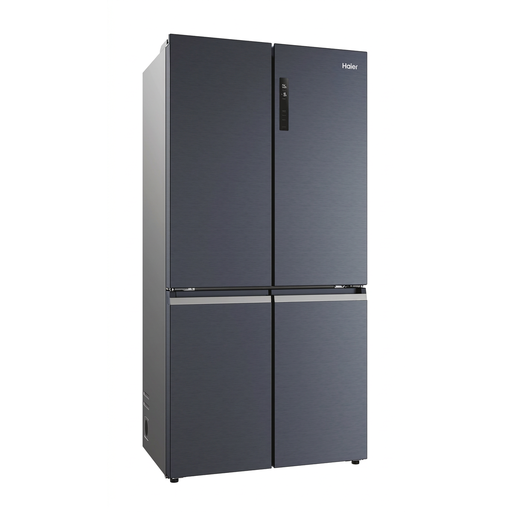 No image available
Consider this freestanding model if you have room for a larger appliance and regularly freeze stock portions.
The product name states 528 L total capacity. Check the freezer drawer layout and your available door clearance before choosing it.
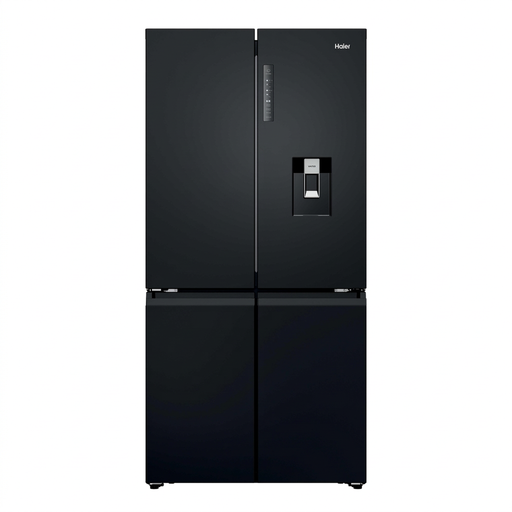 No image available
This freestanding four-door model is worth checking if you make sizeable batches and have space for its installation.
The product name states 649 L total capacity. Confirm the internal freezer dimensions, frost-free status and model-specific energy information if those factors will decide your purchase.
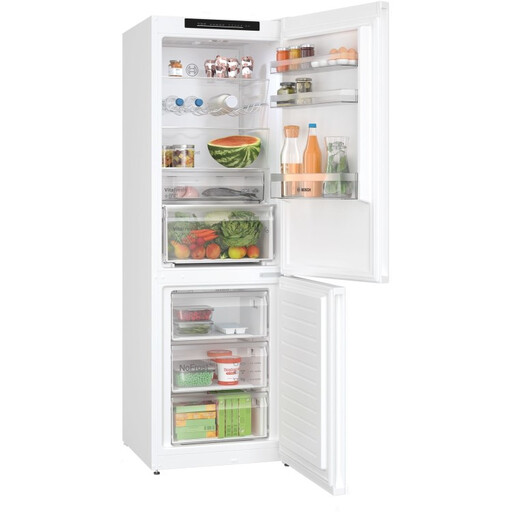 No image available
Consider this freestanding model if a 60/40 fridge-to-freezer split suits your groceries and you want NoFrost operation.
The product name states a height of 186 cm, width of 60 cm and energy class D. Check whether its freezer drawers fit your stock containers.
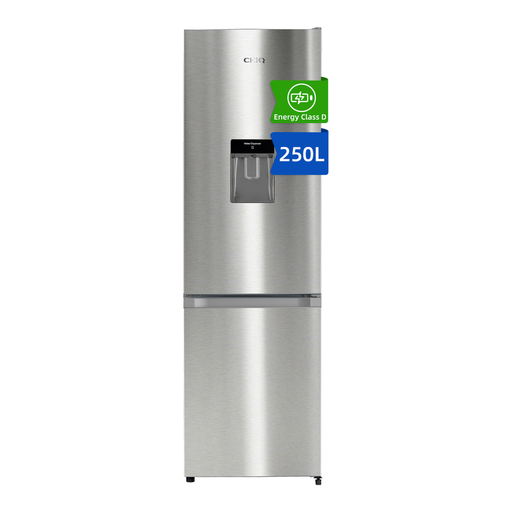 No image available
If your kitchen opening is narrow, this freestanding model’s stated 54 cm width is a useful starting point for measuring fit.
The product name also states a height of 181 cm, a water dispenser and energy class D. Check that the freezer drawers accommodate your usual portions.
 No image available
Consider this model if your kitchen has an integrated-appliance space and a 50/50 storage split suits your chilled food and stock portions.
The product name specifies a fixed hinge and energy class E. Check the required cabinet dimensions, hinge compatibility and freezer drawer fit.
Cool it before freezing rather than putting a large hot container straight in. UK government guidance recommends dividing warm food into smaller portions to help it cool quickly before refrigeration or freezing.
Divide it into smaller, shallow portions instead of keeping it in one large pot. UK government guidance recommends smaller portions for quicker cooling; choose containers that also fit the freezer drawers or shelves you plan to use.
UK government food-safety guidance says the fridge should be between 0 and 5°C and the freezer should be around −18°C. Check temperatures with a suitable thermometer and use the appliance instructions to adjust its controls.
It can be worthwhile if avoiding manual defrosting matters to you. Beko describes its frost-free technology as preventing ice build-up, but you should still check the exact model’s freezer layout and energy information.
Only choose a model whose installation guidance covers the conditions in that location. Beko says the freezer compartment of selected FreezerGuard models can operate at ambient temperatures down to −15°C, but does not recommend using the fridge compartment in low ambient temperatures.