Fridge-first family-meal planners
If fresh yoghurt, dairy, vegetables and prepared ingredients fill your weekly shop, the chilled compartment and its shelf arrangement matter more to you than total appliance capacity alone.


Start with the space your family actually uses: if fresh yoghurt, dairy and meal ingredients take priority, compare fridge-heavy layouts with a 70/30 split; if you regularly freeze cooked portions too, compare 50/50 models. Check the separate compartment volumes rather than relying on the split alone, then confirm kitchen fit, fridge temperature controls and the energy-label figures for the exact appliance.
If fresh yoghurt, dairy, vegetables and prepared ingredients fill your weekly shop, the chilled compartment and its shelf arrangement matter more to you than total appliance capacity alone.
If you freeze meal portions and ingredients regularly, you need to assess freezer space alongside the room available for fresh food. A fridge-heavy layout may not match how you store meals.
If the new appliance must fit existing cabinetry, check the exact aperture, hinge arrangement, ventilation requirements and door clearance before comparing storage features.
For a yoghurt-and-family-meals shop, settle the chilled-versus-frozen space you need before comparing features. A freestanding or integrated appliance must then fit its intended position and provide practical cold storage for the foods you buy.
| Concern | What to check | Who this matters to |
|---|---|---|
| Chilled capacity and split | Compare separate chilled and frozen volumes in litres. Check whether a 70/30 or 50/50 layout suits the food you normally store. | If yoghurt pots, dairy and meal containers crowd the fridge while the freezer sees lighter use, I want more accessible chilled space. Around 36% of consumers put that fridge-first need ahead of the other concerns here. |
| Cold storage | Check the fridge temperature controls and how you will confirm a setting of 5°C or below. Follow each yoghurt pack’s storage instructions and use-by date. | When I store chilled ingredients for family meals, I need to keep them at the right temperature rather than rely on a freshness feature. For around 29% of consumers, dependable cold storage is the primary concern. |
| Kitchen fit and access | Measure height, width and depth; check door swing, ventilation and the exact fitting requirements, including hinges for an integrated model. | If I am replacing an appliance in a tight kitchen, being able to install it and open its drawers fully comes before extra features. Fit is the leading concern for around 21% of consumers. |
| Everyday ownership | Compare annual energy consumption in kWh, noise in dB(A) and the exact model’s freezer-defrost requirements. | With the fridge-freezer running every day, I care most about its electricity information, kitchen noise and upkeep. Around 14% of consumers make those ownership considerations their first priority. |
A large appliance can still devote more space to freezing than a fridge-first household needs. The total figure does not tell you how much room is available for yoghurt, dairy and fresh ingredients.
Compare the separate chilled and frozen compartment figures on the product information, then consider how the shelves accommodate the containers you use.
An appliance may fit between cabinets yet leave too little room to open its doors, pull out drawers or provide the ventilation specified for that model.
Measure the full installation space and check nearby sockets, pipework and obstacles against the exact model’s fitting instructions. General measurement guidance also calls attention to space behind the appliance for sockets or pipework.
Airflow and dedicated storage zones are model-specific features, not permission to keep yoghurt beyond the instructions on its pack.
Follow the pack’s storage directions and use-by date. GOV.UK food-hygiene guidance advises setting the fridge to 5°C or below to help keep chilled food cold enough.
The letter alone does not show how much electricity a particular appliance is labelled to use over a year, or whether its size and noise suit your kitchen.
Compare annual kWh, compartment volumes and noise figures across models of a similar type and size. The UK Government’s household refrigeration label information identifies annual energy consumption in kWh per year.
Use brand features as prompts for checking individual models, not as substitutes for compartment volumes, fitting dimensions or yoghurt storage instructions.
Relevant when comparing integrated and freestanding formats with clearly specified compartment volumes and installation requirements.
Relevant to shoppers comparing higher-capacity freestanding appliances and model-specific airflow features.
Relevant when comparing standard-width appliances with wider formats for a larger family shop.
Relevant if a model’s dedicated fresh-food compartments are part of your storage decision.
These freestanding models offer different stated total capacities and widths for comparing a family-meal storage setup. Check each model’s actual chilled and frozen compartment volumes, temperature controls and installation instructions before choosing; a total-capacity figure alone cannot establish the space available for yoghurt.
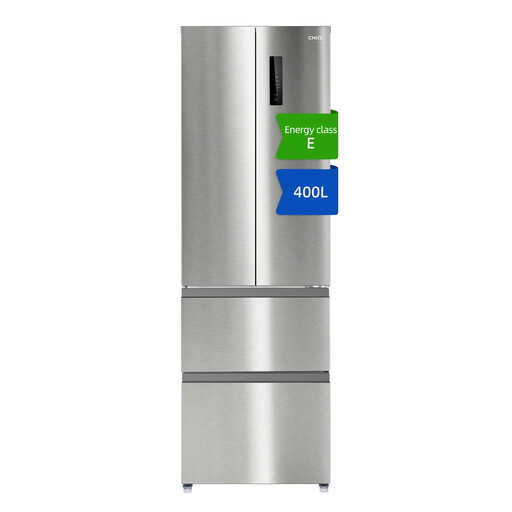 Image unavailable
Consider this model if a 60 cm-wide French-door layout could fit your kitchen; check its separate chilled and frozen volumes against your family’s shopping pattern.
The title specifies 400 L total capacity, Total No Frost, a stainless-steel finish and an E energy rating. Confirm the fridge temperature settings, required clearances and door opening before buying.
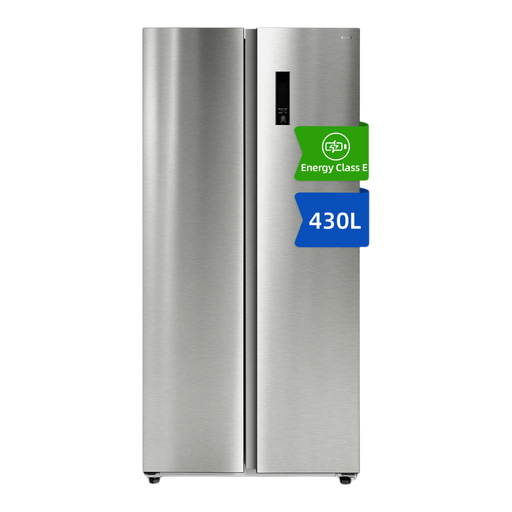 Image unavailable
For a family considering a wider, side-by-side format, compare its chilled and frozen compartments with the space you need for fresh meals and frozen portions.
The title specifies 430 L total capacity, No Frost, a stainless-steel finish and an E energy rating. Check that the 84 cm width, full door swing and ventilation requirements fit your kitchen, and confirm its fridge temperature controls.
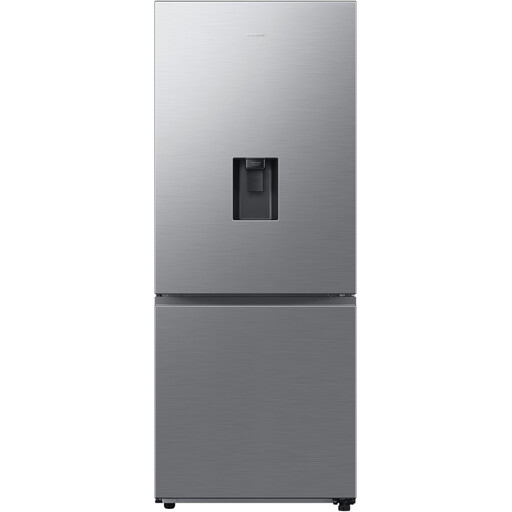 Image unavailable
If you want to compare a wider freestanding appliance for chilled ingredients and freezer storage, assess the separate compartment volumes rather than its 505 L total alone.
The title specifies a 75 cm width, silver finish and E energy rating. Check the available depth, door clearance, ventilation and fridge temperature controls for this exact model.
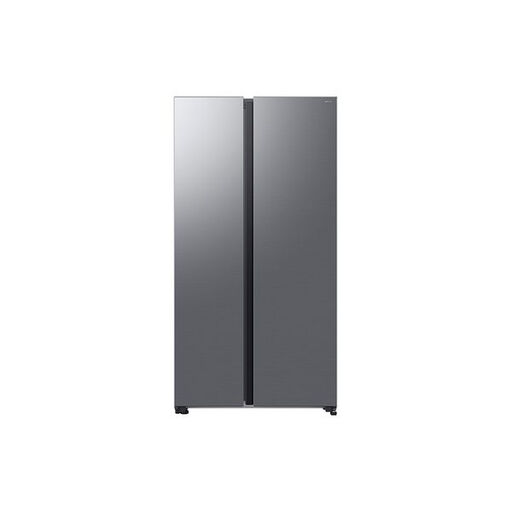 Image unavailable
This wider format is worth comparing if your family needs substantial chilled and frozen storage and has room for an American-style appliance.
The title specifies a silver finish and C energy rating. Compare the actual compartment volumes and annual kWh figure, then check the model’s width, depth, door swing, ventilation and fridge temperature controls.
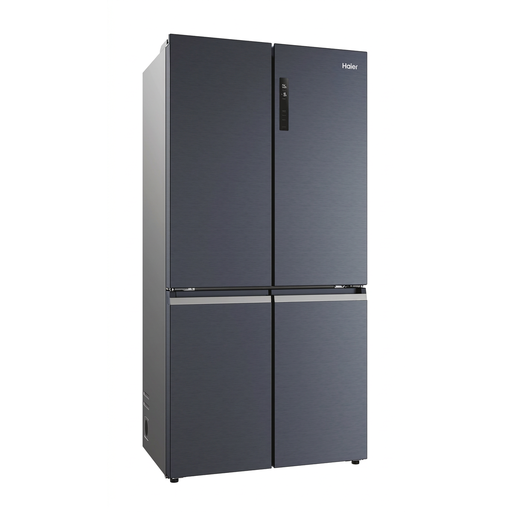 Image unavailable
Consider this freestanding model if a larger appliance could accommodate your fresh-food containers as well as frozen meals; compare its separate compartment volumes before deciding.
The title specifies 528 L total capacity and a black-steel finish. Check kitchen fit, fridge temperature controls and freezer-defrost instructions for the exact model.
Set the fridge to 5°C or below, in line with GOV.UK food-hygiene guidance, and use a fridge thermometer to check it where possible. Follow the yoghurt pack’s storage instructions and use-by date as well.
A 70/30 layout is the more relevant starting point when yoghurt, dairy and fresh ingredients dominate; compare 50/50 models if you also freeze substantial amounts of cooked food or ingredients. In either case, check the stated litres for both compartments, because the split does not tell you their exact volumes.
Measure the available height, width and depth, then allow for the full door swing, access to drawers, ventilation and any sockets or pipework. If you are replacing an integrated model, check the cabinet aperture and hinge requirements against the new appliance’s installation instructions.
Compare the efficiency class alongside annual energy consumption in kWh, rather than using the letter on its own. The UK Government’s household refrigeration label information identifies annual kWh consumption; consider it together with compartment volumes and noise when comparing similarly sized models.
Follow the exact model’s installation and maintenance instructions, including its ventilation and defrost requirements. Electrical Safety First advises installing a fridge-freezer close to a wall socket rather than using an extension lead.