Shared-kitchen fresh-food organisers
If several people store yoghurt, milk, leftovers and ready-to-eat food, clearly allocated, visible fridge space can make it easier to find items without crowding the shelves.


Choose enough accessible fridge space for everyone’s yoghurt and other chilled food before deciding how much freezer space you need. GOV.UK’s home guidance for England, Northern Ireland and Wales says a fridge should be kept between 0 and 5°C, so check the temperature with a fridge thermometer rather than relying on the control setting alone. A fridge-led layout suits predominantly chilled shopping, while a 50/50 split can suit more balanced use; either choice still has to fit the kitchen and access route.
If several people store yoghurt, milk, leftovers and ready-to-eat food, clearly allocated, visible fridge space can make it easier to find items without crowding the shelves.
If the fridge is opened frequently or holds food with use-by dates, prioritise a temperature you can check. GOV.UK’s home guidance for England, Northern Ireland and Wales gives a fridge range of 0 to 5°C.
When replacing an appliance in a confined kitchen, the access route, height, depth and door swing can matter as much as capacity. An integrated replacement also needs to match its cabinet installation.
Start with usable chilled space and a checkable fridge temperature, then narrow the choice by installation fit and day-to-day maintenance. For home food storage in England, Northern Ireland and Wales, GOV.UK advises keeping the fridge between 0 and 5°C.
| Concern | What to check | Who this matters to |
|---|---|---|
| Chilled storage and temperature | Check the fridge controls and make room for a fridge thermometer; confirm the temperature after installation. | If I store yoghurt and other chilled food alongside housemates’ groceries, I need to know the fridge is staying within the recommended range. Around 33% of consumers put checkable chilled storage first. |
| Organised fridge space | Compare fridge litres separately from freezer litres, then inspect shelf and door-storage layouts. | When several people share shelves, I need room to keep my chilled food visible rather than squeezed behind someone else’s. Around 27% of consumers make organised fridge space their primary concern. |
| Fit and door access | Measure the appliance space, delivery route and open-door clearance; check cabinet requirements for integrated models. | In a narrow kitchen, I need an appliance that can get through the doorway and open where it will stand. Around 20% of consumers prioritise fit and access. |
| Maintenance, noise and energy | Check the exact model’s frost-free features, stated noise level and current energy information. | If upkeep falls to several housemates or the kitchen adjoins a living area, I want to understand the defrosting and noise implications before choosing. Around 20% of consumers put maintenance and operating information first. |
A selected setting does not show the temperature inside the fridge. GOV.UK’s home guidance for England, Northern Ireland and Wales gives a range of 0 to 5°C and recommends checking with a fridge thermometer.
Check the thermometer after installation and when changing the setting, and agree that everyone will close the door promptly.
A generous combined capacity can still leave too little accessible fridge space if the household stores much more fresh food than frozen food.
Compare the separate fridge and freezer capacities, then look at whether shelves and door storage can accommodate the items housemates regularly keep.
A fridge-freezer may fit its intended position yet be difficult to bring through an entrance or open fully once installed.
Measure the access route and door clearance as well as the appliance space. For an integrated model, check the housing, ventilation and cabinet-door requirements in its installation instructions.
Beko says the freezer compartment of its CNG4692 can operate down to −15°C ambient temperature, but does not recommend using that model’s fridge compartment at low ambient temperatures.
If the appliance will stand in an unheated space, check the exact model’s conditions for each compartment; a freezer claim does not establish that its fridge is suitable for yoghurt there.
These examples illustrate layouts and checks for particular product lines, not a judgement that every model from a brand has the same features.
Bosch offers freestanding and built-in fridge-freezers in the UK. Its KGN392LEBG is a fridge-led freestanding example with a manufacturer-stated 279 L chilled compartment and 89 L freezer compartment.
Hotpoint’s UK range includes freestanding and integrated 50/50 fridge-freezers. The HPKH 1261 XBR4UK is a freestanding no-frost example; the HPKH 1262B4 UK is integrated.
Beko offers freestanding fridge-freezers including the CNG4692, for which it states reversible doors and NoFrost features.
Liebherr’s CNgbc 5723 Plus NoFrost is a larger freestanding example with a manufacturer-stated 371 L total volume and 35 dB noise level.
These fridge-freezers cover different stated capacities and formats for shared chilled-food storage. Check each model’s usable fridge space, full installation dimensions and temperature controls against the way your household shops and shares shelves.
 No image available
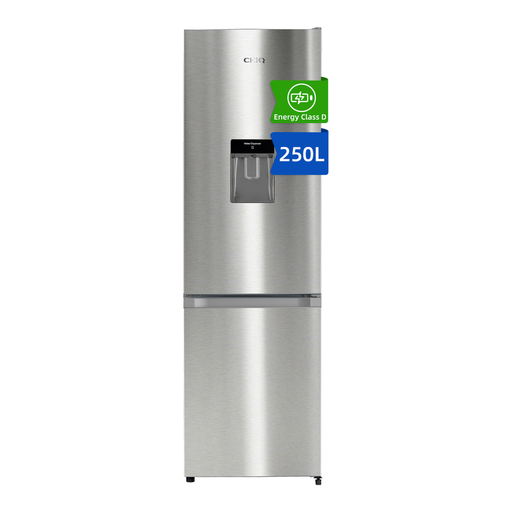
Consider this freestanding model if a narrower appliance would make shared-kitchen placement easier.
The product title states 54 cm width, 181 cm height, Total No Frost and energy class D. Check the full installation clearance and confirm the fridge temperature with a thermometer after setup.
 No image available
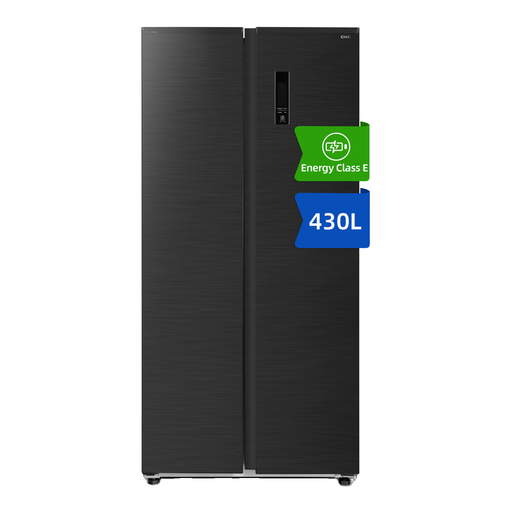
Consider this format if housemates want to assess a larger appliance for shared groceries and have space for a wide installation.
The product title states an 84 cm width, No Frost operation and energy class E. Measure the delivery route and door clearance, then check the separate fridge capacity and temperature controls for the exact model.
 No image available
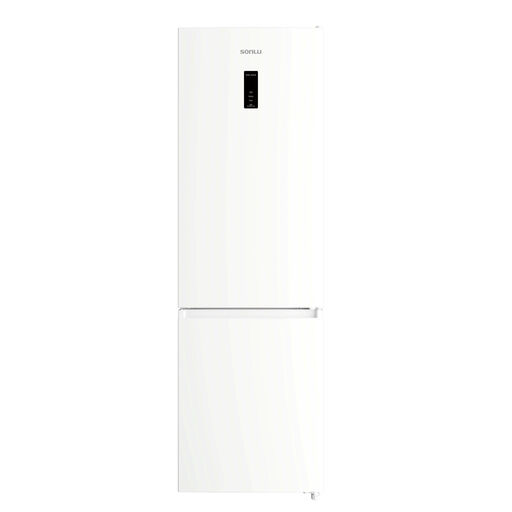
If chilled food takes priority but freezer space still matters, this model’s separately stated compartment capacities make the split straightforward to assess.
The product name specifies 252 L for the fridge, 103 L for the freezer, a 60 cm width, a reversible door and energy class E. Check its full height, depth and door clearance before ordering.
 No image available
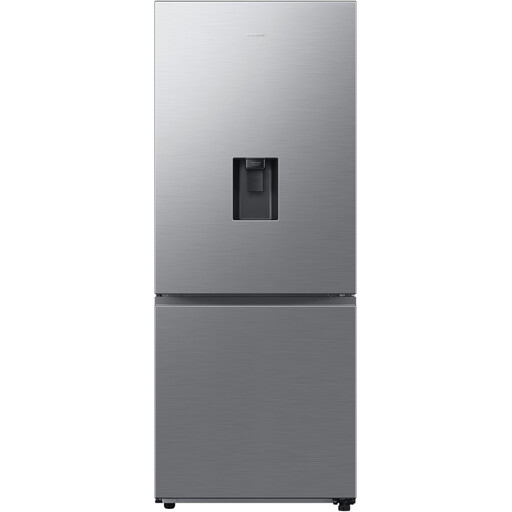
Consider this larger-capacity option if several residents need chilled storage, but compare its fridge compartment and shelf layout rather than relying on total volume.
The product title states energy class E. Check the exact external dimensions, access route and fridge temperature controls before choosing it for yoghurt storage.
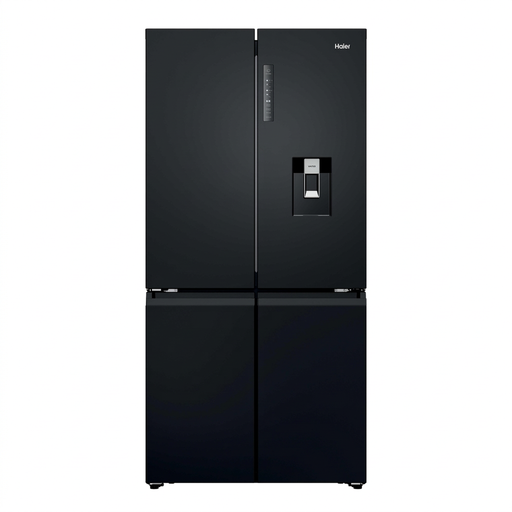 No image available
This freestanding four-door format is worth assessing where several residents share substantial grocery storage and the kitchen can accommodate it.
Compare the fridge and freezer capacities separately, and measure the full installation space and delivery route. Check the exact model’s fridge controls and verify the temperature with a thermometer after installation.
GOV.UK’s home guidance for England, Northern Ireland and Wales says to keep the fridge between 0 and 5°C. Use a fridge thermometer to check the actual temperature, and follow the yoghurt pack’s storage instructions.
No dedicated drawer is necessary for the choice: prioritise the fridge temperature and the storage instructions on the pack. A drawer may help organise shared food, but do not assume it maintains a different temperature unless the exact model’s documentation says so.
A 50/50 layout can suit housemates who need broadly similar fridge and freezer space. If yoghurt, milk and other fresh groceries dominate, compare fridge-led models by their separate chilled-compartment capacity and usable shelf layout instead of choosing by total litres.
Check the housing aperture, ventilation requirements, cabinet-door assembly and access route against the exact model’s installation instructions. An integrated fridge-freezer is not automatically compatible with an existing cabinet simply because both are described as integrated.