People who freeze bread rolls regularly
If several people use the freezer, accessible drawers make it easier to keep portions separate and find a bag without moving everyone else’s food.


A 50/50 fridge-freezer is a sensible starting point if bread rolls and other frozen food need regular, accessible drawer space; a 60/40 or 70/30 layout may suit a kitchen that stores much more fresh food. Compare the exact freezer volume and drawer layout before choosing, then check frost-free operation, dimensions, door clearance, noise and energy information for the model you intend to buy.
If several people use the freezer, accessible drawers make it easier to keep portions separate and find a bag without moving everyone else’s food.
Where responsibility for maintenance is shared, frost-free operation can remove manual defrosting from the routine. Check whether the feature applies to the freezer or both compartments.
A narrow gap, a door opening onto a walkway or a kitchen close to living space makes the appliance’s full dimensions, door swing and stated noise worth checking.
Start with the household’s balance of frozen and fresh food: Bosch UK describes 50/50, 60/40 and 70/30 as common layouts, but the split alone cannot tell you how bread-roll bags will fit. If considering an integrated appliance, check the cabinet and hinge requirements separately from that storage decision.
| Concern | What to check | Who this matters to |
|---|---|---|
| Accessible freezer space | Compare net freezer volume in litres and the number and layout of drawers, not just the 50/50, 60/40 or 70/30 label. | If bread rolls share a freezer with other food, I need room to keep the bags separate and easy to reach; around 31% of consumers would put accessible frozen storage first. |
| Low-maintenance shared use | Check the exact model’s Frost Free or No Frost specification and which compartments it covers. | When several people use the appliance, I would rather not rely on someone volunteering to defrost it; roughly 31% of consumers would make lower-maintenance freezing their main concern. |
| Fit and noise | Measure the installation space and door clearance; check the declared noise level in dB(A). Integrated models also need the correct cabinet aperture and hinge. | If the kitchen is narrow or near a living area, I need a door that opens without obstructing people and a noise level I can assess; about 23% of consumers would prioritise fit and disturbance. |
| Energy information | Use the exact model’s energy label alongside its stated capacity when comparing appliances. | Because the appliance runs continuously, I want to compare its stated energy information without losing sight of the storage I need; around 15% of consumers would put that comparison first. |
The split describes a general layout, while net frozen volume and drawer arrangements vary by model. A balanced split is little help if bread-roll bags are difficult to store or retrieve.
Compare the stated frozen-compartment litres and the drawer arrangement before settling on a layout.
An integrated appliance needs a compatible cabinet and hinge system. For example, Bosch UK lists its KBN96NSE1G built-in model at 193.5 × 69.1 × 54.8 cm with a sliding hinge.
Check the exact model’s installation dimensions, hinge type and ventilation instructions against the kitchen cabinet before ordering.
A mismatch may mean installation work or that the appliance cannot be fitted as planned.
Cold-room claims depend on the model and compartment. Hotpoint limits its stated −15°C freezer feature to certain models and does not recommend using the fridge compartment at low ambient temperatures.
If placement outside the kitchen is being considered, check the exact appliance’s permitted operating conditions rather than relying on another model’s feature.
Replacing a fridge-freezer also means arranging what happens to the old electrical appliance.
Check the retailer’s removal arrangements and your local council’s collection or recycling options in advance.
These model examples offer useful configurations to compare, rather than a reason to assume every appliance from a brand has the same features.
Relevant if a narrower freestanding appliance and separate freezer drawers are priorities.
Offers freestanding and integrated examples for comparing declared capacity, noise and installation requirements.
Relevant when comparing frost-free layouts with different fresh-to-frozen storage splits.
These freestanding choices offer different appliance sizes and freezing arrangements for a shared kitchen. Check each model’s actual freezer capacity and internal layout against the space needed for bread rolls and everyone else’s food.
 No image available
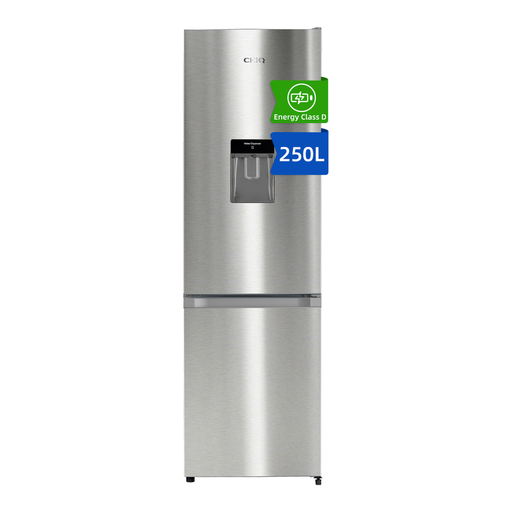
Consider this freestanding model if you want a narrower appliance with Total No Frost for shared use.
The listed width is 54 cm and height is 181 cm; the product title gives a 250 L total capacity and energy class D. Check the freezer’s own capacity and drawer layout against the household’s frozen food, as well as the space needed to open the door.
 No image available
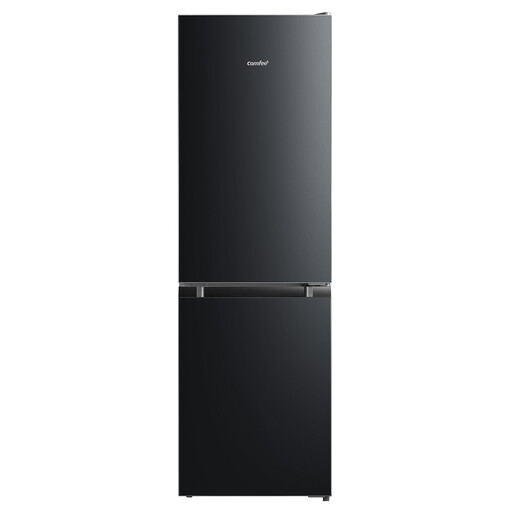
The 70/30 layout is worth considering if shared fresh-food storage takes priority over larger frozen batches.
The title lists a 150 cm height, 39 dB noise level, reversible door and energy class E. Low Frost is not the same as eliminating manual defrosting; check both the freezer capacity and the upkeep you are prepared to share.
 No image available
This three-door format may appeal where separating access to stored food matters in a shared kitchen.
The title lists a 54 cm width, 282 L total capacity and energy class E. Check the net freezer volume and whether its freezer-drawer arrangement holds the household’s bread-roll bags conveniently.
 No image available
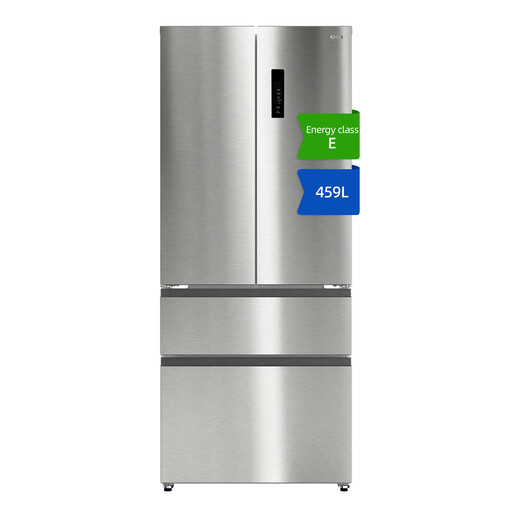
Consider this larger four-door format only if the shared kitchen has room for the appliance and its doors.
The title specifies Total No Frost, a 459 L total capacity and energy class E. Measure the intended position carefully and check how the freezer compartments are arranged before deciding whether bread rolls will be easy to access.
 No image available
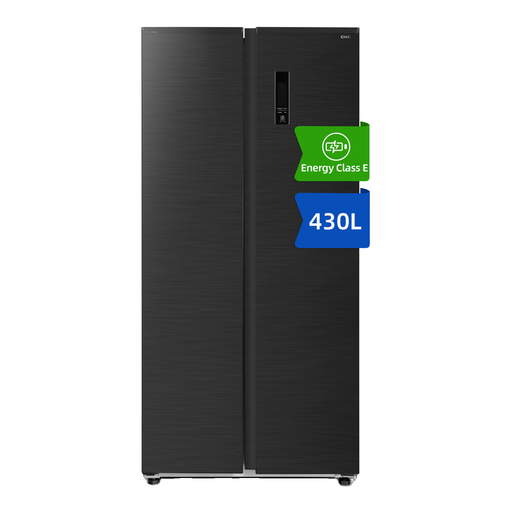
A side-by-side layout is another option if several people need access to frozen food and the kitchen can accommodate a wider unit.
The title lists an 84 cm width, 430 L total capacity and energy class E. Check door-opening clearance and the freezer’s internal arrangement to see whether separate bread-roll bags will be practical to store.
No: a 50/50 layout is a useful starting point when frozen food regularly takes up a substantial share of household storage, while 60/40 or 70/30 may suit a kitchen dominated by fresh groceries. Compare the exact freezer volume and drawer layout before deciding whether bags of rolls will fit alongside other food.
It can remove a maintenance task that might otherwise be left to one person. Hotpoint UK describes frost-free systems as preventing ice build-up, but check which compartments the feature covers on the exact model; it says nothing by itself about freezer space or energy use.
Keep rolls in sealed, clearly labelled bags or containers and agree where they belong so users can identify their own food. Follow any storage instructions on the bread’s packaging; the Food Standards Agency refers to −18°C as the recommended freezer temperature in its review of consumer freezing.
Sharing an ordinary domestic kitchen does not by itself settle what type of appliance to choose. If the kitchen is used for a food business, the Food Standards Agency’s MyHACCP guidance calls for adequate refrigerating and freezing facilities and, where necessary, food-temperature monitoring appropriate to the operation; check the business’s specific requirements before relying on a domestic appliance.
Compare the energy label for the exact fridge-freezer alongside its capacity and other features you need. GOV.UK states that products within the scope of its energy-labelling guidance must be supplied with an accurate printed energy label.