
24/7 Customer Support

Free returns

Same-day & Next-day Delivery

Quality Guaranteed

Unlock Your Welcome Offers: FREE Delivery | Up to 80% OFF | Free 30-day JoyPlus trial
Download the APP
Buying a fridge freezer is rarely as simple as choosing the finish you like. A model may fit the advertised width but fail at the doorway, offer impressive total capacity but little usable freezer space, or include features that add cost without matching your routine.
This guide explains the practical specifications to check before buying, followed by product recommendations for different UK household needs.
A narrow fridge freezer can still be unsuitable if there is not enough room for ventilation, door opening or delivery access. Measure:
A 50cm fridge freezer may fit a compact kitchen, while a 54cm fridge freezer can provide significantly more capacity without reaching the width of many standard appliances. However, depth and height matter just as much as width.
A frost-free fridge freezer, also described as a No Frost fridge freezer, circulates cold air to reduce frost formation and normally avoids manual freezer defrosting. Low Frost models reduce ice build-up compared with conventional static designs but may still need occasional defrosting.
If you want to minimise maintenance, check that the specification says Total No Frost rather than simply “low maintenance” or “advanced cooling”.
Total litres do not reveal how easily food can be organised. Consider the split between fridge and freezer compartments, drawer layout, shelf adjustability and door storage.
For example, a household that batch-cooks may prefer several freezer drawers, while a couple may value more fridge space for fresh ingredients. An American fridge freezer offers substantial capacity but requires considerably more kitchen space than a slim fridge freezer.
A narrow fridge freezer is useful in flats, galley kitchens and utility rooms, but compact dimensions usually mean less internal storage. The Esatto ES50UCFF is 47.4cm wide, 84.5cm high and offers 86 litres, making it suitable for offices, student accommodation or occasional-use spaces.
A 50cm fridge freezer such as the Midea MDRB241FGE01 provides 173 litres, while several 54cm models offer around 250–282 litres. Always compare the separate fridge and freezer capacities rather than relying only on the combined figure.
UK appliances use the A–G energy label. A higher rating generally indicates lower tested energy consumption, but actual costs depend on room temperature, usage, installation and temperature settings.
Look for the annual kWh figure on the product information sheet where available. This gives a more useful comparison than the rating letter alone. For instance, some D-rated models may use less energy than larger E-rated appliances, but their smaller capacity and different cooling systems also affect the comparison.
Mechanical controls are straightforward and can suit a basic appliance. Electronic controls may offer more precise adjustment, holiday mode, fast cooling or fast freezing.
For households that dislike manual maintenance, No Frost is worth considering. Low Frost can be a practical compromise where budget, size or storage layout is more important than fully automatic defrosting.
Also check the noise rating if the appliance will be installed in an open-plan kitchen or studio flat. Models listed at approximately 35–41dB may be more appropriate for living areas, although perceived noise can vary by installation.
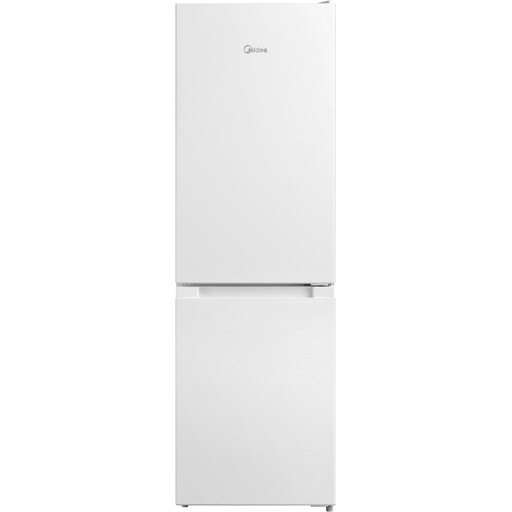
Why This Fits Their Persona: Its 50cm width suits smaller kitchens, rented homes and first flats, while the 173-litre capacity covers everyday chilled and frozen storage.
The listed dimensions and separate 121L fridge and 52L freezer capacities make the storage trade-off clear before purchase.
E energy rating, reversible door, LED lighting and transparent freezer drawers.
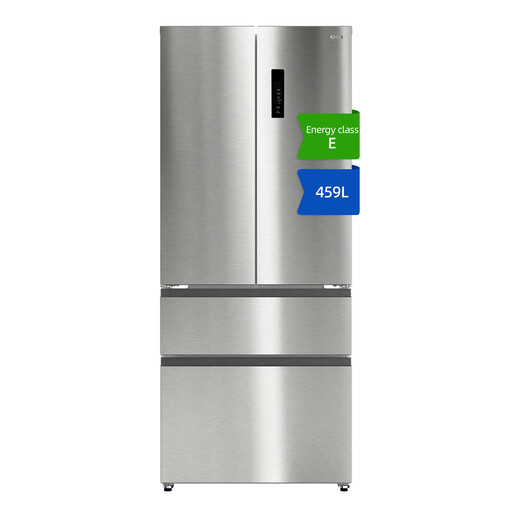
Why This Fits Their Persona: The French door layout, 459-litre capacity and 60cm depth are suited to homeowners wanting a feature-rich appliance with a built-in-style appearance.
Its stated 790mm width and 1920mm height encourage proper space checking before choosing a large-format design.
Total No Frost, 37dB listed noise level and a Care+ Space compartment with three temperature modes.
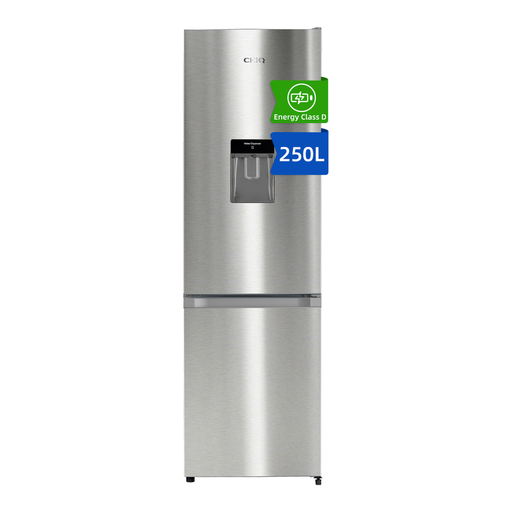
Why This Fits Their Persona: It suits medium-sized households wanting chilled water without plumbing, while retaining a relatively slim 54cm footprint.
The dispenser uses a refillable tank, so buyers can distinguish it from plumbed models and plan for manual refilling.
250-litre capacity, Total No Frost, D energy rating and three transparent freezer drawers.
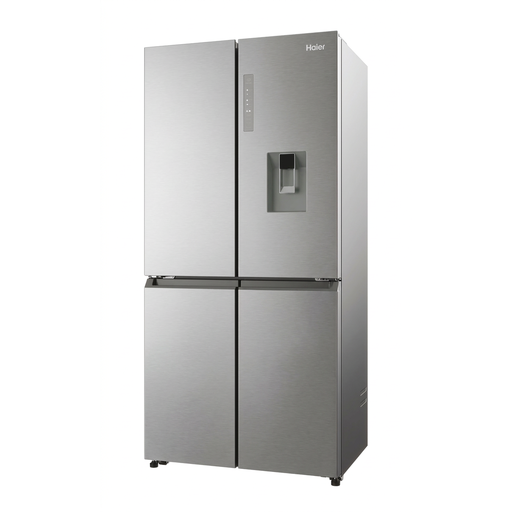
Why This Fits Their Persona: Its four-door layout and 463-litre capacity provide organised storage for family shopping, batch cooking and larger chilled items.
The 83.3cm width and 65cm depth are stated clearly, helping households check that an American-style design will not overwhelm the kitchen.
Total No Frost, non-plumbed water dispenser, four freezer drawers and a listed 35dB noise level.
We have compiled a complete, real-time list of products that fully satisfy these strict selection criteria and UK safety regulations.
Follow the manufacturer’s installation instructions, as clearance varies by model. Keep ventilation openings clear and allow enough room for doors and drawers to open fully. Also measure the delivery route before ordering.
It can be useful if you want to avoid regular manual defrosting. A No Frost fridge freezer typically uses circulating air to limit frost formation, while Low Frost models reduce but may not eliminate the need for defrosting.
Many couples can manage with approximately 150–250 litres, depending on shopping habits and freezer use. A compact 50cm or 54cm model may provide a useful balance, while an under-counter fridge freezer is more suitable for limited storage or secondary use.