
24/7 Customer Support

Free returns

Same-day & Next-day Delivery

Quality Guaranteed

Unlock Your Welcome Offers: FREE Delivery | Up to 80% OFF | Free 30-day JoyPlus trial
Download the APP
Buying a fridge freezer involves more than comparing capacity and price. An appliance that looks suitable online may be too deep for your kitchen, awkward to open beside a wall or expensive to run over time. The right choice depends on your available space, shopping habits, household size and tolerance for maintenance.
This guide explains the key specifications to check, common marketing pitfalls and suitable options for different UK households.
A fridge freezer listed as 60cm wide may still need additional clearance for ventilation, door opening and installation. Depth can also be a problem in galley kitchens or beside breakfast bars. Check the full height, width and depth, then compare these measurements with the delivery route, doorways and the intended position.
Remember to check whether doors can open fully enough to remove shelves and drawers. Reversible doors can be useful in smaller kitchens, but the hinge must usually be changed before or during installation.
UK refrigeration appliances use the A to G energy label. The rating helps compare efficiency, but it is not a guaranteed statement of running cost. Annual electricity consumption in kWh is more useful when comparing two models, alongside your household tariff and usage.
For example, the CHiQ JKR461WSSE is rated E and lists annual consumption of 297kWh, while the Haier Cube 83 Series 3 is also rated E and lists 290kWh per year. Looking at the kWh figure prevents the energy letter from being treated as the only deciding factor.
Water dispensers, multi-door layouts and touch controls can be convenient, but they may not suit every home. A plumbed dispenser requires suitable installation, while a non-plumbed water tank needs regular filling and cleaning. Similarly, wide American fridge freezers offer substantial storage but need considerably more floor and door-opening space than slim fridge freezers.
Choose features that solve a genuine daily problem rather than simply adding to the specification list.
Total capacity is only part of the picture. Compare the separate fridge and freezer volumes, particularly if you batch-cook, freeze large packs or buy fresh food frequently.
Drawer design also matters. Transparent freezer drawers make stock easier to see, while wide direct-access drawers can accommodate larger items.
Total No Frost fridge freezers circulate cold air to reduce frost formation in both compartments, avoiding routine manual defrosting. Low Frost fridge freezers reduce ice build-up compared with conventional static cooling, but occasional defrosting may still be required.
Check the exact wording rather than assuming “frost-free” and “Low Frost” mean the same thing. A manual-defrost under-counter freezer may be perfectly suitable as a secondary appliance, but it requires more maintenance.
Noise levels are measured in decibels, or dB. Models listed at around 37–40dB may be more suitable for open-plan kitchens, although room acoustics and installation affect how noticeable an appliance sounds.
Leave the ventilation gap specified in the manual, keep the unit level and avoid positioning it next to a radiator, cooker or strong source of sunlight. Always use a correctly earthed mains socket and follow the manufacturer’s installation instructions.
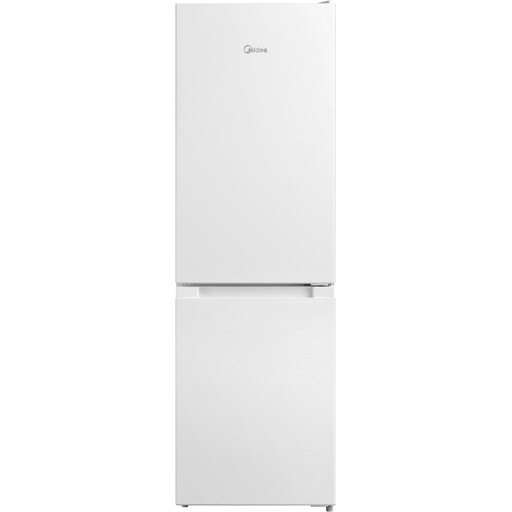
Why This Fits Their Persona: A practical option for couples, renters and smaller kitchens where a standard 60cm appliance will not fit comfortably.
Its 50cm width is clearly specified, and the reversible door helps accommodate different kitchen layouts.
173L total capacity, adjustable glass shelves, LED lighting and transparent freezer drawers.
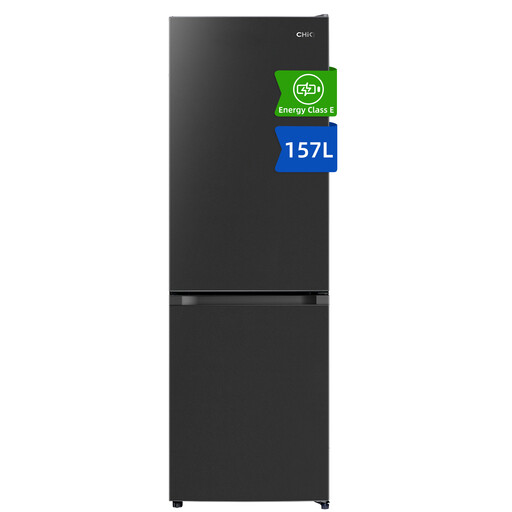
Why This Fits Their Persona: Its 47cm width and 144cm height suit studio flats, student accommodation and utility rooms with limited floor or wall space.
Low Frost technology reduces ice build-up, while the product specification still makes clear that it is not a Total No Frost model.
157L capacity, three freezer drawers, reversible door and a stated 39dB noise level.
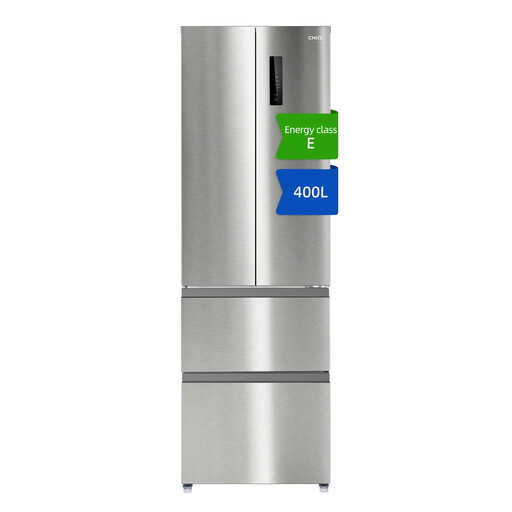
Why This Fits Their Persona: A multi-door format for home cooks and families wanting substantial storage without moving to an exceptionally wide appliance.
The 60cm width, 400L capacity and Total No Frost system are separately stated, making the core fit and maintenance requirements easier to compare.
400L total capacity, 37dB stated noise level, dual inverter technology and a dedicated 40L Care+ Space.
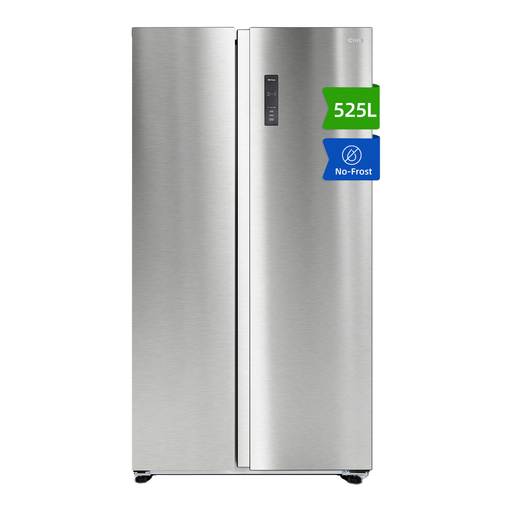
Why This Fits Their Persona: Designed for larger households that buy in bulk, freeze batch-cooked meals and have sufficient width for an American-style appliance.
The 91cm width is clearly shown, helping buyers check kitchen clearance before choosing a large side-by-side layout.
525L capacity, Total No Frost, inverter compressor, fast-freeze function and external LED touch controls.
We have compiled a complete, real-time list of products that fully satisfy these strict selection criteria and UK safety regulations.
The required gap varies by model, so follow the installation manual rather than applying one universal measurement. Allow space around ventilation points, avoid blocking the rear and ensure doors can open without hitting nearby cabinets or walls.
Lifespan depends on usage, installation, cleaning and component quality. Keeping ventilation clear, checking door seals and avoiding overloading can support reliable operation. Review the manufacturer warranty and any separate compressor warranty before purchasing.
Not automatically. Total No Frost can reduce maintenance and help preserve usable freezer space, but running costs depend on the appliance’s annual kWh consumption, energy rating, room temperature and usage pattern. Compare the energy label figures between shortlisted models before making a decision.