
24/7 Customer Support

Free returns

Same-day & Next-day Delivery

Quality Guaranteed

Unlock Your Welcome Offers: FREE Delivery | Up to 80% OFF | Free 30-day JoyPlus trial
Download the APP
Buying one of the many fridge freezers available in the UK involves more than comparing prices and litre capacity. The appliance must fit your kitchen, household routine and budget for running costs. A model that looks suitable online may be difficult to install, awkward to open or too small once shelves and drawers are taken into account.
This guide explains the specifications worth checking, common marketing traps and a selection of models matched to different household needs.
A listed width does not tell the whole installation story. You also need to check height, depth, door-opening clearance and ventilation space. American fridge freezer and French door fridge freezer models can be particularly demanding in narrow kitchens or homes with restricted access through hallways and doorways.
For an integrated fridge freezer, compare the appliance dimensions with the housing niche dimensions, cabinet door arrangement and hinge system. Sliding hinges and fixed hinges are not automatically interchangeable.
Gross capacity can appear impressive, but net capacity is more useful because it reflects usable storage after shelves, drawers and internal fittings are included. Also consider the split:
A large appliance may also encourage unnecessary food storage and use more electricity. Match the capacity to your shopping habits rather than choosing by litre count alone.
“Smart”, “inverter” and “no frost” can be useful, but the labels need context. A no frost fridge freezer normally reduces or removes manual freezer defrosting, while static or low-frost models may still require occasional maintenance. A smart fridge freezer may offer Wi-Fi controls, energy monitoring or alerts, but these functions may not justify the extra cost if you rarely use connected appliances.
Measure the available space in centimetres, including skirting boards, worktops and nearby walls. Allow room for doors and drawers to open fully. Check the manufacturer’s required clearance rather than assuming the appliance can sit flush against surrounding units.
Choose between:
Look beyond the headline total. Check the separate fridge and freezer volumes, number of drawers, shelf adjustability and door balcony size. Pull-out freezer drawers can make contents easier to see, while conventional drawers may provide more vertical stacking space.
For families, compare the freezer’s usable drawer dimensions with the food you typically buy, such as frozen pizzas, batch-cooked meals or large meat packs.
UK refrigeration appliances use the A–G energy label. The rating should be considered alongside the stated annual energy consumption in kWh, because this gives a clearer basis for comparing likely electricity use between models.
Noise is measured in decibels. Around 35–41 dB is generally relevant for open-plan homes, but kitchen acoustics and personal sensitivity vary. Also check whether the appliance uses Total No Frost, Multi Air Flow or static cooling. These systems affect maintenance and temperature distribution, but they do not remove the need to follow storage and cleaning instructions.
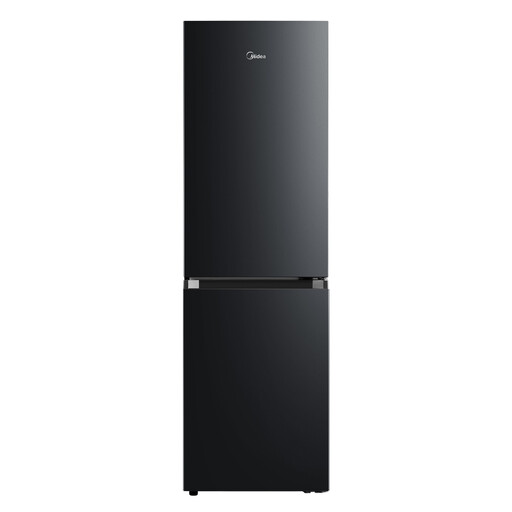
Why This Fits Their Persona: Its 54.7cm width and 273-litre capacity suit couples, smaller families and flats where floor space matters.
The listed net capacity is separated into 173L fridge and 100L freezer space, while Total No Frost avoids regular manual defrosting.
D energy class, 38dB noise level, reversible door and Super Cool/Super Freeze functions.

Why This Fits Their Persona: A large household wanting high capacity, connected controls and chilled water without a mains plumbing connection may value this configuration.
The 635L capacity and 913mm width are clearly specified, helping buyers assess whether the generous storage is realistic for their kitchen.
D energy class, Wi-Fi connectivity, internal 4L water tank and 35dB stated noise level.
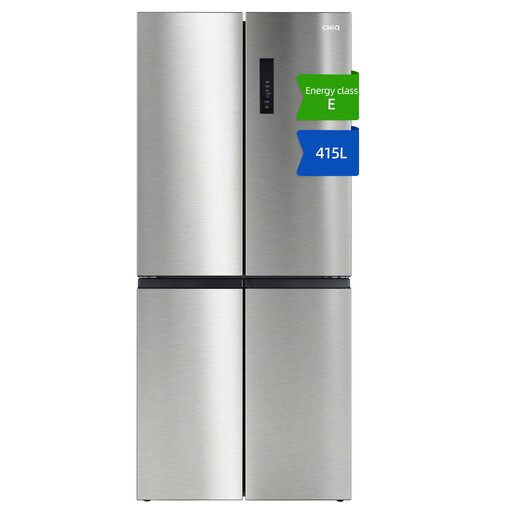
Why This Fits Their Persona: Families buying large weekly shops can use the 415L multi-door layout to separate fresh, frozen and frequently used food.
The 782mm width and 630mm depth are stated alongside the capacity, making kitchen access and placement easier to assess before ordering.
Total No Frost, Dual Inverter System, touch controls and a dedicated multi-freeze zone.
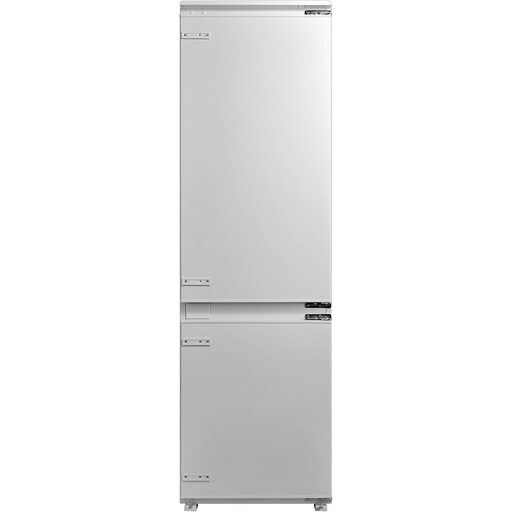
Why This Fits Their Persona: Homeowners replacing a built-in appliance can prioritise a concealed finish and greater fresh-food storage.
Its sliding hinge, 178.5cm height and 54cm width are specified, while Total No Frost avoids the maintenance associated with manual defrosting.
248L total capacity, 180L fridge space, reversible door and 41dB operation.
We have compiled a complete, real-time list of products that fully satisfy these strict selection criteria and UK safety regulations.
A fridge freezer’s working life varies with usage, installation, maintenance and component quality. Keep ventilation clear, avoid overloading shelves, clean door seals and follow the manufacturer’s care instructions. Warranty length can provide useful information about the support included, but it does not guarantee a particular lifespan.
A higher-rated appliance may use less electricity, but compare the annual kWh figure, purchase price and capacity together. A larger model can consume more energy even when its rating appears favourable. Keeping the appliance away from heat sources and maintaining clear ventilation can also support efficient operation.
It can require more planning than replacing a freestanding model because the cabinet dimensions, door hinges and fixing system must match. Before purchase, check the required niche size and whether the appliance uses a sliding or fixed hinge. If electrical or cabinet work is needed, use a suitably qualified installer.