Measure the complete appliance space, including ventilation and door-opening clearance, before choosing a fridge-freezer for a tight kitchen. If cooked vegetables are usually kept chilled rather than frozen, compare fridge capacity and shelf layout before freezer size; a narrow freestanding model saves width, while an integrated or taller model needs its own housing or floor-space checks. GOV.UK advises keeping a home fridge at 0–5°C and refrigerating cooked food within one to two hours.
Who needs which layout?
Small-kitchen batch cooks
If you regularly chill containers of cooked vegetables beside a crowded worktop, measure the appliance opening and door swing, then check whether the fridge shelves will hold your containers. The narrowest exterior is not necessarily the most useful interior.
Fitted-kitchen renovators
If the fridge-freezer sits behind cabinet doors, match the replacement to the housing, door-fitting system and ventilation instructions. A freestanding model is not an interchangeable replacement for an integrated one.
Low-maintenance freezer users
If you freeze backup portions and want less manual defrosting, check for a frost-free freezer. Measure the appliance and assess its chilled storage separately: easier freezer maintenance does not establish that it suits your containers.
What matters when choosing?
Narrow freestanding
Choose when: A measured gap can accommodate a slim appliance, its ventilation space and its fully opened door.
Trade-off: Reducing width can limit chilled storage; Bosch UK lists 171 L of fridge space for its 55 cm-wide KGN27NBEAG.
Integrated
Choose when: An existing or planned cabinet matches the exact model’s housing and door-fitting requirements.
Trade-off: Cabinet compatibility narrows the choice; Electrolux UK specifies a 1780 × 560 × 560 mm housing and 154 L of fridge space for the LNA7TE18S5.
Tall freestanding
Choose when: Height and depth are available and you need room for several chilled containers at once.
Trade-off: Check the larger footprint against the kitchen: Electrolux UK lists its 266 L-fridge LNT6ME36W2 at 2010 mm high and 650 mm deep.
| Concern | What to check | Who this matters to |
|---|
| Fit and door opening |
Measure width, height and depth, then check the exact model’s ventilation instructions and full door swing. |
With cabinets close to the appliance, I need its door to open far enough to reach shelves and drawers. Around 29% of consumers would put physical fit first. |
| Usable fridge space |
Compare fridge litres separately from freezer litres, and check shelf positions against your container dimensions. |
I chill several portions of cooked vegetables at once, so space for the containers matters more to me than total appliance litres. Chilled storage would be the primary concern for around 29% of consumers. |
| Safe chilling |
Check how to set and monitor fridge temperature; GOV.UK advises 0–5°C for home storage and prompt refrigeration of cooked food. |
When I prepare food ahead, I need to keep track of the fridge temperature and how long the food spends cooling. Around 24% of consumers would make safe chilling their main concern. |
| Energy and upkeep |
Compare annual kWh, capacity and noise on the energy label; check whether the freezer is frost-free if defrosting effort matters. |
I want to understand ongoing electricity use and avoid routine manual defrosting where possible. Those running and maintenance considerations come first for around 18% of consumers. |
Mistakes to avoid
-
Buying by width alone
A fridge-freezer can fit between worktops but still be too deep, lack ventilation space or have a door obstructed by a wall.
Measure the complete opening and nearby obstacles, then follow the exact model’s installation drawing for clearances and door operation.
-
Comparing total litres instead of fridge litres
Freezer volume cannot hold the containers you intend to keep chilled. Shelf spacing can also limit how useful the stated fridge capacity feels.
Compare the two compartment capacities separately and check container dimensions against the fridge’s shelf layout.
-
Relying on capacity instead of food handling
More storage space does not make cooked food safe if it is left warm for too long.
GOV.UK advises cooling cooked food and refrigerating it within one to two hours; eat leftovers within 48 hours or freeze them if that is not possible.
-
Looking only at the energy letter
The letter alone does not show how much electricity a particular appliance uses in a year or how much chilled space it provides.
For models that fit, compare annual kWh alongside fridge capacity and the noise figure shown on the energy label.
A higher annual kWh figure means more electricity used over a year under the label’s stated measurement basis.
Brands and models to consider
Bosch
Bosch UK’s KGN27NBEAG is a narrow freestanding reference point: it is 55 cm wide, with 171 L of chilled space and 84 L of frozen space.
- Bosch UK lists Total No Frost and a 41 dB noise figure for this model.
- Its 171 L fridge compartment needs checking against the number and size of containers you usually chill; these specifications do not describe every Bosch model.
Beko
Beko UK lists the CFG4582 with Frost Free technology, making it relevant if reducing freezer-defrosting work matters to you.
- Beko states that the CFG4582’s freezer can operate at ambient temperatures down to −15°C.
- Beko does not recommend using its fridge compartment in low ambient temperatures; the freezer feature is not a reason to store cooked vegetables in an unheated outbuilding.
Electrolux
Electrolux UK provides two distinct layout examples: the freestanding LNT6ME36W2 has a 266 L fridge, while the integrated LNA7TE18S5 has a 154 L fridge.
- The two models give you specific compartment capacities to compare against your chilled-storage needs.
- The freestanding model is 2010 mm high and 650 mm deep; the integrated model requires a 1780 × 560 × 560 mm housing. Check the relevant fit rather than treating them as interchangeable.
Joybuy product choices
These choices cover narrow freestanding fridge-freezers and integrated models for kitchens where floor space or cabinet fit shapes the decision. Compare each model’s chilled space and installation requirements with your own kitchen before choosing.
 No image available
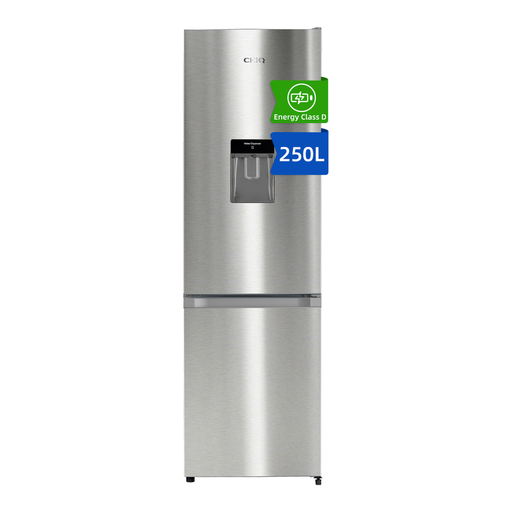
CHiQ JKR250WDSSD 54 cm freestanding fridge-freezer with water dispenser
Consider this model if a narrow freestanding layout suits your kitchen; check its full installation space and whether the fridge shelves fit your containers.
The product name specifies a 181 cm height, 250 L total capacity and Total No Frost.
Confirm how to set and monitor the fridge at 0–5°C before using it for cooked leftovers.
Joybuy
 No image available
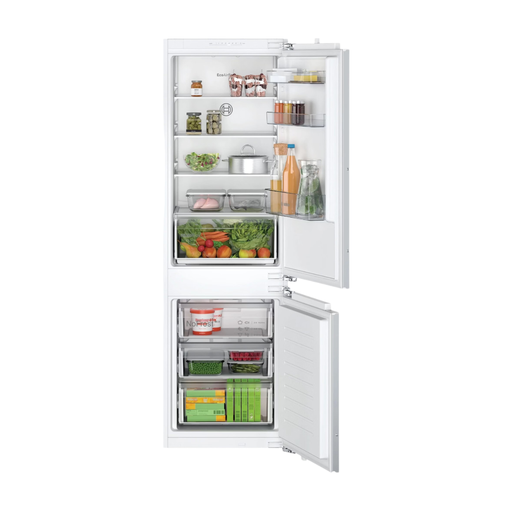
Bosch Series 2 KIN86NFE0G integrated 60/40 fridge-freezer
Consider this model for a fitted kitchen only after checking the cabinet, fixed-hinge door arrangement and ventilation requirements.
The product name specifies a 177 cm height, 260 L total capacity and Total NoFrost.
Check shelf space for your containers and how to monitor fridge temperature for cooked food.
Joybuy
 No image available
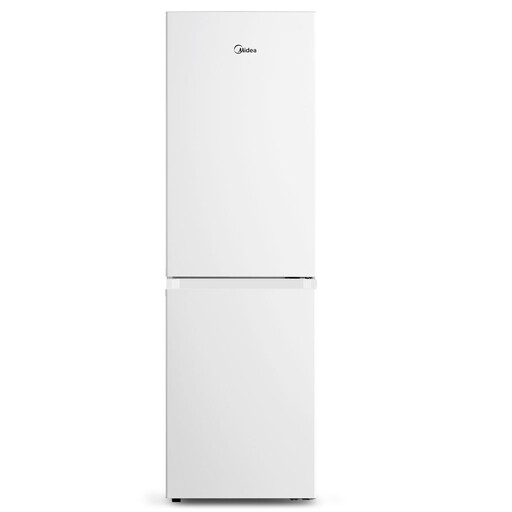
Midea MDRB379FGD01 Total No Frost freestanding fridge-freezer
Consider this model if you need a relatively narrow freestanding appliance and room for chilled containers.
Confirm the exact width, total capacity and energy class for this model before assessing fit or comparing labels. Check ventilation, door opening and fridge-temperature controls as well.
Joybuy
 No image available
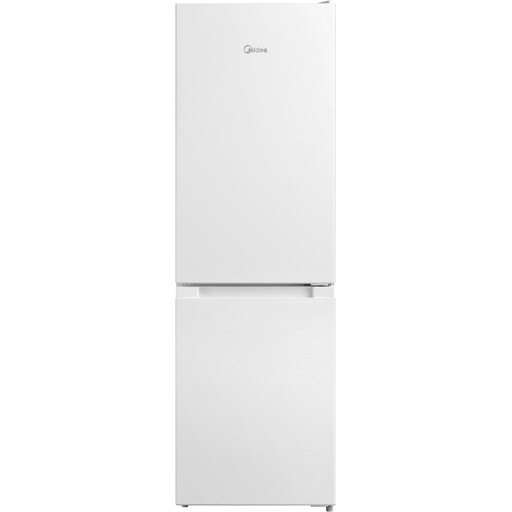
Midea MDRB241FGE01 50 cm freestanding fridge-freezer
Consider this model for a particularly narrow opening, provided its fridge shelves can accommodate the cooked-food containers you use.
The product name specifies 173 L total capacity and an E energy rating. Check the full dimensions, installation clearances and fridge-temperature controls before buying.
Joybuy
 No image available
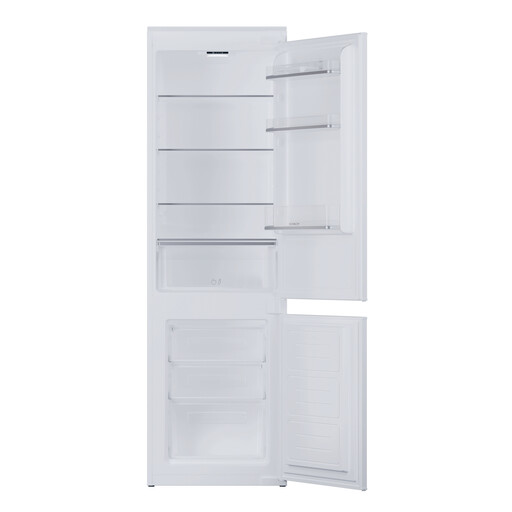
Candy CBBML18EK integrated 70/30 fridge-freezer
Consider this fridge-led layout if you have a compatible fitted-kitchen housing; confirm the cabinet and door-fitting arrangement before purchase.
The product name specifies a 177 cm height, 262 L total capacity and Low Frost. Check the fridge’s net capacity and shelf space for your containers, as well as its temperature controls.
Joybuy
Frequently asked questions
What temperature should I use for cooked vegetables in the fridge?
Keep the home fridge between 0 and 5°C, according to GOV.UK guidance; it advises around −18°C for the freezer. Check the fridge temperature with a thermometer if you cannot readily tell what temperature it is maintaining.
How soon should cooked vegetables go into the fridge?
GOV.UK advises cooling cooked food and refrigerating it within one to two hours. Eat leftovers within 48 hours or freeze them if you will not use them in that time.
Will a 55 cm fridge-freezer fit a 55 cm gap?
Do not assume it will: the appliance also needs appropriate ventilation and room for its door to open. Check the exact model’s dimensions and installation instructions against the full measured space, including any nearby wall, socket or pipework.
Is frost-free necessary for storing cooked vegetables?
No. Frost-free technology addresses freezer ice build-up and defrosting effort; cooked-vegetable storage depends more directly on usable fridge space, prompt refrigeration and maintaining 0–5°C. Choose frost-free if reduced freezer maintenance also matters to you.
What should I compare on an energy label?
Compare annual kWh alongside the efficiency class, chilled and frozen capacities, and noise figure. Energy Saving Trust notes that refrigeration labels show compartment capacities; use those figures to compare models that already meet your fit and chilled-storage needs.


