
24/7 Customer Support

Free returns

Same-day & Next-day Delivery

Quality Guaranteed

Unlock Your Welcome Offers: FREE Delivery | Up to 80% OFF | Free 30-day JoyPlus trial
Download the APP
Replacing a fridge freezer is rarely as simple as choosing the largest model that fits your budget. A spacious appliance can become awkward if doors cannot open fully, while a compact model may leave a family short of freezer space. Marketing language can also make everyday features sound more useful than they are.
Three common buying traps deserve attention:
A practical choice starts with your household’s storage habits, kitchen measurements and preferred daily conveniences.
Record the available height, width and depth, then check the manufacturer’s product and installation dimensions. Allow room for ventilation as specified in the instruction manual, as well as clearance for doors and freezer drawers.
Slim fridge freezers can be useful in flats, galley kitchens and narrow utility areas. For example, the CHiQ JKR250WDSSD measures 54cm wide, 181cm high and 57.6cm deep, with a 250-litre total capacity. A wider American fridge freezer may offer substantially more storage, but models such as the CHiQ JKR525WSSE measure approximately 91cm wide, making them unsuitable for many standard kitchen runs.
Also check access routes. Measure doorways, staircases and tight turns before ordering, not just the final position.
Total litres provide a useful starting point, but the split between fresh and frozen storage is equally important.
French door fridge freezers generally provide wide refrigerator shelves, while 3-door and 4-door fridge freezers can make frozen food easier to organise in pull-out drawers. Look for adjustable shelves, transparent drawers and a dedicated crisper rather than focusing only on the headline capacity.
UK appliances use the A to G energy label, with A at the more efficient end of the scale. Compare the stated annual energy consumption in kWh where available, rather than treating the letter alone as a precise running-cost forecast. Electricity tariffs vary, and actual use depends on room temperature, settings and how often the doors are opened.
Inverter fridge freezers can adjust compressor output according to cooling demand. This may support steadier temperatures and quieter operation, but the quoted noise figure remains important. Models rated around 35–39dB may be more suitable for open-plan homes than louder alternatives.
For convenience, No Frost fridge freezers and frost-free fridge freezers reduce the need for manual defrosting. However, food should still be stored correctly, vents must remain unobstructed and the appliance requires routine cleaning.
Water dispensers also need scrutiny. A non-plumbed dispenser uses an internal tank and avoids connection to the mains water supply, while a plumbed system requires suitable installation. Check tank capacity and cleaning instructions before deciding.
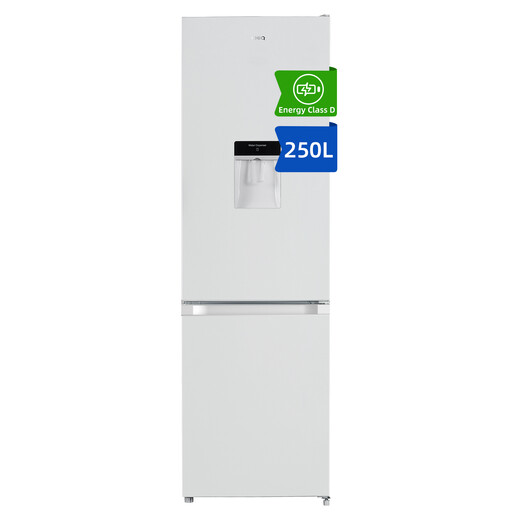
Why This Fits Their Persona: Its 54cm width suits smaller UK kitchens, while the 250-litre capacity provides practical storage for couples and medium-sized households.
The stated 54cm width and 57.5cm depth make planning easier, while Total No Frost avoids the maintenance burden associated with manual defrosting.
250L capacity, D energy rating, non-plumbed water dispenser and adjustable glass shelving.
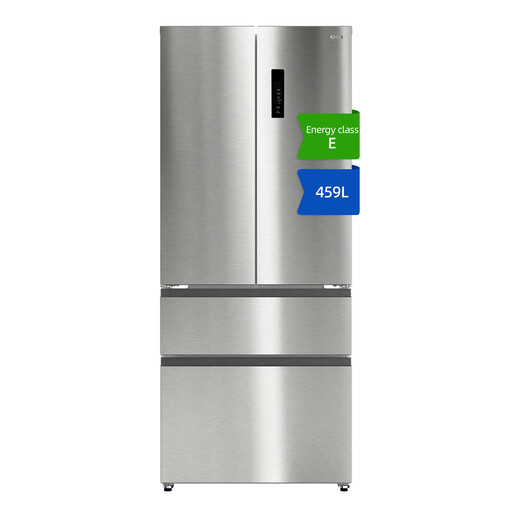
Why This Fits Their Persona: The four-door format, 459-litre net volume and 600mm depth suit households wanting a built-in-style appearance with multi-zone organisation.
The published dimensions help prevent a capacity-led purchase that overwhelms the room, while Total No Frost removes routine manual defrosting.
459L capacity, Care+ Space with three temperature modes, 37dB noise level and dual inverter technology.
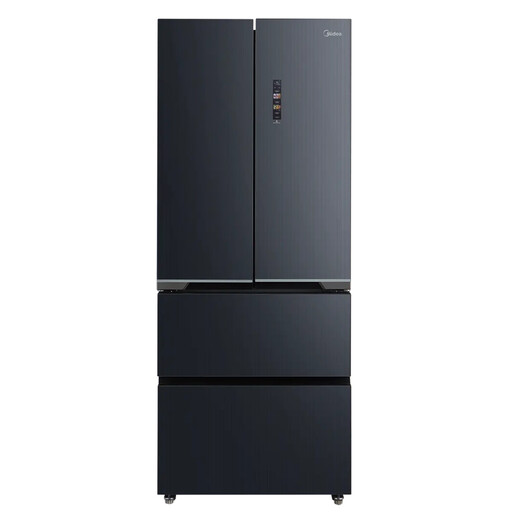
Why This Fits Their Persona: It provides family-scale storage in a 753mm-wide body and 600mm depth, making it more manageable than many wider American fridge freezers.
Its stated 435L capacity is paired with clear fridge and freezer figures, so heavy users can assess whether the split matches their shopping habits.
276L fridge space, 159L freezer capacity, Total No Frost, 35dB operation and an XL crisper.
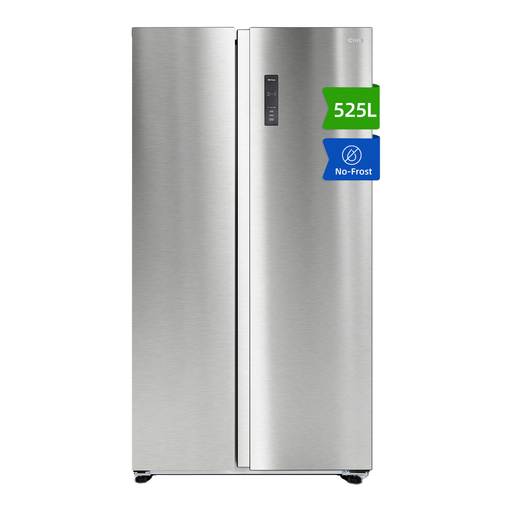
Why This Fits Their Persona: The 333-litre fridge and 192-litre freezer suit large households, bulk shoppers and frequent batch cooking where kitchen width allows.
The separate fridge and freezer capacities make the storage proposition clearer than relying on a single headline litre figure, while Total No Frost reduces maintenance.
525L total capacity, inverter compressor, 3D Multi-Airflow, fast freeze and external LED touch controls.
We have compiled a complete, real-time list of products that fully satisfy these strict selection criteria and UK safety regulations.
Lifespan varies with build quality, usage, ventilation, cleaning and maintenance. Keeping condenser areas and air vents clear, avoiding overloaded shelves and checking door seals can support reliable operation. Always follow the manufacturer’s care instructions.
They can be a practical choice if you want to avoid routine manual defrosting. No Frost systems circulate air to reduce ice formation, but they may have fans and can produce a different operating sound. Compare the quoted noise level and energy information before buying.
There is no single fixed figure. A couple may manage with around 250–320 litres, while families that batch-cook or shop less frequently may prefer 400 litres or more. Consider the fridge-to-freezer split, not just total capacity, and measure the kitchen space before selecting a large appliance.