Frequent herb cook with limited kitchen space
If you regularly buy fresh herbs but have a compact kitchen, check that the produce drawer is usable and the door can open fully. Total capacity alone will not tell you either.


Choose a fridge-freezer by the chilled space and produce storage you will use, not household size alone. An undercounter model can suit a small kitchen and modest weekly shop if its crisper and freezer are large enough; frequent herb and vegetable purchases may justify a taller, fridge-led model with a documented produce zone. Check the exact appliance’s dimensions, compartment volumes, energy information and installation requirements before deciding.
If you regularly buy fresh herbs but have a compact kitchen, check that the produce drawer is usable and the door can open fully. Total capacity alone will not tell you either.
If vegetables, salad and herbs take up much of your weekly shop, a fridge-led capacity split and a produce-specific compartment may matter more to you than a larger freezer.
If everyday upkeep is a priority, compare freezer defrost requirements alongside compartment volumes, noise and energy information. A produce feature is only part of the decision.
Consider it when: Kitchen space is the limiting factor and your weekly chilled and frozen food will fit the separate compartments.
Trade-off: A smaller crisper and freezer leave less flexibility; the undercounter example described in the product information also requires manual defrosting.
Consider it when: You buy fresh produce frequently and have room for more chilled storage and a model-specific produce zone.
Trade-off: Check that the additional height and capacity fit both your kitchen and the amount of food you actually store.
| Concern | What to check | Who this matters to |
|---|---|---|
| Produce conditions | Check the exact drawer’s intended food type and whether it offers humidity control or a distinct temperature zone. | If I buy herbs and vegetables often, I want a suitable place to store them rather than relying on the name of a salad drawer. Around 42% of consumers put produce conditions first. |
| Kitchen fit and chilled space | Measure the appliance space and full door swing; compare chilled and freezer volumes separately. | In a small kitchen, I need the fridge-freezer to fit without giving up the chilled space my weekly shop requires. For around 33% of consumers, that balance is the primary concern. |
| Energy and upkeep | Compare annual energy use and noise for similarly sized models, and confirm the freezer’s defrost type. | I would rather avoid an awkward defrost routine or capacity I will rarely use. Energy and freezer upkeep come first for around 25% of consumers. |
A small fridge-freezer may leave too little chilled space for herbs and everyday food, while a tall one may take more room than you need.
Compare what you normally refrigerate and freeze over a week with the separate compartment volumes and drawer layout.
A standard crisper does not, by itself, establish that you can adjust humidity or that it provides a separate produce climate.
Check the exact model’s description for the drawer’s controls, temperature conditions and intended food types.
An appliance may fit between cabinets yet be difficult to use or install as instructed if its door or ventilation space is obstructed.
Measure height, width and depth, account for anything behind the appliance, and follow the model’s installation instructions for clearances.
A letter grade alone does not show an appliance’s annual energy use, capacity or noise. Energy Saving Trust recommends using the information on the energy label when comparing appliances.
Read the annual consumption figure and compartment volumes, then compare models of a similar size that meet your storage needs.
Relevant if you want to examine a full-height, fridge-led model with a dedicated produce feature.
Relevant if you are comparing produce-crisper features and separate fridge and freezer cooling.
Relevant if a dedicated high-humidity fruit-and-vegetable compartment is a priority.
These options cover tall, narrower-width and integrated fridge-freezers. Compare their stated size and configuration with your kitchen first, then check the exact produce drawer and compartment information for the way you shop.
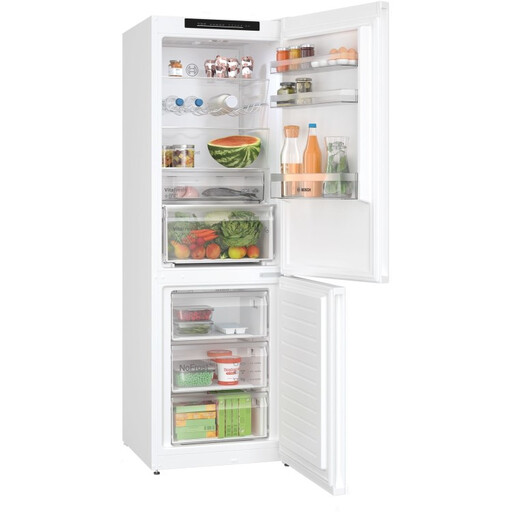 No image available
Consider this freestanding model if you have room for a tall appliance and want to assess its produce storage. It is listed as 186 cm high and 60 cm wide, with a 60/40 split, NoFrost and energy class D. Check the exact drawer features and installation clearances before buying.
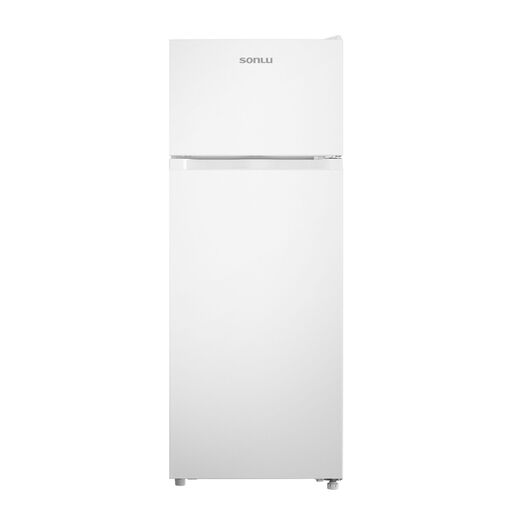 No image available
Consider this model if a top-mount freezer and adjustable shelves suit your storage routine. Its title lists 206 L total capacity and energy class E. Compare the separate compartment volumes, full dimensions and drawer controls with what you need for herbs and other food.
 No image available
This is an option if you need an integrated appliance rather than a freestanding one. It is listed with a fixed hinge, 50/50 split, 249 L total capacity and energy class E. Confirm cabinet and hinge compatibility, and check the produce drawer’s stated features if herb storage is your priority.
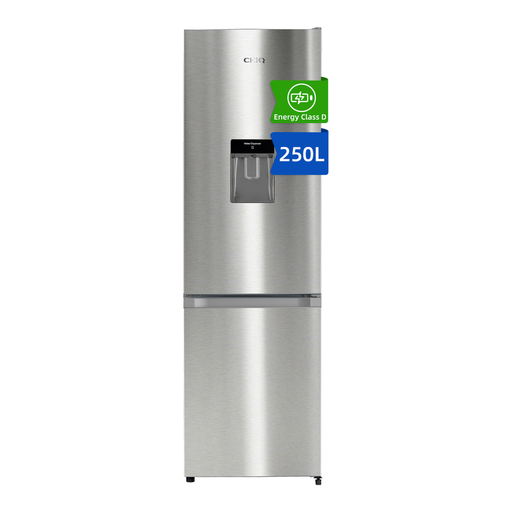 No image available
Consider its stated 54 cm width if a narrower freestanding appliance would help it fit your kitchen. The model is listed as 181 cm tall, with 250 L total capacity, Total No Frost and energy class D. Check door clearance and the crisper’s actual features; a crisper name alone does not establish humidity control.
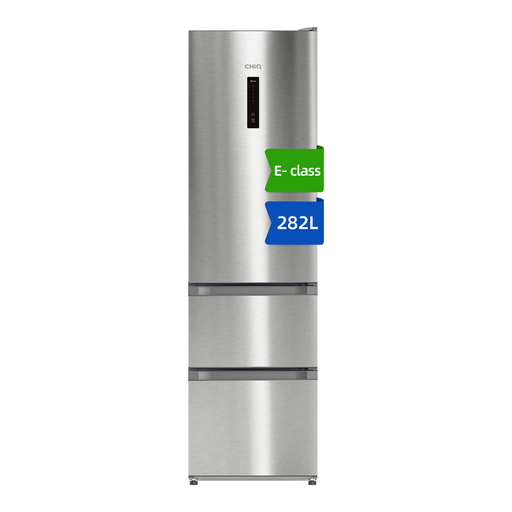 No image available
This three-door option may suit a kitchen where width is constrained but a taller appliance will fit. It is listed as 54 cm wide, with 282 L total capacity, No Frost and energy class E. Compare its chilled and freezer volumes and check the produce compartment’s conditions before deciding.
Not necessarily, but a dedicated produce compartment is worth considering if herbs and vegetables are a frequent part of your shop. Bosch Home UK describes climate-controlled VitaFresh drawers on the KGN39VWEAG, while Liebherr describes a high-humidity Fruit & Vegetable safe on the CBNdgc 5723. Check the intended use of the exact drawer rather than assuming a standard salad crisper has the same controls.
It can be if your weekly food and freezer use fit its separate compartments. An undercounter example listed in the product information has 61 litres of fridge space, 24 litres of freezer space and a salad crisper, but requires manual defrosting; compare those features with your own shopping routine.
Measure the available height, width and depth, the space needed behind the appliance, and the path of the fully open door. General guidance advises allowing room for airflow and checking door clearance; follow the installation instructions for the exact model you choose.
Compare annual energy use as well as the energy-efficiency class, preferably between appliances of a similar size that meet your storage needs. Energy Saving Trust explains that the A-to-G label also carries information relevant to capacity and noise; check the exact model’s label and product information before choosing.
Arrange an appropriate collection or recycling route rather than putting the appliance in ordinary waste. The UK’s waste electrical and electronic equipment framework covers electrical appliances; check the retailer’s take-back arrangements or your local authority’s collection options before a replacement arrives.