What matters when choosing?
Decide whether frozen portions or fresh groceries need more space, then check the appliance and its delivery route against your kitchen.
| Concern | What to check | Who this matters to |
|---|
| Usable freezer space |
Compare freezer litres and the number, shape and depth of drawers; a 50/50 label alone does not tell you how many portions will fit. |
I want to keep chopped rhubarb in labelled portions without crowding out my other frozen food. Around 31% of consumers put accessible freezer space and organisation first. |
| Kitchen fit and delivery |
Check appliance dimensions, required clearances, door swing and the delivery route; an integrated model also needs compatible cabinet and door fittings. |
A fridge-freezer is only useful to me if it can reach and fit its intended place. For around 31% of consumers, physical fit is the primary concern. |
| Defrosting and storage |
Confirm whether the exact freezer is frost-free and check its temperature controls. FoodSafety.gov advises keeping a freezer at or below −18°C. |
I would rather avoid manual defrosting while keeping my portions at an appropriate freezer temperature. That is the leading need for around 19% of consumers. |
| Energy information |
Compare the annual kWh figure, energy class and product information sheet for models with capacities and layouts that meet your needs. |
Because the appliance runs continuously, I want to compare its stated electricity use before choosing. Around 19% of consumers make energy information their first priority. |
Bosch describes 50/50, 60/40 and 70/30 as fridge-to-freezer layouts, so a larger fridge share leaves a smaller freezer share within a given appliance. For energy comparisons, GOV.UK says products within the scope of its energy-information guidance must be supplied with an accurate energy label and a product information sheet.
Joybuy fridge-freezer options
These fridge-freezers offer different ways to balance chilled storage, space for rhubarb portions and kitchen fit. Compare the stated layout with the freezer capacity and installation details before choosing.
 No image available
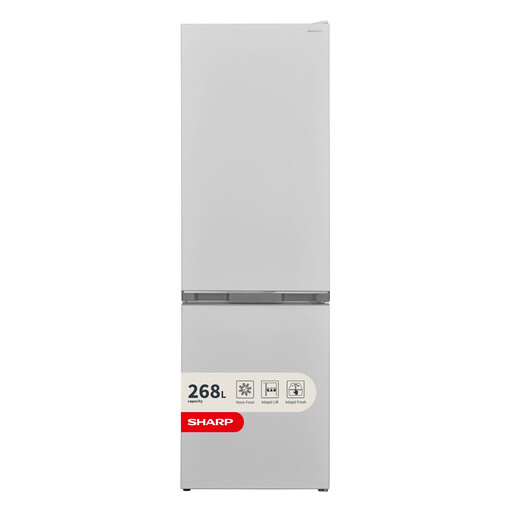
Sharp SJ-BB04DTXWE2-EN 60/40 NanoFrost fridge-freezer, white
Consider this 60/40 model if fresh-food storage is a priority and you freeze rhubarb occasionally.
Its listed size is 170 × 54 cm and its energy class is E. Check the freezer litres, internal arrangement, annual kWh figure and delivery fit for your planned portions.
NanoFrost should not be treated as a promise that manual defrosting is unnecessary.
View on Joybuy
 No image available
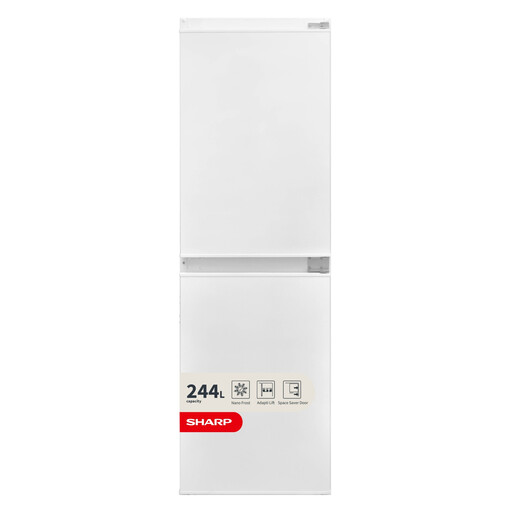
Sharp SJ-BE240M1XS-EN integrated 50/50 NanoFrost fridge-freezer, white
Consider this integrated 50/50 layout if you have a fitted kitchen and want to give frozen portions a larger share of the appliance.
The listed size is 177 × 54 cm and the energy class is E. Check freezer litres and drawer dimensions, as well as cabinet size, door fittings, ventilation and annual kWh information.
NanoFrost does not, by itself, establish that manual defrosting is unnecessary.
View on Joybuy
 No image available
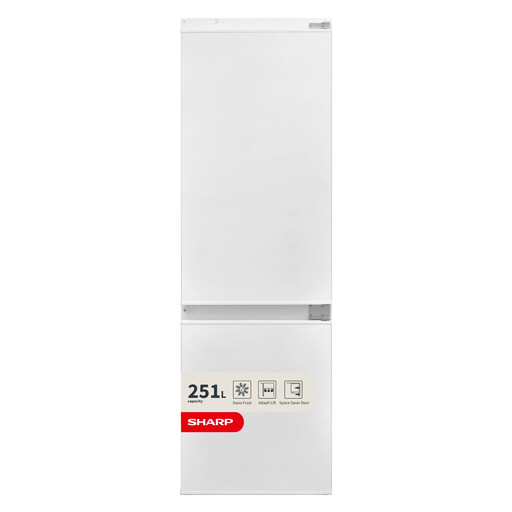
Sharp SJ-BE250M1XS-EN integrated 70/30 NanoFrost fridge-freezer, white
This integrated 70/30 layout is worth considering when fresh groceries take priority and you freeze smaller amounts of rhubarb.
Its listed size is 177 × 54 cm and its energy class is E. Check that the freezer litres and drawer space meet your needs, and confirm cabinet, door-fitting and ventilation compatibility.
Compare annual kWh information separately; NanoFrost is not a substitute for checking defrosting requirements.
View on Joybuy
 No image available
CHiQ JKR282WGE 282 L No Frost three-door fridge-freezer, black steel
Consider this model if a 54 cm-wide appliance with freezer drawers suits your kitchen and portion-storage plans.
The title lists 282 L total capacity, an E energy class and No Frost operation. Check the freezer compartment’s own capacity and drawer dimensions rather than using the total litres to judge rhubarb space.
Confirm the full dimensions, delivery access and annual kWh figure before ordering.
View on Joybuy
Questions about freezing rhubarb
What temperature should the freezer be for chopped rhubarb?
Keep the freezer at or below −18°C, in line with FoodSafety.gov’s freezer-temperature guidance. Check the appliance manual for its controls and use an appliance thermometer if you need to check the temperature; portion the rhubarb so you can take out what you need.
Should one person choose a 50/50 or 60/40 fridge-freezer?
Choose by how much you expect to freeze, not household size alone: a 50/50 layout gives the freezer a larger share, while 60/40 gives more space to fresh food. Bosch describes these as layout splits, so compare the actual freezer litres and drawers before deciding whether your rhubarb portions will fit.
Do I need a frost-free fridge-freezer?
A frost-free model is worth considering if avoiding manual defrosting matters to you, but it does not replace a freezer-capacity check. Beko and Hotpoint describe frost-free operation for particular ranges; confirm the feature and storage arrangement on the exact model.
Which energy figures should I compare?
Compare the stated annual electricity use in kWh alongside the energy class, freezer volume and the rest of the product information sheet. GOV.UK says products within the scope of its energy-information guidance must have an accurate energy label and a product information sheet; a lower kWh figure is most useful when the appliances being compared also meet similar storage needs.
What should I arrange for an old fridge-freezer?
Arrange an appropriate recycling or collection route before the replacement arrives. Retailer take-back or a local council service may be options; check availability and terms for your address and appliance.


