Regular single-portion batch cook
If you freeze several containers at a time for later meals, compare freezer-drawer fit and the fridge/freezer split rather than relying on total capacity alone.


Choose a 50/50 fridge-freezer if you regularly freeze several individual soup portions and need substantial freezer space alongside chilled storage. If fresh vegetables and other chilled ingredients take priority and you freeze only a few portions, consider a fridge-led 60/40 or 70/30 layout instead. In either case, check that your containers fit the drawers and that the appliance suits its intended location.
If you freeze several containers at a time for later meals, compare freezer-drawer fit and the fridge/freezer split rather than relying on total capacity alone.
If soup batches are occasional but chilled ingredients take up more space, a fridge-led 60/40 or 70/30 layout may suit your storage pattern. Bosch lists these alongside 50/50 layouts.
If space is restricted or the appliance will stand somewhere cold, check its dimensions, installation requirements and the exact model’s permitted ambient conditions before choosing a storage split.
Start with how often you freeze soup, then check container fit, food-handling needs and installation conditions. A 50/50 split gives frozen storage more emphasis than Bosch’s fridge-led 60/40 and 70/30 layouts, but leaves less of the appliance for chilled ingredients.
| Concern | What to check | Who this matters to |
|---|---|---|
| Usable freezer space | Compare frozen-compartment volume and drawer dimensions with your filled containers; total appliance litres will not tell you whether they fit. | If I freeze several portions regularly, I need drawers that hold my containers alongside other food; around 33% of consumers put usable freezer space first. |
| Cooling and freezer temperature | Plan to cool soup promptly, and check how to monitor the freezer temperature. A University Hospitals of Leicester NHS Trust leaflet advises keeping a freezer below −18°C. | When I put away a batch for later meals, I want a sound cooling routine and a temperature I can check; for around 27% of consumers, that is the primary concern. |
| Kitchen fit and layout | Measure the space, access route and door clearance. For an integrated model, also check the cabinet aperture, ventilation and door-hinge system. | If the appliance must fit a small kitchen or existing cabinetry, a suitable layout is my starting point; around 20% of consumers prioritise fit. |
| Maintenance and placement | Check the exact model’s Frost Free or No Frost specification and, for a cold outbuilding, its approved ambient conditions. | I want less defrosting work, or I need to place the appliance somewhere cold; around 20% of consumers make maintenance or placement their first concern. |
Total capacity includes the fridge, while soup containers must fit inside the freezer drawers. Bosch, for example, lists chilled and frozen volumes separately for its KGN34NWEAG.
Measure a filled container and compare it with the exact model’s freezer volume, internal drawer dimensions and door clearance.
Beko and Hotpoint describe Frost Free or No Frost as reducing frost and manual defrosting. It does not replace prompt cooling or checking freezer temperature.
Choose it for easier maintenance, then follow appropriate cooling guidance and monitor the freezer separately.
Beko warns that some appliances may stop functioning below 0°C. On its integrated BCFD450, Beko also cautions against using the fridge compartment in low ambient temperatures.
Read the exact model’s approved ambient range and installation instructions for both compartments before placing it in a garage or outbuilding.
Collection of an old fridge-freezer needs a separate arrangement; buying a replacement does not establish how the old appliance will be removed.
Ask the retailer about its take-back service and check the local authority’s arrangements before delivery.
Bosch provides model-specific capacity and dimensions for shoppers comparing storage splits. Its freestanding KGN34NWEAG is a reference point for checking freezer volume against available kitchen space.
Beko has model lines to examine if reduced defrosting work or a cold installation location matters.
Hotpoint’s HPKH 1261 W4UK provides a named freestanding 50/50 option for comparing balanced storage with a No Frost specification.
These choices include freestanding and integrated fridge-freezers for different kitchen layouts. Compare their stated format and dimensions with your space, then check freezer-drawer fit for the portions you normally make.
 No image available
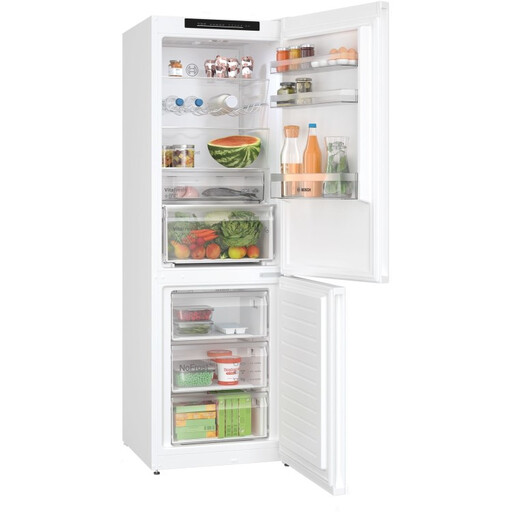
Consider this freestanding model if chilled ingredients take more space than your frozen soup portions. Its stated dimensions are 186 cm high and 60 cm wide, with a 60/40 split, NoFrost and a D energy rating. Check the freezer drawers against your containers and confirm how to monitor the temperature before storing soup.
 No image available
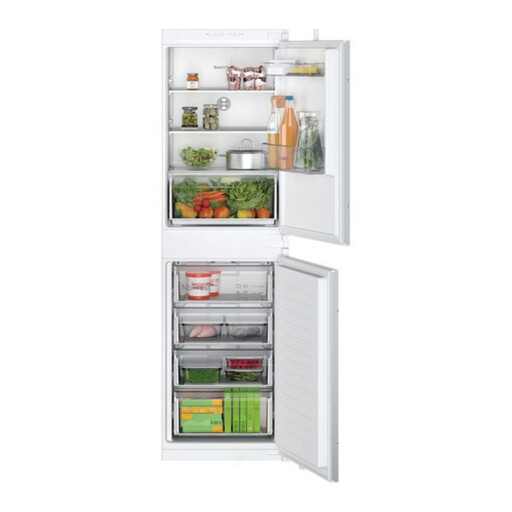
Consider this 50/50 model if you need an appliance behind fitted cabinetry while regularly freezing individual portions. The title specifies a 177 cm height, Frost Free operation, a sliding hinge, 249 litres of total capacity and an E energy rating. Confirm the cabinet aperture, ventilation, hinge arrangement, drawer fit and freezer-temperature guidance for the exact installation.
 No image available
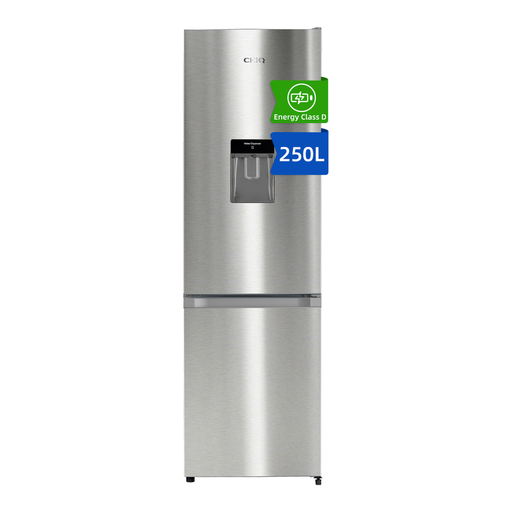
Consider this freestanding model where a narrower appliance matters, provided its freezer drawers hold your usual batch. Its stated width is 54 cm and height is 181 cm; the title also specifies 250 litres of total capacity, Total No Frost and a D energy rating. Check drawer fit and the freezer’s temperature guidance before use.
 No image available
Consider this white 50/50 model if a fitted-kitchen installation and balanced storage are your priorities. The product name specifies static cooling and an E energy rating, so do not assume it eliminates manual defrosting. Check cabinet and hinge compatibility, freezer-drawer fit and the temperature instructions.
 No image available
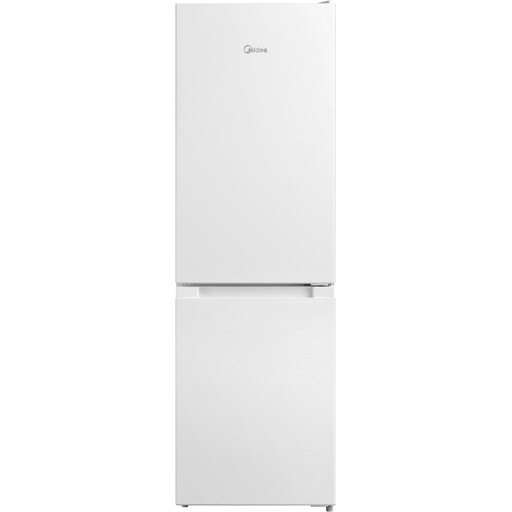
Consider this model if a 50 cm-wide appliance better fits your kitchen and you freeze smaller batches. The title states 173 litres of total capacity and an E energy rating; total capacity alone does not show how many soup containers its freezer will hold. Check the drawers, installation clearance and freezer-temperature instructions.
Cool it promptly before refrigerating or freezing it. NHS guidance on prepared food advises cooling it ideally within one to two hours; dividing a batch into shallow portions can make the cooling step easier to manage.
A University Hospitals of Leicester NHS Trust food-safety leaflet advises keeping a freezer below −18°C. Check the appliance instructions and use a freezer thermometer if you need to confirm the actual temperature rather than relying on a control setting alone.
No: Frost Free or No Frost is a maintenance choice, not a requirement specific to soup. Beko and Hotpoint describe the feature as reducing frost or manual defrosting; drawer space, prompt cooling and freezer temperature still need separate attention.
No; check the exact model’s approved ambient conditions before installing it there. Beko warns that some appliances may stop functioning below 0°C, and its guidance for the integrated BCFD450 distinguishes low-ambient freezer operation from its caution about using the fridge compartment in those conditions.