
24/7 Customer Support

Free returns

Same-day & Next-day Delivery

Quality Guaranteed

Unlock Your Welcome Offers: FREE Delivery | Up to 80% OFF | Free 30-day JoyPlus trial
Download the APP
Buying a fridge freezer is rarely just about finding an appliance that fits the kitchen. UK households also need to consider door clearance, usable capacity, freezer maintenance, energy consumption and noise. A model that looks suitable online can become inconvenient if it blocks a cupboard, lacks enough freezer space or requires frequent manual defrosting.
This guide explains the practical checks that can help renters, families, students and small-kitchen owners avoid common purchasing mistakes.
A 50cm fridge freezer or 54cm fridge freezer may fit neatly between cabinets, but width is only one measurement. Depth can affect walkways and worktop alignment, while height needs to be checked against overhead cupboards, coving and ventilation space.
Also measure the route into the property, including doors, staircases and lifts. Leave the manufacturer’s recommended clearance around the appliance, particularly near ventilation openings.
A low frost fridge freezer reduces ice accumulation but does not remove the need to defrost completely. A frost-free fridge freezer circulates cold air to reduce frost and ice build-up across the freezer compartment, which generally means less manual maintenance.
If you regularly store frozen food for several weeks or dislike emptying and defrosting the freezer, check the defrost system carefully rather than relying on phrases such as “easy maintenance”.
UK refrigeration appliances use the A to G energy label. A D-rated model is not automatically cheaper to run than every E-rated model, because annual electricity consumption, total capacity and cooling technology also matter.
For a more useful comparison, check the annual kWh figure where it is provided and consider how much usable storage you receive. A larger appliance may consume more electricity overall, even when its rating appears similar to a smaller model.
Total litres can be misleading if the fridge-to-freezer split does not suit your household. A 70/30 freestanding fridge freezer may provide more chilled storage for fresh-food shoppers, while a larger freezer section can be more practical for batch cooking.
Consider the following layouts:
Compare the stated W × D × H dimensions with the available opening. Include space for handles, door movement and cleaning. A reversible door is useful in a galley kitchen or rented property, but check whether changing the hinge is included in installation or must be arranged separately.
Integrated and freestanding appliances are not interchangeable. An integrated fridge freezer is designed to sit behind a cabinet door, whereas a freestanding model needs visible clearance around its body and ventilation areas.
Noise is measured in decibels, or dB. Models listed at 35–40 dB may be worth considering for open-plan kitchens, bedrooms or shared accommodation, although the perceived sound can vary with flooring and room acoustics.
Look beyond capacity and check the internal layout:
A stainless steel fridge freezer or black fridge freezer may suit a modern kitchen, while a white fridge freezer can coordinate with existing appliances and is often easier to match during a replacement.

Why This Fits Their Persona: Its 47cm width and 157-litre capacity suit students, renters and households working with a narrow kitchen gap.
The listing specifies Low Frost rather than implying a completely maintenance-free freezer, and the reversible door helps with awkward layouts.
Three glass shelves, a crisper drawer, three freezer drawers, LED lighting and a 39 dB noise level.
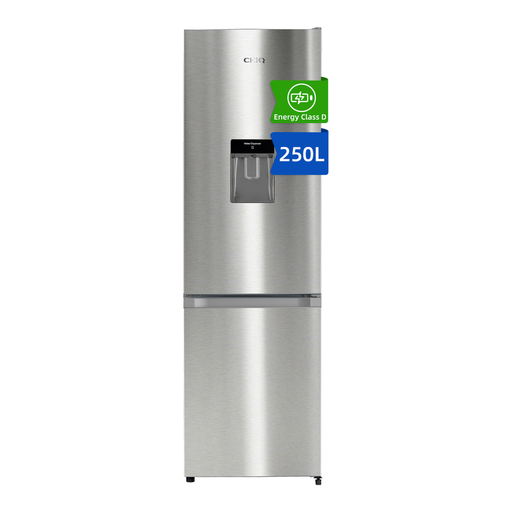
Why This Fits Their Persona: It combines a slim 54cm footprint with a stainless steel finish, non-plumbed water dispenser and 250 litres of total capacity.
Its Total No Frost specification is clearly separated from the water dispenser, which uses a non-plumbed tank rather than requiring a dedicated water connection.
180-litre fridge space, 70-litre freezer space, three freezer drawers, electronic controls and D energy class.
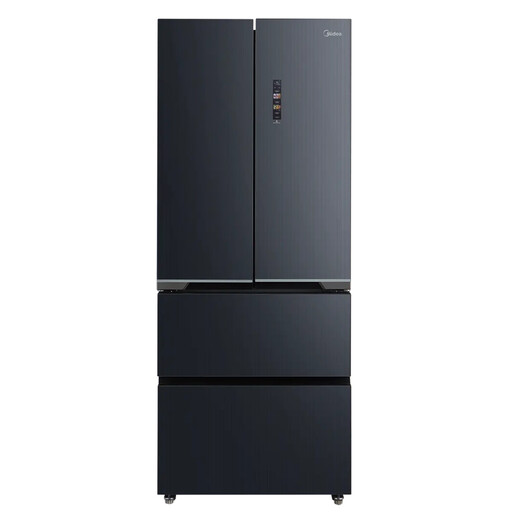
Why This Fits Their Persona: Families and home cooks can use the 435-litre capacity for weekly shops, meal preparation, platters and frozen food.
The 753mm width and 600mm depth are stated clearly, helping buyers check whether an American-style format will suit their kitchen before ordering.
276-litre fridge capacity, 159-litre freezer capacity, Total No Frost, XL crisper and 35 dB operation.
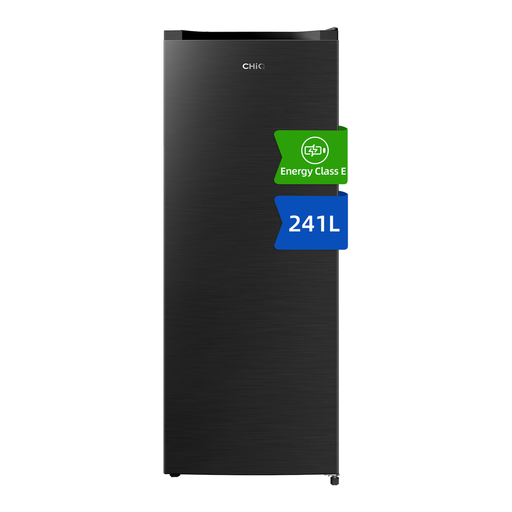
Why This Fits Their Persona: A dedicated larder fridge provides 241 litres of chilled storage for fresh produce, dairy, drinks and prepared meals.
It is clearly a fridge-only appliance, so shoppers are less likely to mistake a large fresh-food cavity for combined fridge freezer capacity.
54cm width, adjustable glass shelves, salad crisper, reversible door and E energy class.
We have compiled a complete, real-time list of products that fully satisfy these strict selection criteria and UK safety regulations.
Lifespan depends on build quality, usage, ventilation, cleaning and maintenance. Keep the condenser and ventilation areas clear, avoid overloading shelves and ensure the door seal closes properly. A removable or cleanable seal can make routine care easier. Always follow the supplied manual for installation and maintenance.
It can suit a small family if the internal capacity and fridge-to-freezer split match your shopping habits. Models around 150–175 litres are generally more suitable for smaller households than large families. Families that batch cook or buy frozen food may need a taller or wider model, even if the kitchen can physically accommodate a slim appliance.
Not necessarily. Frost-free systems can reduce manual defrosting and help maintain usable freezer space, but running cost depends on the appliance’s annual kWh consumption, capacity, energy class, room temperature and usage. Compare the energy label and annual consumption rather than assuming that one cooling system will always cost less.