Households buying fresh produce regularly
If grapes share fridge space with other fruit and vegetables, a dedicated produce area may be more useful to you than extra open shelving. Compare the usable drawer space with the amount you normally buy.


For fresh grapes, start with a fridge you can keep within the 0–5°C range recommended by Love Food Hate Waste; a specialist produce drawer is not essential for occasional grape storage. If you regularly store other fruit and vegetables, compare the exact model’s drawer and humidity controls, then check that the appliance fits your kitchen and meets your wider food-storage needs.
If grapes share fridge space with other fruit and vegetables, a dedicated produce area may be more useful to you than extra open shelving. Compare the usable drawer space with the amount you normally buy.
Your new appliance needs room for ventilation and for its door to open, not just a body that fits the kitchen opening. Measure the space against the exact model’s installation instructions.
You want to consider the displayed energy label and product information sheet alongside produce-storage features, rather than choosing by a feature name alone.
Decide how much chilled produce space you need before comparing specialised drawers. Love Food Hate Waste recommends keeping a fridge at 0–5°C; kitchen fit and the exact model’s energy information matter whichever drawer you choose.
| Concern | What to check | Who this matters to |
|---|---|---|
| Reliable chilling | Check the temperature controls and whether your usual grape container fits without crowding the compartment. | I mainly want somewhere to keep grapes chilled alongside everyday food. Around 36% of consumers would put dependable chilling first. |
| Produce-drawer space | Compare usable drawer size and whether humidity is adjustable, fixed or not specified for the exact model. | When I buy grapes with other fruit and vegetables regularly, a separate produce area matters more to me. Roughly 29% of consumers would make that their primary concern. |
| Kitchen fit and format | Measure height, width and depth; check the required ventilation, door swing and whether you need an integrated appliance. | If the fridge must replace one in an existing opening, I need to know it can be installed and opened properly. For about 21% of consumers, fit and format would come first. |
| Energy and replacement planning | Read the exact model’s energy label and product information sheet, and check the retailer’s old-appliance collection arrangements. | Before replacing a working appliance, I want to weigh its energy information and plan what happens to the old one. That would be the main priority for around 14% of consumers. |
Bosch describes adjustable humidity in VitaFresh drawers, Liebherr describes high humidity and a temperature close to 0°C in its BioFresh Fruit & Vegetable safe, and Beko describes three-colour lighting for HarvestFresh. Those manufacturer-described features are not interchangeable specifications.
Check the exact model for its drawer type, humidity controls and usable space rather than relying on a feature name.
A fridge with room for more produce may still be unsuitable if its door cannot open fully or its required ventilation space is unavailable.
Measure the opening and compare the model’s dimensions, door arrangement and installation instructions before ordering.
The letter does not describe the whole appliance: fridge and freezer capacities, format and storage features also affect whether a model meets your needs.
Compare the energy label and product information sheet for the exact models alongside their capacities and features.
Bosch’s VitaFresh range is relevant if you want a fridge freezer with a dedicated fruit-and-vegetable drawer.
Selected Beko fridge freezers are relevant if you are comparing crisper features with conventional chilled storage.
Liebherr is relevant if a dedicated high-humidity fruit-and-vegetable compartment is a priority.
These fridge freezers offer integrated and freestanding formats for households considering chilled grape storage. Compare their stated size and compartment layout first, then check temperature settings, produce-drawer details and installation requirements for the exact model.
 No image available
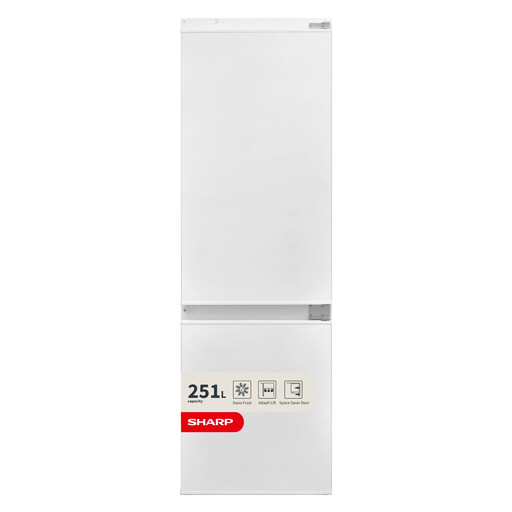
Consider this model if you need an integrated fridge freezer for grapes and everyday food. Its title specifies a 70/30 layout, NanoFrost, 177 × 54 cm dimensions and energy class E.
Check the cabinet niche, ventilation instructions, temperature controls and usable produce-drawer space against your needs.
 No image available
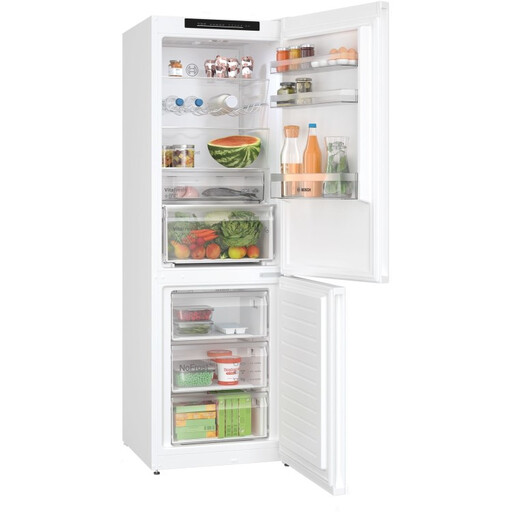
This freestanding format may suit a household that needs chilled space for grapes alongside a freezer. The title specifies NoFrost, a height of 186 cm, a width of 60 cm and energy class D.
Confirm the exact drawer configuration, temperature controls, ventilation clearance and door-opening space before choosing it.
 No image available
Consider the CDA FW872 if an integrated 70/30 fridge-freezer layout suits your kitchen and food storage. Its title also specifies a frost-free design.
Check the required cabinet niche, hinge arrangement, ventilation, temperature controls and usable produce-drawer space.
 No image available
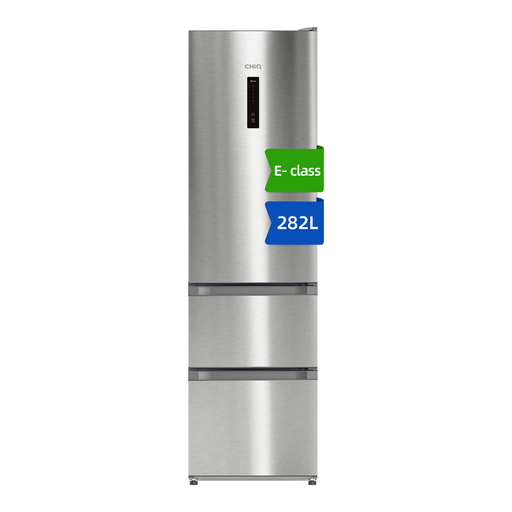
The stated 54 cm width makes this a model to measure against a narrower kitchen space. Its title specifies 282 L total capacity, a three-door layout with drawers, No Frost and energy class E.
Check the fridge compartment’s capacity, drawer arrangement, temperature controls and full installation clearances before deciding whether it meets your grape-storage needs.
 No image available
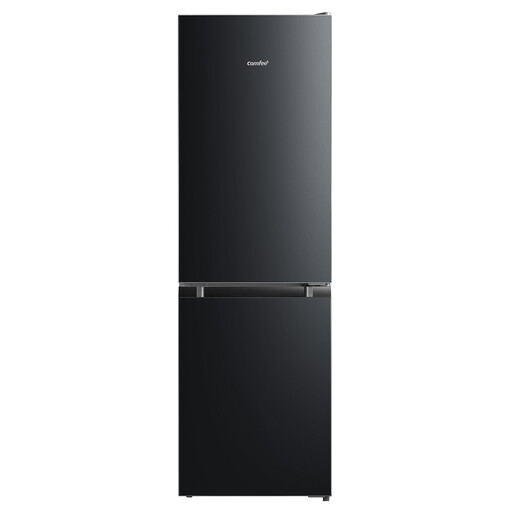
Consider this freestanding model if you need to compare a smaller appliance with your available kitchen space. Its title specifies 174 L total capacity, a height of 150 cm, Low Frost and mechanical temperature control.
Check that its fridge space and crisper meet your usual produce needs, and confirm the temperature settings, ventilation and door clearance.
Yes. Love Food Hate Waste says grapes keep fresher for longer in the fridge and recommends a fridge temperature of 0–5°C. Leave enough space around the grapes for normal airflow.
Not just for occasional grape storage: a standard fridge kept at an appropriate temperature can serve that need. If you regularly store other fruit and vegetables too, compare the exact model’s drawer size and whether its humidity is adjustable or fixed.
Measure the available height, width and depth, then allow for door opening and ventilation. General fridge-freezer guidance suggests about 5 cm behind and 2 cm at either side, but follow the exact appliance’s installation instructions where they differ.
Compare the energy label and product information sheet for each exact model, alongside its capacity and appliance type. GOV.UK guidance describes the energy information retailers should display for products within its scope; a produce-feature name is not a substitute for that model-specific information.
Ask the retailer about its old-appliance collection arrangements before ordering a replacement. Confirm whether home collection and disconnection are available for your address and appliance.