Shared-kitchen fresh-food organisers
If several people keep produce, leftovers and labelled containers in one fridge, look for chilled space that remains accessible when everyone’s food is inside.


Choose the fridge format by measuring the kitchen space and judging how much chilled food everyone needs to share: an under-counter larder fridge can suit a modest load, while a tall larder fridge offers more fresh-food space if freezer storage is available separately. Give mushrooms a dry, accessible place, and compare the energy information for the exact appliance rather than choosing by brand or size alone.
If several people keep produce, leftovers and labelled containers in one fridge, look for chilled space that remains accessible when everyone’s food is inside.
If mushrooms are a frequent grocery purchase, plan a dry, breathable storage routine and a place where their packaging will not get wet or crowded.
If the fridge must fit an existing opening, check its dimensions and door swing before deciding whether an under-counter, tall or integrated format is practical.
Decide how much chilled space the household needs before choosing a format; a fridge-freezer’s total volume is not the same as its fresh-food capacity.
Consider it when: The kitchen has room below a counter and the shared chilled-food load is modest.
Trade-off: Check that its shelf and drawer layout still leaves enough room for everyone’s food.
Consider it when: Several people regularly share fresh groceries and freezer storage is available separately.
Trade-off: It needs suitable height and depth clearance and does not provide freezer space.
Consider it when: A suitable built-in opening is part of the kitchen plan and both chilled and frozen storage are needed.
Trade-off: Cabinet and door-fitting requirements make the exact installation arrangement important.
| Concern | What to check | Who this matters to |
|---|---|---|
| Shared chilled space | Compare fresh-food capacity and the usable shelf and drawer layout, not just total appliance volume. | When several people’s groceries compete for room, I need a visible place for mushrooms without crowding other food; around 33% of consumers put shared chilled space first. |
| Mushroom storage | Check whether an accessible shelf or produce area can be reserved for mushrooms kept dry in breathable packaging. | If I buy mushrooms regularly, I want to keep their packaging dry and away from strong food odours. For roughly 27% of consumers, mushroom condition is the primary concern. |
| Kitchen fit | Measure the opening and access route; check the exact dimensions, door swing and installation instructions. | In a cramped shared kitchen, I need a fridge whose door can open and whose body fits the available space; approximately 27% of consumers prioritise fit. |
| Shared use and energy information | Check shelf access and the exact model’s energy label; compare its stated noise figure if the kitchen adjoins living space. | When everyone uses the same fridge, I want food to be easy to find and appliance information to be clear; around 13% of consumers place shared-use convenience and running-cost visibility first. |
Two larder fridges can differ substantially in both dimensions and fresh-food capacity. Beko lists 128 L for its under-counter UL4584 and 367 L for its tall LSP4671; those are specifications for those models, not every fridge in either category.
Measure the opening and route into the kitchen, then check the chosen model’s dimensions, door swing and shelf layout.
Moisture trapped against mushrooms can leave them wet and deteriorating. The Mushroom Emporium recommends a paper bag to absorb excess moisture while allowing air through.
Keep mushrooms dry and chilled in a paper bag or other breathable container, follow any pack instructions, and discard mushrooms that have clearly deteriorated.
Mushrooms that become wet or slimy may have to be discarded.
GOV.UK’s requirement to keep chilled food at 8°C or below applies to food businesses in England, Wales and Northern Ireland, not automatically to every domestic shared kitchen.
If the kitchen is used for a food business, check the rules that apply to that activity. For a house in multiple occupation, check the relevant local authority’s licence conditions and amenity standards.
Capacity alone does not establish how much energy an appliance uses.
Compare the energy label and product information sheet for the exact variants you are considering, alongside their capacity and fit.
Its UK range includes under-counter and tall larder fridges, giving buyers different formats to assess against the kitchen space.
A reference point for shoppers looking at larder fridges with a dedicated produce drawer.
Relevant when a fitted kitchen calls for an integrated fridge-freezer rather than a freestanding larder fridge.
These choices span under-counter and tall larder fridges, a side-by-side fridge-freezer and a chest unit that switches between refrigerator and freezer operation. For shared mushroom storage, assess the space available for chilled food in each format; a switchable chest unit cannot provide refrigeration and freezing at the same time.
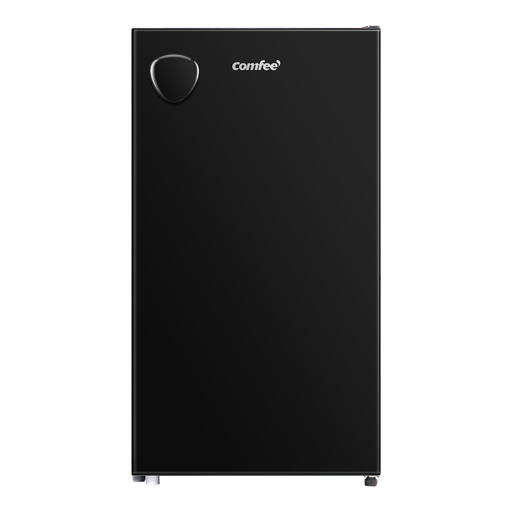 No image available
Consider this under-counter fridge where kitchen space is tight, but judge whether 88 L leaves enough room for everyone’s chilled food.
Its product name lists an adjustable thermostat, reversible door, removable glass shelves, interior light and energy class E. Check the installed fit and the exact model’s energy information.
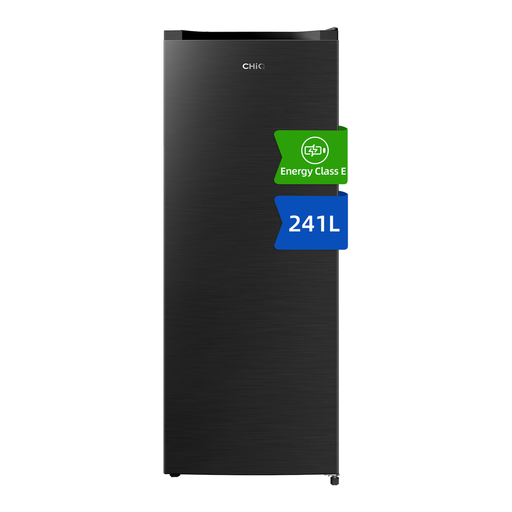 No image available
Consider this larder format when several people need chilled storage and freezer space is available separately.
The product name states 241 L capacity, 54 cm width, 1.44 m height and energy class E. Check the full installation dimensions and door clearance before ordering.
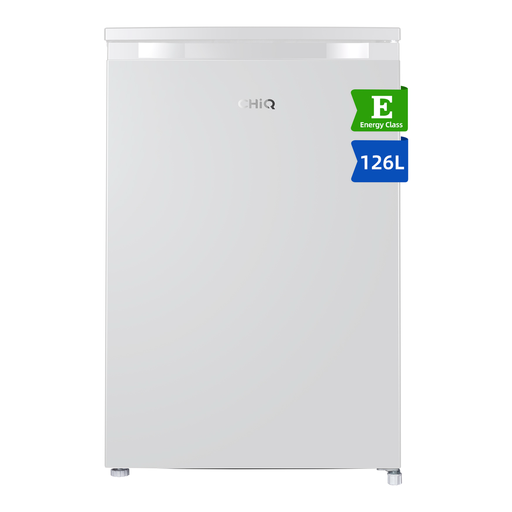 No image available
This under-counter format is worth considering when the kitchen needs a compact fridge but several users still need access to chilled food.
The product name states 126 L capacity, 55 cm width and energy class E. Confirm the door swing and available shelf arrangement for the intended position.
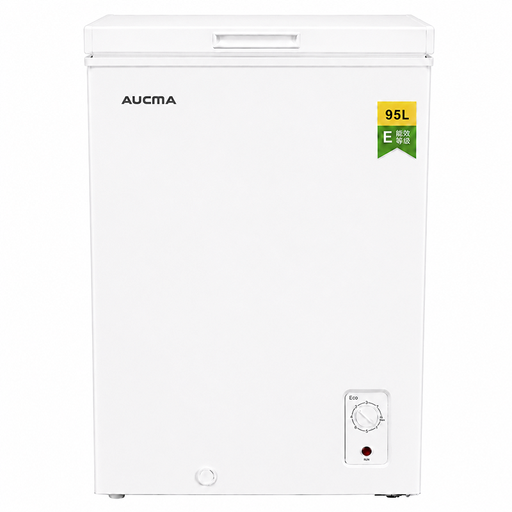 No image available
Consider this top-opening unit only if its switchable refrigerator or freezer use suits the household; it is not a simultaneous fridge-freezer with separate compartments.
The product name lists a 7-level thermostat, removable basket, defrost drain and energy class E. Check the refrigeration setting and whether top-opening access works for shared mushroom storage.
 No image available
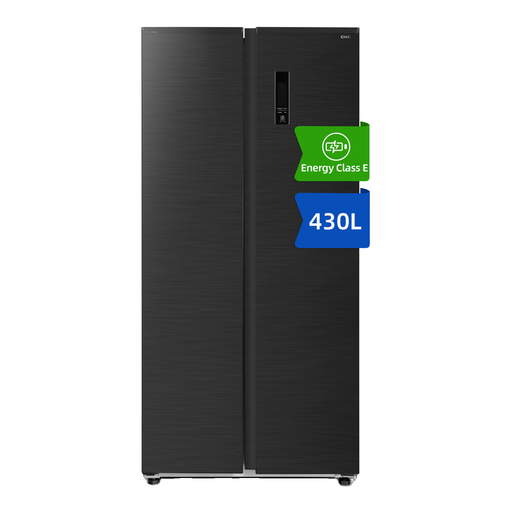
Consider this wider format when the shared kitchen needs both chilled and frozen storage and has room for the appliance and its doors.
The product name states 430 L total capacity, 84 cm width, No Frost and energy class E. Compare its fresh-food compartment capacity separately rather than treating the total as mushroom-storage space.
GOV.UK advises food businesses to set a fridge to 5°C or below to allow for temperature changes. Its requirement to keep chilled food at 8°C or below applies to food businesses in England, Wales and Northern Ireland; it is not a separate legal temperature rule for every domestic shared kitchen.
Keep them dry and chilled in a paper bag or another breathable container rather than tightly sealing damp mushrooms in plastic, as advised by The Mushroom Emporium. A labelled, accessible place also helps other kitchen users avoid crowding their packaging.
Compare the energy labels and product information sheets for the exact appliance variants, alongside the amount of chilled space each provides. Do not assume two similarly sized fridges use the same amount of energy.
Check the relevant local authority’s licence conditions and kitchen amenity standards for the property. Stockton-on-Tees Borough Council, for example, says communal kitchens should be sized and equipped for the number of occupiers; its guidance should not be treated as a UK-wide fridge-capacity rule.