Start with the space available and how much frozen food you actually keep. A compact fridge with a small four-star freezer compartment suits occasional freezing; a larder fridge suits chilled jars and groceries when you do not need freezer space in this appliance. If you regularly freeze batches, consider a larger fridge-freezer, while checking its dimensions, freezer capacity and defrost requirements against your kitchen and routine.
Who needs which fridge?
Solo cook with a small kitchen
If you mainly keep covered dressing jars alongside fresh groceries, check that the fridge fits your available space and has a shelf layout that accommodates your containers. Beko’s compact under-counter examples include adjustable shelves and reversible doors, but those features should be checked on the model you choose.
Solo cook who freezes batches
If you regularly freeze ingredients or portions, decide how much freezer room you need rather than relying on a small box inside a fridge. Bosch specifies the four-star compartment in its KTL15NWEAG for long-term storage at −18 °C or below; check the rating and capacity of any other model separately.
Household with increased food-safety risks
If someone eating the dressing has a weakened immune system, give particular attention to measured fridge temperature and recipe safety. Cambridge University Hospitals advises extra care with raw or insufficiently cooked foods for people at increased risk of infection; seek appropriate clinical advice if a dressing contains raw or lightly cooked egg.
What matters when choosing?
Compact fridge with a freezer compartment
Choose it when: Most food needs chilling, but you occasionally freeze small quantities.
Trade-off: The freezer is limited in size; Beko’s UR4584 example has a 13 L four-star compartment that requires manual defrosting.
Compact larder fridge
Choose it when: Chilled jars and groceries take priority and you have no need to freeze food in this appliance.
Trade-off: A larder fridge has no freezer compartment, so frozen ingredients need storage elsewhere.
Larger fridge-freezer
Choose it when: You freeze batches regularly and can accommodate a taller appliance.
Trade-off: It needs more installation space than an under-counter model; check whether the exact freezer is frost-free or still needs defrosting.
| Concern | What to check | Who this matters to |
|---|
| Chilled dressing storage |
Check whether shelves fit your covered jars or bottles, and use an independent thermometer to check the fridge temperature in use. |
If dressing and fresh groceries make up most of what I store, I need room for covered containers and a fridge temperature I can check. Around 50% of consumers put chilled storage first. |
| Kitchen fit |
Compare appliance dimensions with the installation space, ventilation requirements and the clearance needed to open the door. |
In a narrow kitchen, I cannot choose by capacity alone if the appliance or its door will not fit. For around 25% of consumers, physical fit is the main concern. |
| Freezer capability |
Check freezer volume, star rating, stated temperature capability and defrost type on the exact model. |
When I freeze ingredients or portions regularly, a small chilled-food compartment will not answer that need. Freezer capability comes first for around 25% of consumers. |
Common buying pitfalls
-
Assuming every small freezer box works alike
A compartment’s size alone does not establish its freezing temperature or suitability for longer storage. Bosch specifies its KTL15NWEAG four-star compartment for storage at −18 °C or below.
Check the exact model’s star rating, stated temperature capability, capacity and defrost type before planning to freeze batches.
-
Choosing by capacity without measuring the space
Compact models can have substantially different dimensions: Beko lists its UL4482 at 81.8 × 47.5 × 50 cm and its UR4584 at 84 × 54 × 59 cm.
Measure the installation space and door-opening path, then allow for the ventilation clearances in the model’s instructions.
-
Taking the fridge dial as a temperature reading
The control setting does not tell you the temperature around stored dressing. Buckinghamshire Healthcare NHS Trust advises a fridge range of 0 °C to 5 °C and recommends a thermometer for checking it.
Check the temperature with an independent fridge thermometer after the appliance has stabilised, and keep dressings covered.
-
Putting a compact appliance in an unheated outbuilding without checking
The retailer information for the Essentials CUC50W20 specifies a 16 °C to 32 °C climate range and says that model is not designed for unheated areas.
If the intended location is outside a heated kitchen, check that the manufacturer approves the exact model for its expected ambient temperatures.
Relevant brands to consider
Beko
Its compact under-counter examples show the choice between a fridge with a small freezer compartment and a narrower larder fridge.
- Beko specifies 101 L of fresh-food space and a 13 L four-star freezer compartment for the UR4584; the UL4482 is an 88 L larder fridge without a freezer.
- The UR4584 freezer requires manual defrosting. Check each model’s dimensions and configuration rather than applying either example’s features to other Beko fridges.
Bosch
Its KTL15NWEAG is an under-counter example for buyers who want a specified four-star freezer compartment.
- Bosch lists 106 L of chilled volume, an open-door warning and a four-star compartment specified for storage at −18 °C or below.
- Confirm the KTL15NWEAG’s dimensions and availability with the retailer before treating it as an option for your kitchen.
Hotpoint
Its Total No Frost fridge-freezers are relevant when regular freezer use makes defrosting an important consideration.
- Hotpoint states that Total No Frost prevents ice build-up in both fridge and freezer compartments.
- The cited examples are larger integrated fridge-freezers, not direct under-counter substitutes. Check the exact model’s cabinet requirements, dimensions and fridge-to-freezer split.
Joybuy fridges for this use
These options cover compact chilled storage, built-under installation and a taller fridge-freezer for households that also want freezer space. Choose by the space and compartments you will use for dressing, groceries and any frozen ingredients.
 No image available
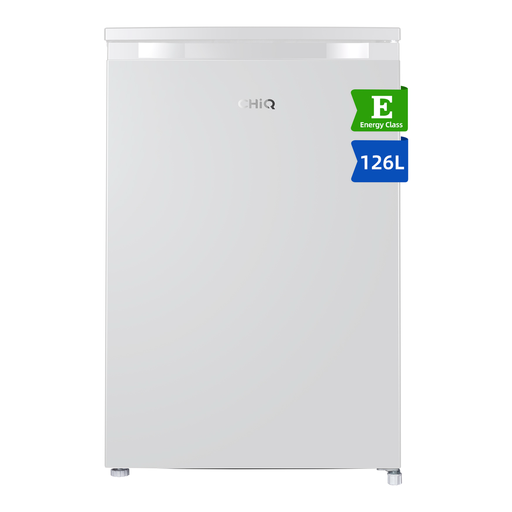
CHiQ JKR120DWE 126 L white larder fridge
Consider this 55 cm-wide larder fridge when chilled dressing and groceries matter more than freezer space. Check the installation clearances and measure the temperature in use with a fridge thermometer.
View on Joybuy
 No image available
Candy CM4SE68EWK built-under fridge with ice box
Consider this model for a compatible built-under space where dressing needs chilled storage. It has a sliding hinge and an ice box; check cabinet fit and the ice box’s stated capability before relying on it for frozen food.
View on Joybuy
 No image available
CHiQ JKR157LWE 157 L Low Frost fridge-freezer
Consider this fridge-freezer if you want separate freezer space and can accommodate its 144 cm height; its width is 47 cm. Low Frost does not mean frost-free, so check the defrost instructions and freezer rating for your intended storage.
View on Joybuy
 No image available
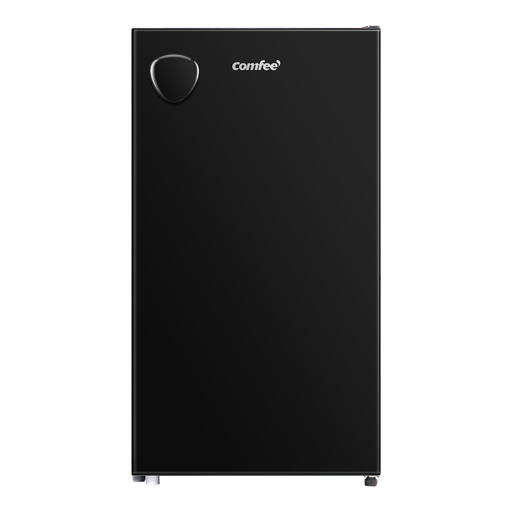
COMFEE' RCD92BL2UKY(E) 88 L under-counter fridge
Consider this compact fridge for chilled jars and a kitchen where door direction matters. It has removable glass shelves and a reversible door; check the shelf arrangement for your containers and use the main fridge compartment for dressing rather than treating the cooler box as a freezer.
View on Joybuy
 No image available
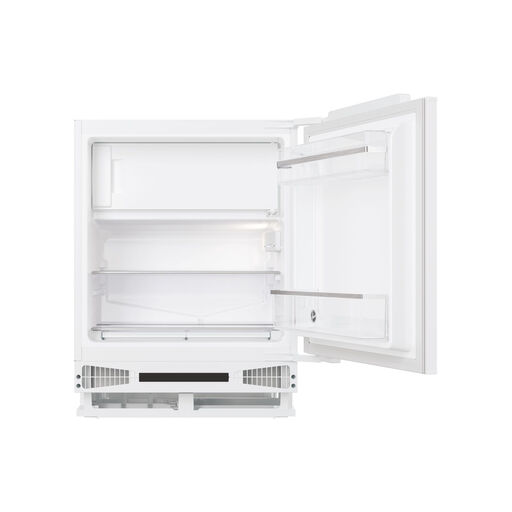
Hoover HOM4SE68EWPK integrated under-counter fridge with icebox
Consider this model when dressing needs chilled storage in a compatible integrated under-counter cabinet. Check cabinet and ventilation requirements, usable shelf space and the icebox’s stated capability if you also plan to store frozen food.
View on Joybuy
Frequently asked questions
What fridge temperature should I use for homemade dressing?
Check the temperature with a fridge thermometer, not just the control dial. Buckinghamshire Healthcare NHS Trust advises 0 °C to 5 °C; Cambridge University Hospitals advises 2 °C to 4 °C for people at increased risk of infection. Follow the clinical advice that applies to your household.
Do I need a freezer compartment to store homemade dressing?
No freezer is needed if you only intend to refrigerate dressing and fresh ingredients. If you plan to freeze ingredients or portions, check the compartment’s rating and capacity; Bosch specifies the four-star compartment in its KTL15NWEAG for long-term storage at −18 °C or below.
How should I arrange dressing in the fridge?
Keep dressing in a covered container and away from possible drips from raw meat or fish, which belong below ready-to-eat foods. If someone with a weakened immune system will eat dressing containing raw or lightly cooked egg, seek appropriate clinical food-safety advice rather than assuming refrigeration removes that risk.


