Flat sharers short on space
If the fridge must go beneath a worktop or into a narrow gap, measure that space before deciding how much chilled storage it can hold. The layout still needs room for separated yoghurt tubs and other food.


For one or two people with limited kitchen space, start by considering a freestanding undercounter larder fridge; a slimline model is worth considering if width is especially tight. Several sharers storing groceries as well as yoghurt may need the separate shelf space of a taller fridge, while an integrated model makes sense only if its cabinet and door fittings are compatible. Whichever format you consider, check the chilled capacity, shelf layout, fit and stated noise level.
If the fridge must go beneath a worktop or into a narrow gap, measure that space before deciding how much chilled storage it can hold. The layout still needs room for separated yoghurt tubs and other food.
When several people store more than yoghurt, distinct shelves or baskets can make food easier to allocate. The Food Standards Agency reports that some households use allocated fridge areas, while others put food wherever there is space.
If the kitchen is close to a bedroom, study area or open-plan living space, compare the stated noise emission of the exact fridges that fit. Capacity and installation requirements still need to work for the household.
Consider it when: Worktop-height space is available and a movable fridge for chilled food suits the household.
Trade-off: A narrow model can fit a tighter gap, but its interior may be difficult to divide among several people storing full grocery shops.
Consider it when: Several sharers need distinct shelves for yoghurt and other regular groceries, and the kitchen has room for a tall appliance.
Trade-off: It takes substantially more space than an undercounter fridge and may be unnecessary for a small dedicated yoghurt supply.
Consider it when: The kitchen has suitable appliance housing and a fridge behind a furniture door is required.
Trade-off: Cabinet dimensions and the door-attachment system limit which replacement models will fit.
| Concern | What to check | Who this matters to |
|---|---|---|
| Organised chilled space | Compare chilled-compartment volume and whether the shelves or baskets can give regular sharers usable, separate space. | If several of us keep yoghurt alongside weekly groceries, I need space I can identify without crowding everyone else’s food. Around 33% of consumers may put organised chilled capacity first. |
| Fit and installation | Measure the appliance space and required clearances; for an integrated fridge, confirm the cabinet-door attachment. | In a narrow shared kitchen, I need the fridge and its open door to fit without blocking access. Roughly 25% of consumers may treat fit and installation as their primary concern. |
| Chilled-food handling | Check the model’s temperature controls and plan how to keep personal food clearly allocated; follow the yoghurt pack’s storage and use-by instructions. | When different people use the fridge throughout the day, I want yoghurt kept correctly chilled and easy to find before its use-by date. Around 25% of consumers may prioritise chilled-food handling. |
| Noise and energy information | Compare the exact models’ stated dB(A) figures and energy labels after confirming that each has enough space and will fit. | With a kitchen beside a living or sleeping area, I want to assess operating noise and ongoing electricity use. For about 17% of consumers, those details may be the main deciding factor. |
Two fridges that fit the same kitchen can offer very different amounts of usable chilled space. A litre figure alone also says little about whether several people can keep food separate.
Count regular sharers, then compare chilled-compartment volume and the shelf layout of each exact model. Plan where labelled yoghurt and other groceries would go.
An integrated appliance depends on both the housing and its furniture-door arrangement. Fitting guidance for an Indesit integrated model warns that the specified fixed-hinge cabinet arrangement is necessary for that model.
Check the housing measurements, door-attachment method and model-specific installation instructions before ordering.
Auto defrost, low-frost features and door alarms do not establish how the fridge is being used. The Food Standards Agency identifies chilling and use-by dates as basic food-safety controls.
Follow the appliance instructions, keep yoghurt sealed and correctly chilled, and agree where each person’s food belongs.
A fridge runs in a shared living space, so its stated noise emission and energy information deserve attention alongside capacity and fit.
Compare the exact model’s dB(A) figure and energy label, using models that can meet the household’s storage and installation needs.
Beko’s UL4482 illustrates a narrow, freestanding undercounter option for a modest-sized kitchen.
Bosch’s KTR15NWEAG is an example of a wider freestanding undercounter fridge.
Hotpoint’s H55R1 112W UK offers another freestanding undercounter larder-fridge format.
Indesit has named examples of both an integrated fridge and a tall freestanding larder fridge.
These fridges cover compact freestanding, tall freestanding and cabinet-fitted layouts. Choose a format that fits the kitchen first, then assess how its storage can be shared.
 No image available
Consider this built-under model where a furniture-door installation suits the kitchen. Its product title states an E energy rating; check the required housing, ventilation and door arrangement before choosing it.
 No image available
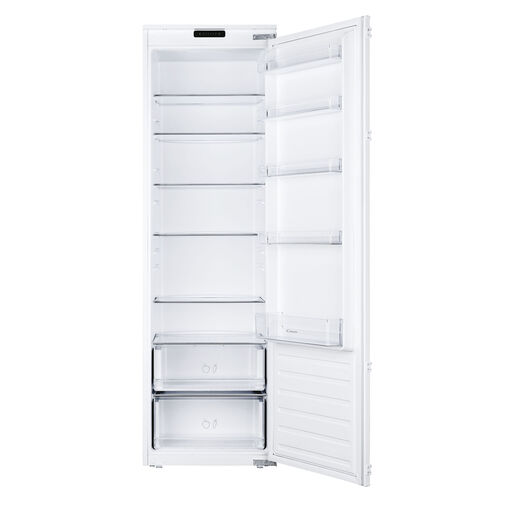
This tall integrated format is an option for several sharers only where suitable cabinetry is already available. The title specifies a sliding hinge, 316 L capacity and E energy rating; confirm the cabinet dimensions and door fitting.
 No image available
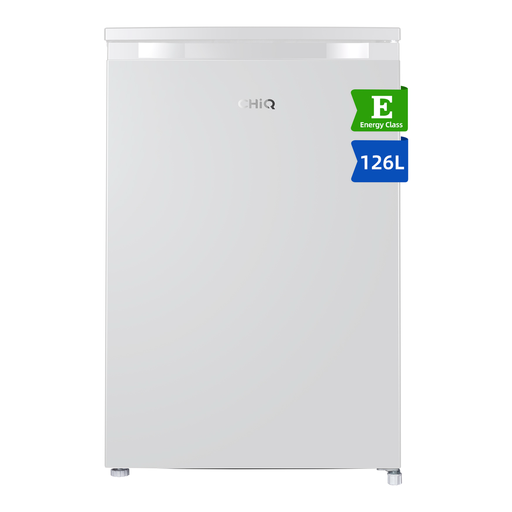
Consider this undercounter format for a smaller shared kitchen if its interior can accommodate everyone’s food. The title states a 55 cm width, 126 L capacity and E energy rating; check installation clearances and door swing.
No image available
This freestanding option suits a kitchen with room for a taller fridge and a need for more shared chilled space. Its title specifies a 54 cm width, 1.44 m height, 241 L capacity and E energy rating; check the full installation space.
 No image available
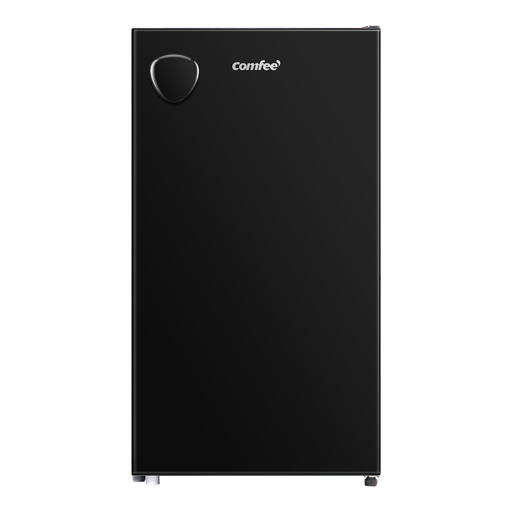
This compact freestanding option is worth assessing for a small dedicated supply rather than several people’s full grocery shops. Its title specifies an 88 L capacity, adjustable thermostat, removable glass shelves and reversible door. Keep yoghurt in the main fridge area and follow the model’s instructions for its separate cooler box.
An undercounter fridge can suit a small dedicated supply, while several people storing weekly groceries may benefit from the extra separation of a taller larder fridge. For scale, Beko specifies 88 litres for its compact UL4482, and Indesit specifies 365 litres and five shelves for its tall MLINF 1442 W4UK. Check the space and shelf layout rather than choosing by litres alone.
Give each person a clearly labelled shelf or basket where space allows, and keep yoghurt closed and stored according to its pack instructions. Follow use-by dates and the appliance’s instructions for chilled storage; an allocation system does not replace food-safety hygiene.
A door-open alarm can be useful when several people use the kitchen and a door might be left ajar, but capacity and fit still come first. Bosch lists one for its KTR15NWEAG; check the feature on the exact model you are considering.
Only if the appliance housing and furniture-door arrangement match the model’s installation requirements. Measure the cabinet and check its hinge or door-attachment system against the specific fridge instructions before ordering.