Under-counter space maximisers
If the fridge must sit below a worktop, check its full dimensions, ventilation requirements and door swing before comparing litres. An appliance that fits the gap on paper still needs room to be installed and opened.


Measure the available height, width and depth, the required installation clearances and the door-opening path before choosing a fridge by capacity. If height is restricted, an under-counter format may fit; if width is tight but height is available, a narrow fridge-freezer offers a separate frozen-food section. Compare energy-label information, noise and defrosting requirements for models that meet your space and storage needs.
If the fridge must sit below a worktop, check its full dimensions, ventilation requirements and door swing before comparing litres. An appliance that fits the gap on paper still needs room to be installed and opened.
If you regularly keep frozen ingredients or batch-cooked meals, compare freezer volume separately from chilled volume. A small freezer compartment and the separate freezer section of a taller fridge-freezer serve different storage needs.
Once more than one format fits, compare the energy-label information, capacity and declared noise for the exact models. Noise may matter particularly when the kitchen opens onto a living area; freezer defrosting also affects routine upkeep.
Choose a format that fits the installation space, then decide how much chilled and frozen food it must hold. These routes differ chiefly in the height they use and the freezer space they provide.
Consider it when: You mainly store fresh food but want a small space for frozen items below the worktop.
Trade-off: Beko UK specifies 101 litres chilled and a 13-litre freezer compartment for its 84 cm-high UR4584; that compartment is not equivalent to a separate freezer section and requires manual defrosting.
Consider it when: You have separate freezer storage or seldom need frozen food, and want the under-counter space for chilled groceries.
Trade-off: Check how you will store frozen food rather than assuming a larder fridge includes a freezer compartment.
Consider it when: Floor width is limited, but there is enough height for separate chilled and frozen compartments.
Trade-off: Bosch UK specifies 171 litres chilled and 84 litres frozen for the 55 cm-wide KGN27NWEAG, but its 182.4 cm height rules it out beneath a worktop or low cabinet.
Consider it when: You have a compatible cabinet housing and want the appliance behind a fitted kitchen door.
Trade-off: Cabinet aperture and door-system compatibility matter as well as appliance dimensions. Liebherr specifies an 86–92 cm-high, 60 cm-wide and 56 cm-deep aperture for its URc 3700 Pure.
| Concern | What to check | Who this matters to |
|---|---|---|
| Fit and door access | Measure height, width and depth, then check the exact model’s ventilation clearances and full door-opening path. | If the available gap is tight, I need the fridge to fit without blocking a cupboard or walkway. Roughly 50% of consumers put physical fit and access first. |
| Chilled and frozen storage | Compare chilled and freezer litres separately, and check whether the freezer space is a small compartment or a separate section. | When I regularly store both fresh groceries and frozen meals, the split between compartments decides whether one appliance will work for me. Around 30% of consumers make storage balance their primary concern. |
| Energy, noise and upkeep | For similarly sized formats, compare the energy-label information and declared noise; check the exact freezer’s defrosting instructions. | Once a fridge fits and holds what I need, I want to understand its running information, sound level and maintenance. About 20% of consumers place these ongoing-use concerns first. |
A fridge can fit a narrow gap yet be too deep or tall, lack installation clearance, or have a door that cannot open fully.
Measure the whole space and door arc, including room for rear sockets or pipework. Follow the clearance requirements in the exact model’s installation instructions.
Beko UK specifies a 13-litre freezer compartment for the UR4584, while Bosch UK specifies an 84-litre frozen-food section for the taller KGN27NWEAG. Both store frozen food, but the available space differs substantially.
Compare chilled and frozen litres separately against the food you normally keep.
An efficiency class does not describe the appliance’s capacity or noise. The Energy Saving Trust advises comparing energy information alongside size and other label details.
Compare models of a suitable type and size, reading their capacity and declared noise as well as the energy class.
Defrosting systems differ between exact models: Beko UK specifies manual freezer defrost for the UR4584, while Bosch UK lists Full NoFrost for the KGN27NWEAG.
Check the model’s defrosting specification and maintenance instructions if you expect to use its freezer regularly.
Beko UK lists freestanding and integrated under-counter formats, including models with small freezer compartments.
The Bosch KGN27NWEAG illustrates a tall fridge-freezer for kitchens with restricted width but ample height.
The I55R1 112W UK is an example of a freestanding under-counter fridge for primarily chilled-food storage.
Liebherr has under-counter examples for buyers with space for a 60 cm-wide appliance, including an integrated route.
These choices include narrow or shorter freestanding fridge-freezers, a built-under fridge with an ice box and a compact under-counter fridge. Match the format to your available space and frozen-food needs before comparing individual models.
 No image available
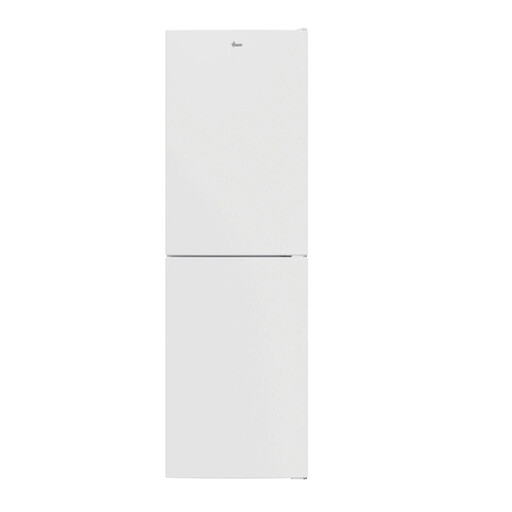
Consider this freestanding model if you need both chilled and frozen storage and have room for a fridge-freezer approximately 176 cm high and 55 cm wide.
Its title specifies Low Frost and an E energy rating. Check the required installation clearances and door-opening space; Low Frost should not be taken to mean that defrosting is never needed.
 No image available
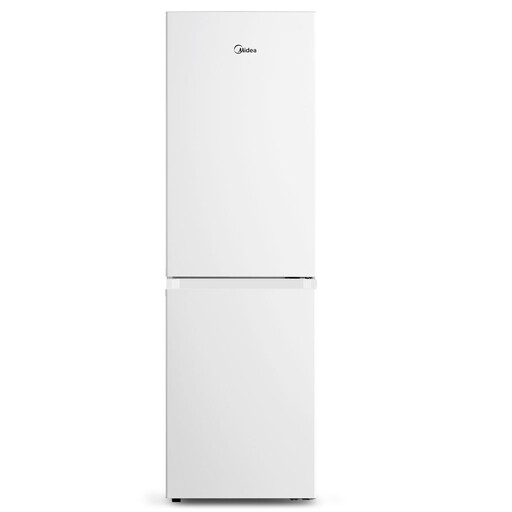
Consider this freestanding fridge-freezer if width is restricted but a tall appliance and separate frozen-food storage suit your kitchen.
Its title specifies a 55 cm width and Total No Frost. Check its full depth, installation clearances and the exact model’s energy label before choosing it.
 No image available
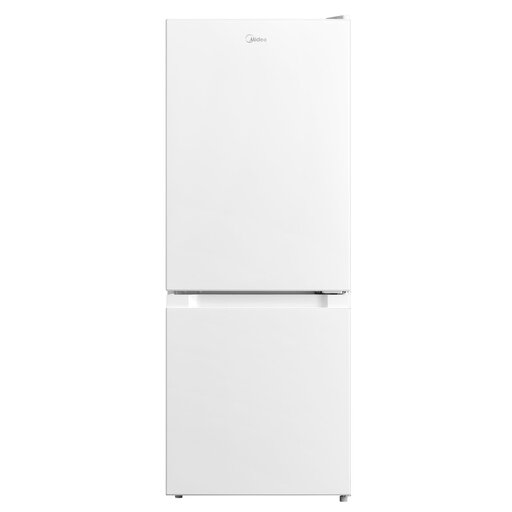
Consider this shorter fridge-freezer if a full-height model will not fit but you still need separate chilled and frozen storage.
Its title specifies a height of approximately 123 cm, Low Frost and an E energy rating. Check the compartment capacities against your usual groceries, as well as the full installation space.
 No image available
Consider this built-under model if you have a suitable cabinet space and need chilled storage with an ice box.
The title specifies a sliding hinge and an E energy rating. Confirm the required cabinet aperture and door arrangement for this exact unit, and check whether its ice box meets your frozen-food needs.
 No image available
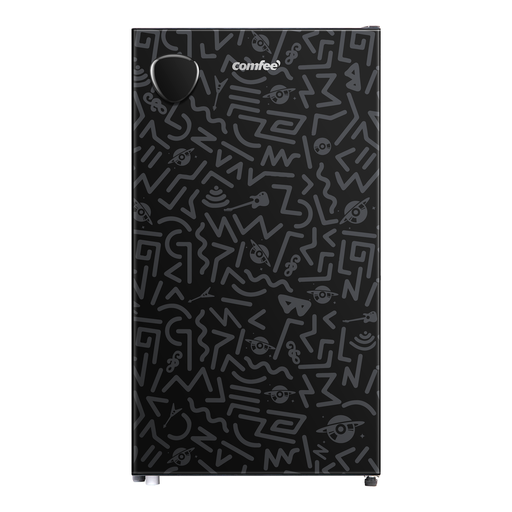
Consider this compact fridge when the available space is tight and your main need is chilled-food storage.
Its title specifies 88L capacity, a cooler box, removable handle, adjustable thermostat, reversible door and E energy class. Check the cooler box’s intended use before relying on it for frozen food, and measure the installation and door-opening space.
Measure the available height, width and depth, plus space for rear sockets or pipework and for the door to open. General measurement guidance recommends allowing installation room, but use the exact appliance’s instructions to determine its required clearances.
A 55 cm-wide fridge-freezer can suit a narrow kitchen if there is enough height and you need a separate freezer section. Bosch UK specifies 171 litres chilled and 84 litres frozen for the 182.4 cm-high KGN27NWEAG; an under-counter choice is more relevant when height is restricted, so compare the space available and the food you keep.
Compare appliances of a suitable type and size rather than choosing by the letter alone. The Energy Saving Trust explains the A-to-G efficiency scale and advises reading the capacity and noise information alongside energy use.
No: do not treat Low Frost as the same specification as NoFrost. Check the exact model’s defrosting and maintenance instructions, particularly if you use its freezer frequently.