Solo frozen-staples shopper
If you keep bread rolls alongside leftovers or meal portions, the freezer compartment and its usable drawers matter more than the appliance’s total capacity.


If bread rolls regularly share your freezer with portions or other frozen food, compare the usable freezer space in 50/50 and 60/40 fridge-freezers before considering a 70/30 layout. If you freeze only an occasional pack, a smaller freezer section may be enough. Check the exact model’s freezer volume and drawer fit against your usual shopping, then make sure the appliance fits your kitchen with room for ventilation and its doors to open.
If you keep bread rolls alongside leftovers or meal portions, the freezer compartment and its usable drawers matter more than the appliance’s total capacity.
If kitchen space is tight, measure for the appliance as well as ventilation and a fully opening door. Which? advises checking the exact model’s instructions for freestanding ventilation clearances.
If regular defrosting would be inconvenient, compare the exact model’s frost-management feature while checking its freezer space and energy information separately.
Decide how much frozen food you actually keep before choosing a fridge-to-freezer split. A 50/50 layout means equal-height doors and a 70/30 layout gives more height to the fridge; neither ratio tells you whether your bread-roll bags will fit a particular drawer.
Consider it when: Bread rolls regularly share the freezer with portions or other frozen staples.
Trade-off: The broadly balanced layout leaves less of the appliance’s height for chilled food than a 70/30 layout; compare the exact compartment volumes.
Consider it when: You freeze rolls regularly but need more room for fresh food than a balanced layout offers.
Trade-off: The ratio alone cannot tell you how many of your usual bread-roll bags will fit.
Consider it when: Frozen stock is small and chilled-food space is your priority.
Trade-off: Its shorter freezer section may become restrictive if you start freezing meals or several packs of rolls.
| Concern | What to check | Who this matters to |
|---|---|---|
| Usable freezer space | Compare the exact model’s frozen-compartment litres and drawer shapes with the bread-roll packs and other food you normally freeze. | If rolls must share space with portions or frozen groceries, I need drawers that accommodate my usual packs without sacrificing the rest of my frozen stock. Around 33% of consumers could put usable freezer space first. |
| Kitchen fit | Measure height, width and depth, then check the model’s ventilation requirements and door swing against the intended position. | In a tight kitchen, I need to be able to install the appliance and open it properly, not just fit its stated width between cabinets. Kitchen fit could be the primary concern for around 27% of consumers. |
| Freezer maintenance | Check whether the exact model is frost-free, low-frost or static, and what defrosting its instructions call for. | If I use the freezer often, avoiding a regular manual-defrosting task may matter more to me than a particular layout. Around 20% of consumers could prioritise low-maintenance freezing. |
| Energy information | Compare current energy labels and product information sheets for the exact models under consideration. | Because the appliance stays on, I want to compare its stated energy information before choosing between models that meet my storage needs. Clear energy comparisons could come first for around 20% of consumers. |
A fridge-freezer’s total litres do not tell you how much space is in its freezer. A 70/30 layout has a shorter freezer section than a 50/50 layout.
Compare frozen-compartment litres and drawer shape with the food you plan to keep before using total capacity to narrow the choice.
An appliance can fit between cabinets yet leave too little room for airflow or a fully opening door. Sockets and pipework can also affect its position.
Measure the available height, width and depth, then follow the exact model’s installation instructions for clearance and door opening. Which? recommends checking model-specific ventilation requirements.
An older energy-rating letter should not be read as though it uses the same scale as a current A–G label. The model-specific label and product information sheet give a clearer basis for comparing appliances.
Check the current documents for each model you are considering, alongside the freezer capacity and dimensions you need.
Beko describes its frost-free range as avoiding manual defrosting, but that feature does not establish how much bread-roll packaging fits in a particular freezer.
Use frost-free operation as a maintenance consideration; assess compartment volume, drawer fit and the exact model’s other specifications separately.
These brands offer fridge-freezer formats relevant to the storage and installation choices here; features still need checking on the exact model.
Bosch offers freestanding and integrated layouts with different fridge-to-freezer allocations, making its range relevant when comparing freezer space and kitchen fit.
Beko offers freestanding and integrated fridge-freezers, including a frost-free range for consumers who want less defrosting work.
Samsung presents classic, integrated and wider fridge-freezer formats, which can be compared according to kitchen space and the amount of food stored.
These integrated and freestanding fridge-freezers offer different formats for keeping bread rolls frozen. Compare each appliance with your available space and usual frozen stock; its split or overall size does not establish whether a particular bread-roll bag fits a drawer.
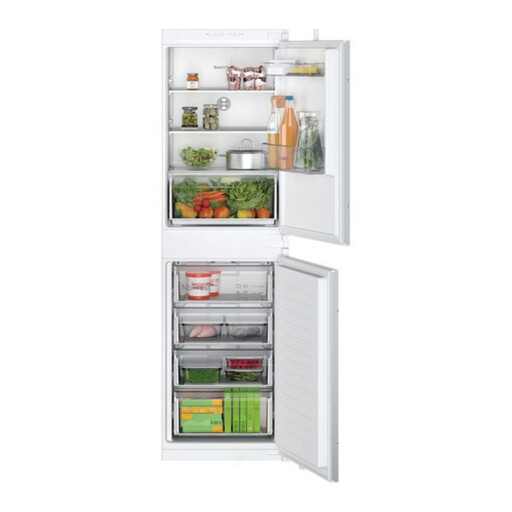 No image available
Consider this for a fitted kitchen where a balanced fridge-freezer layout and frost-free operation suit your needs.
The title specifies a 177 cm appliance, sliding hinge, 249 L total capacity and E energy class. Check cabinet and hinge compatibility, then compare the freezer’s usable space with your bread-roll packs.
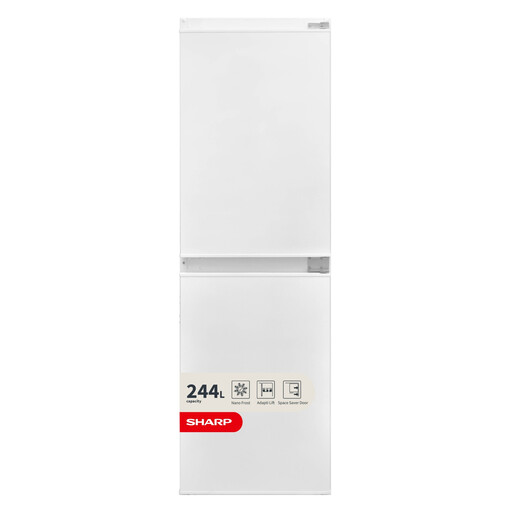 No image available
Consider this if you need a balanced layout in a compatible fitted-kitchen space.
The title gives dimensions of 177 × 54 cm and an E energy class. Check the installation instructions and freezer drawer dimensions against your cabinetry and bread-roll packaging.
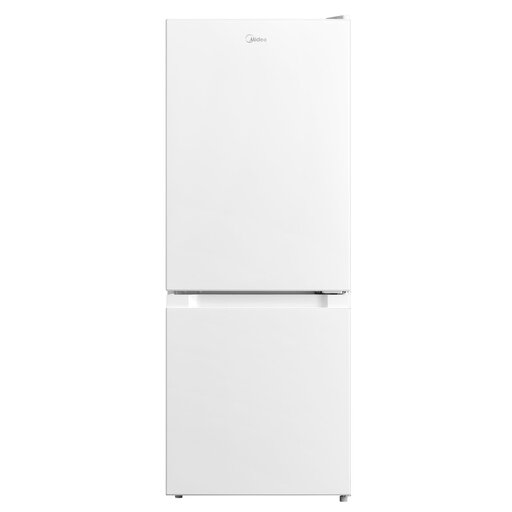 No image available
Consider this freestanding model where appliance height is an important constraint.
The title describes it as 123 cm high with an E energy class. Low Frost is not the same as frost-free; check the defrosting instructions, freezer space and installation clearances.
 No image available
Consider this freestanding model if you are looking at narrow appliances for a smaller kitchen.
The title states 47 cm width, 144 cm height, 157 L total capacity and an E energy class. Check ventilation and door clearance as well as the space available for your frozen food; Low Frost does not mean frost-free.
 No image available
Consider this for a fitted kitchen if a balanced layout suits the amount of bread rolls and other food you freeze.
The title identifies a static model with an E energy class. Check cabinet and hinge requirements, freezer drawer fit and the defrosting instructions before choosing it.
A 50/50 layout is worth comparing if rolls regularly share the freezer with portions or other staples; a 70/30 layout may suffice if you freeze very little else. These splits are described by their relative door heights, so check the exact model’s frozen-compartment litres and drawers rather than deciding from the ratio alone.
No: frost-free operation is a maintenance choice, not a requirement established by storing bread rolls. Beko says its frost-free range avoids manual defrosting, but you still need to check the chosen model’s freezer space, dimensions and energy information.
Measure the available height, width and depth, then allow for the door to open and for the exact model’s required ventilation space. Also account for sockets or pipework; Which? recommends checking the manufacturer’s instructions for freestanding-appliance clearances.
Compare the current energy label and product information sheet for each exact model, alongside the capacity and dimensions you need. UK government guidance requires these documents for products within the applicable energy-labelling rules; an energy class alone does not tell you whether bread rolls will fit.
Follow the food’s packaging instructions for storage and thawing. A 2021 Food Standards Agency review records its consumer guidance that pre-packed food may be frozen up to its use-by date and should be consumed within 24 hours after defrosting; that guidance is for pre-packed food generally, not a bread-roll-specific storage time.