What matters when choosing?
Decide whether the kitchen requires an integrated appliance or has room for a freestanding one. Then compare chilled space and storage layout for your usual family meals before weighing cooling features, energy use and noise.
| Concern |
What to check |
Who this matters to |
| Chilled storage and odours |
Check the fridge controls and room for covered portions. Confirm whether any separate cooling or chiller zone applies to the compartment you would use; follow the cheese’s storage instructions. |
When cheese shares space with other meal ingredients, I want it kept cold and covered without relying on a feature name to manage odours. Around 36% of consumers would put chilled storage and odour management first. |
| Usable family space |
Compare chilled and frozen capacities separately, then assess adjustable shelves and space for your usual containers. |
Preparing several family meals means I need places for portions, ingredients and leftovers, not just a large combined litre figure. Usable capacity would be the main concern for around 29% of consumers. |
| Energy use and noise |
Compare the exact models’ energy-use and noise figures alongside their capacities and A–G energy classes. |
With an appliance running continuously, I want to understand its electricity use and how its stated noise level fits my kitchen. Around 21% of consumers would make those comparisons their priority. |
| Kitchen fit and replacement |
Measure the installation space and check hinges, ventilation and door clearance. Confirm the retailer’s old-appliance collection arrangements. |
Replacing an existing unit means I need the new one to fit and a workable plan for the old one. For around 14% of consumers, fit and replacement arrangements would come first. |
For a household setting, GOV.UK food-hygiene guidance for businesses offers a practical fridge target of 5°C or below to allow for temperature changes; follow each food’s storage instructions as well. Energy Saving Trust explains that appliance energy labels use an A–G scale and provide information for comparing energy use, noise and capacity.
Brands to consider
These model examples show which specifications and features are worth checking; a feature on one model should not be assumed to apply across its brand’s range.
Bosch
A reference point for assessing an integrated fridge-freezer when cabinet fit and separate compartment capacities matter.
- Bosch lists 184 L chilled capacity, 76 L frozen capacity and 35 dB noise for its KIN86VFE0G.
- Those figures describe the KIN86VFE0G, not every Bosch model. Check its installation requirements against the intended cabinet.
Beko
A reference for comparing freestanding layouts with a dedicated compartment described as suitable for dairy.
- Beko describes an approximately 0°C chiller compartment for meat, fish and dairy on the CNG4793V.
- Beko’s statement that NeoFrost Dual Cooling helps minimise odour transfer is a claim for that model, not a guarantee for stored cheese.
Samsung
A reference for households considering a larger appliance with an adjustable storage zone.
- Samsung lists 387 L capacity and a convertible compartment with four temperature choices for the RB38C607AB1/EU.
- Samsung describes separate air flows for its Twin Cooling Plus feature; check the exact compartment settings and food-storage instructions rather than assuming a particular cheese-preservation result.
LG
A reference when comparing models with a door-area cooling feature.
- LG says DoorCooling+ directs cool air towards the door area to reduce temperature differences between door shelves and the main compartment.
- That description does not establish how a particular model will store your cheese. Assess the usable main-compartment layout and follow the food’s storage instructions.
Joybuy fridge-freezers to compare
For covered cheese portions and family-meal ingredients, these choices include freestanding and integrated fridge-freezers. Compare their physical fit and fridge layout before deciding whether their stated features suit your routine.
 No image available
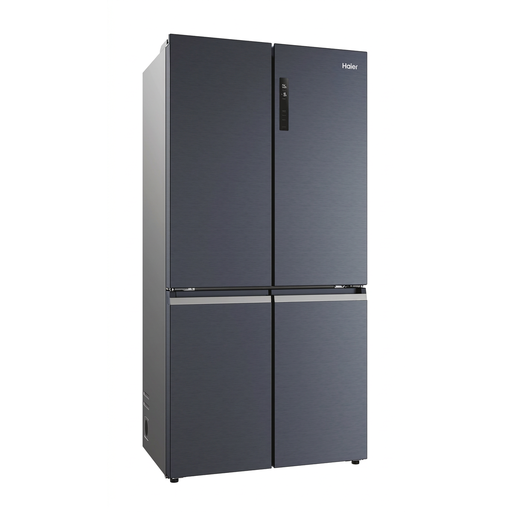
Haier Cube 90 Series 5 HCR5919ENMB 528 L fridge-freezer
Consider this freestanding model if you have room for a larger appliance and need to organise several chilled meal ingredients.
The title specifies a 528 L capacity and black steel finish. Check the chilled-compartment layout, temperature controls, door clearance and delivery access against your needs.
View on Joybuy
 No image available
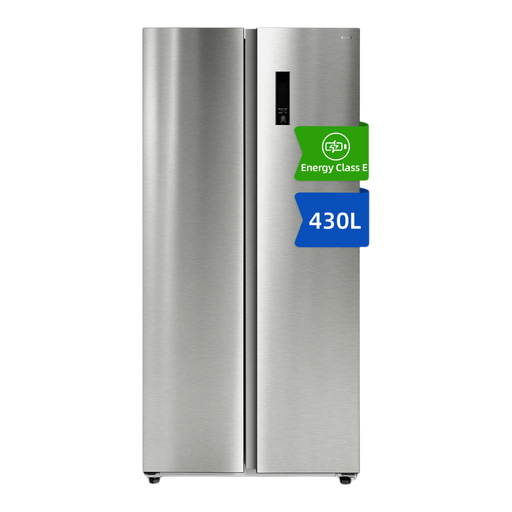
CHiQ JKR433WSSE 430 L side-by-side fridge-freezer
Consider this layout if you want side-by-side access and can accommodate a wider freestanding appliance.
The title specifies an 84 cm width, No Frost and an E energy class. Check the fridge shelves against your covered portions, as well as door-opening space and the exact model’s energy-use figure.
View on Joybuy
 No image available
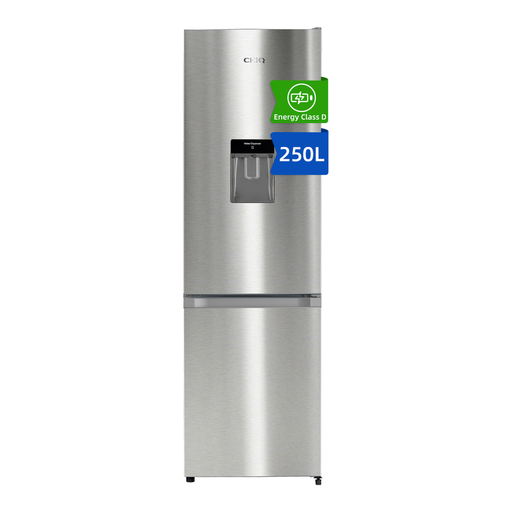
CHiQ JKR250WDSSD 250 L fridge-freezer with water dispenser
Consider this freestanding model if a narrower appliance is important, provided its fridge layout holds your usual portions and meal ingredients.
The title specifies a 54 cm width, 181 cm height, Total No Frost and a D energy class. Check chilled capacity, water-dispenser requirements and door clearance for your space.
View on Joybuy
 No image available
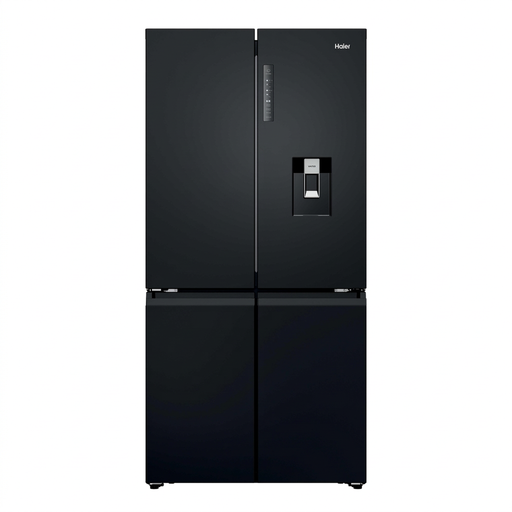
Haier Cube 90 Series 3 HCR39F19EWPT(UK) 649 L fridge-freezer
Consider this four-door freestanding format if your household needs substantial food storage and the kitchen has room for it.
The title specifies a 649 L capacity. Check how much of that space is chilled, whether any specialised zone suits your food’s instructions, and the appliance’s door clearance.
View on Joybuy
 No image available
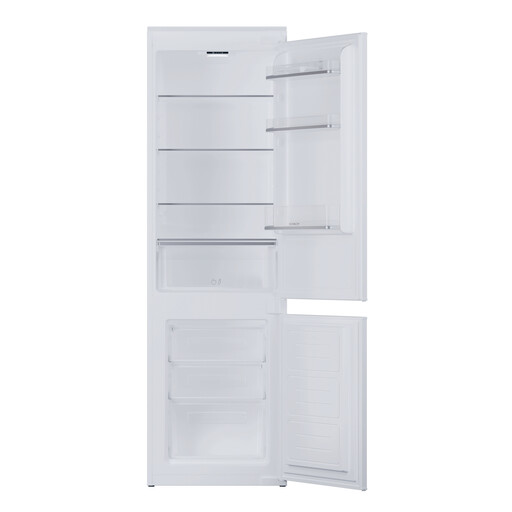
Candy CBBML18EK 262 L integrated 70/30 fridge-freezer
Consider this model when a fridge-freezer must sit behind fitted kitchen cabinetry, subject to cabinet and hinge compatibility.
The title specifies a 177 cm height, Low Frost and an E energy class. Low Frost should not be treated as No Frost; check the freezer’s defrosting instructions and the installation drawing before ordering.
View on Joybuy
Common questions
What fridge temperature should I use for cheese portions?
A setting of 5°C or below is a practical target for chilled food, alongside the storage instructions on each cheese. GOV.UK recommends that setting in its guidance for food businesses to allow for temperature changes; the business rule itself should not be read as a legal requirement for households.
Do I need a chiller drawer for cheese?
Not necessarily: choose a chiller drawer only if its stated use and temperature suit the food’s storage instructions. Beko describes the approximately 0°C compartment on its CNG4793V as intended for meat, fish and dairy; covered portions and usable ordinary fridge shelving may be sufficient for your routine.
How should I compare fridge-freezer energy use?
Compare energy-use figures for models with enough usable space, rather than relying on their A–G classes alone. Energy Saving Trust explains that appliance labels also provide capacity and noise information, which helps put the figures in context.
Will a retailer take back my old fridge-freezer?
In the UK, retailers must offer a take-back route for old electrical equipment of the same type when a customer buys a new item, according to GOV.UK guidance. Ask the retailer whether it offers home collection or uses another permitted arrangement, and confirm its terms before ordering.


