Families organising frequent leftovers
If cooked vegetables and other meal components regularly go into the fridge, usable shelf space and a clear separation from raw ingredients matter more than total capacity alone.


Choose the balance of fridge and freezer space according to where your family keeps its meal containers: prioritise accessible chilled shelves for regularly eaten leftovers, or give more attention to freezer space if you store batch-cooked portions. A tall fridge-freezer can suit a standard-width opening, while flexible-zone and larger side-by-side formats are worth considering when storage needs or household volume justify their fit requirements. Freshness features do not replace prompt cooling, covered storage and keeping the fridge at 0–5°C.
If cooked vegetables and other meal components regularly go into the fridge, usable shelf space and a clear separation from raw ingredients matter more than total capacity alone.
Families preparing portions ahead need to decide how much will stay chilled for near-term meals and how much freezer space they need for labelled portions.
A flexible-zone or side-by-side appliance may be worth considering when grocery and meal-container volumes are high, provided its dimensions suit the kitchen and delivery route.
Start with the space your covered dishes need, then decide whether frozen portions call for more freezer capacity. Choose a format only after checking where it will stand and how it will get into the home.
Consider it when: chilled leftovers need everyday access and the kitchen has a standard-width appliance opening.
Allow for: a tall cabinet and a fixed fridge-to-freezer split; check height, door clearance and the delivery route.
Consider it when: your balance of fresh ingredients and frozen portions changes regularly. Beko says the CNA7603V lower compartment offers five modes.
Allow for: checking the exact compartment modes and delivery eligibility; Beko lists this model as unavailable in Northern Ireland.
Consider it when: a large weekly shop and substantial chilled and frozen storage justify a wider appliance.
Allow for: the installation footprint and access route, and check that shelves actually fit your covered dishes.
| Concern | What to check | Who this matters to |
|---|---|---|
| Cold, separated storage | Check the temperature controls and whether covered cooked food can be kept apart from raw ingredients. Guy's and St Thomas' NHS Foundation Trust advises a fridge temperature of 0–5°C. | If I regularly put cooked vegetables away for another meal, I need a cold fridge with space to keep them covered and separate from raw food; around 36% of consumers put this need first. |
| Usable chilled space | Compare fridge litres separately from total capacity, then check shelf positions against the width and height of your containers. | When several family-meal dishes need refrigerating at once, I care about whether they fit on accessible shelves; for around 29% of consumers, that container space is the primary concern. |
| Space for frozen portions | Compare freezer litres and drawer sizes with the portions and containers you normally freeze. | If I batch-cook, I want portions I can label and find without crowding the freezer; around 21% of consumers chiefly need room for those portions. |
| Fit and appliance information | Measure the installation space and delivery route. Compare the exact model's energy label and product information, and check whether it is frost-free if defrosting work matters to you. | A larger appliance is no use to me if it will not pass through the doorway or fit the kitchen; kitchen fit, energy information and upkeep come first for around 14% of consumers. |
A drawer can help organise fresh produce, but it does not replace cooling cooked food promptly, covering it and keeping it separate from raw ingredients.
Plan shelf space for covered cooked vegetables as well as any drawer space for fresh vegetables, and keep the fridge at 0–5°C.
A large combined capacity does not tell you how much usable shelving or freezer-drawer space your family will have.
Compare the separate fridge and freezer volumes, then check shelf positions and drawer dimensions against the dishes and portions you use.
Even an appliance that fits its final position needs to pass through doorways and reach that position with the required clearance.
Check the exact model dimensions, door swing and manual's clearance requirements, then measure hallways, stairs and other access points before ordering.
Removing an existing fridge-freezer can require separate disconnection and collection arrangements.
Ask the retailer what its take-back service covers and confirm any home-collection and disconnection terms before choosing a delivery date.
The KGN392WDFG is a tall, 60 cm-wide example for households comparing a conventional fridge-freezer split.
The CNA7603V is a flexible-zone option for households whose balance of chilled and frozen food changes.
The side-by-side GSLE81EPBD illustrates a larger format for households needing substantial space in both compartments.
These tall, four-door and side-by-side options offer different cabinet widths and storage formats. Compare their actual shelves and freezer compartments with your family's covered dishes and frozen portions before choosing.
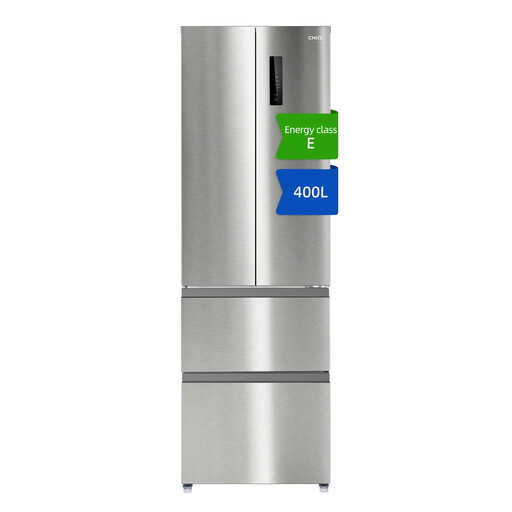 No image available
Consider this 60 cm-wide model if a narrower installation opening is important for your family-meal storage.
The product name specifies Total No Frost and an E energy rating. Check shelf clearance for your covered dishes and how you will monitor the fridge temperature.
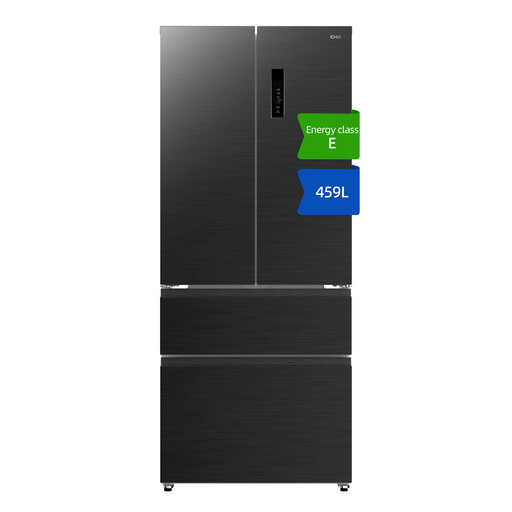 No image available
The four-door layout is an option to examine if your household needs chilled and frozen storage in a wider format.
The product name specifies an 80 cm width and an E energy rating. Check the shelf layout and container clearance, and measure the delivery route as well as the kitchen opening.
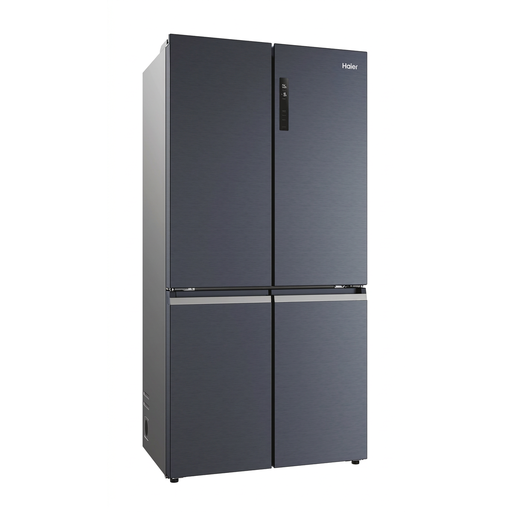 No image available
Consider this freestanding model if you are assessing a larger cabinet for family food and frozen portions.
Confirm the fridge shelf arrangement and clearance against your containers, then check the kitchen opening and delivery route.
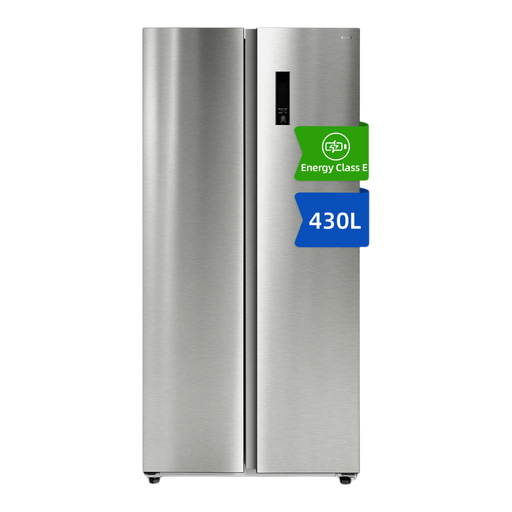 No image available
This side-by-side format is worth checking when your family needs room for both refrigerated meals and frozen portions.
The product name specifies an 84 cm width, No Frost and an E energy rating. Measure door clearance and check that the shelves accommodate your covered containers.
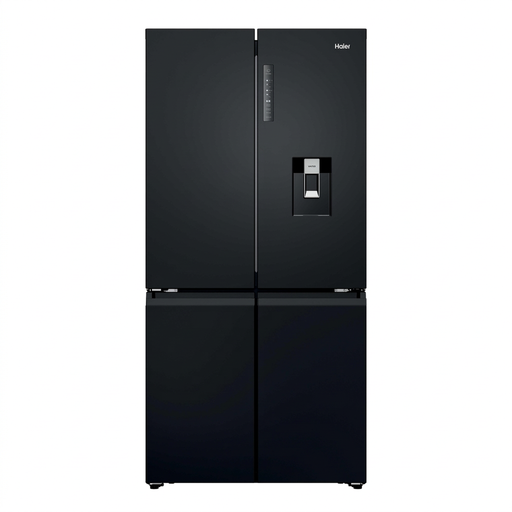 No image available
Consider this larger four-door model if your household stores substantial amounts of food and has space for a wide appliance.
Check the shelf clearance for covered meals, how its temperature controls operate and whether the cabinet can pass along the delivery route.
Cool them promptly, cover them and keep them separate from raw food. Guy's and St Thomas' NHS Foundation Trust advises keeping the fridge at 0–5°C; a freshness drawer is not a substitute for that temperature and careful food handling.
Prioritise the compartment you use most: compare chilled shelf space if you regularly refrigerate meal containers, and freezer volume and drawers if you freeze batch-cooked portions. Compare those compartments separately rather than deciding from the combined litre figure.
Compare the energy label and product information for the exact fridge-freezer models you are considering, alongside their capacities. GOV.UK provides energy-labelling guidance; check which documentation applies at your delivery location, particularly if it is in Northern Ireland.
Confirm its disconnection and removal before delivery of the replacement. Ask the retailer whether it offers take-back, whether collection is from your home and what you need to do to prepare the old appliance.