Family leftover organisers
If cooked pasta, sauces and lunchboxes regularly share the fridge with fresh groceries, look closely at usable shelf space and container clearance.


Choose the fridge-freezer layout around what your family stores most often: a fridge-heavy split suits regular covered pasta leftovers and fresh ingredients, while a more balanced split makes sense if you frequently freeze meal portions. Check that your containers fit the shelves or drawers and that the appliance fits your kitchen before weighing up frost-free operation and other model-specific features.
If cooked pasta, sauces and lunchboxes regularly share the fridge with fresh groceries, look closely at usable shelf space and container clearance.
If you freeze portions for later meals, check freezer drawers as carefully as fridge shelves. A split that favours chilled storage may leave less room for those portions.
If the appliance must fit an existing space, dimensions, door clearance and the choice between integrated and freestanding installation narrow the options before storage features do.
Start with the space your family needs for chilled leftovers and frozen portions, then check kitchen fit. A 70/30 split has a taller fridge door while a 50/50 split has equal-height doors; neither label tells you whether your usual containers will fit.
| Concern | What to check | Who this matters to |
|---|---|---|
| Chilled leftover space | Compare fridge compartment volume, shelf positions and clearance against your widest covered pasta dish. | If pasta dishes and sauces must fit beside the usual groceries, I need usable fridge shelves rather than just a large total-capacity figure. Around 42% of consumers put chilled leftover space first. |
| Freezer room for portions | Compare freezer compartment volume and drawer dimensions with the containers you normally freeze. | When I save batch-cooked portions for later, the drawers need to hold them alongside other frozen food. Freezer room is the primary concern for around 33% of consumers. |
| Kitchen fit and everyday use | Check appliance dimensions, ventilation and door clearance; for integrated models, check cabinet and hinge compatibility. | If I am replacing an appliance in a fixed kitchen space, it must fit and open properly before its features matter. Around 25% of consumers prioritise kitchen fit and everyday use. |
Total capacity cannot tell you whether a covered pasta dish sits flat on a shelf or portion containers fit inside a freezer drawer.
Measure your regular containers and compare them with the exact model’s shelf positions, drawer layout and separate compartment volumes.
No Frost addresses freezer ice build-up and defrosting; it does not take the place of appropriate cooling and chilled storage for cooked food.
Consider it a maintenance preference. Separately check the fridge controls and plan room for covered leftovers; GOV.UK advises setting the fridge to 5°C or below.
An integrated fridge-freezer must suit the cupboard housing and door arrangement. An appliance with enough food-storage space is still unsuitable if it cannot be fitted correctly.
Compare the opening, ventilation requirements and hinge system with the installation instructions for the exact model.
An incompatible cabinet door or hinge arrangement may also mean additional fitting work.
Cooked dishes need a workable cooling and storage routine; a full fridge makes that harder to manage.
Allow space for the portions you usually cook, follow GOV.UK guidance on cooling cooked food, and use suitable covered containers for chilled storage rather than treating door shelves as the default place for a pasta dish.
These examples show features to compare on specific models, not features shared by every fridge-freezer from a brand.
One reference point for integrated fridge-freezers with separately stated chilled and frozen capacity.
A reference for freestanding, frost-free models when freezer maintenance matters.
A reference for bottom-freezer layouts with model-specific storage and No Frost features.
A reference for comparing model-specific cooling features with the practical storage layout.
These freestanding fridge-freezers offer chilled and frozen storage for families comparing leftover space with room for frozen portions. Their exterior formats vary, so check kitchen access and the internal layout before choosing.
 No image available
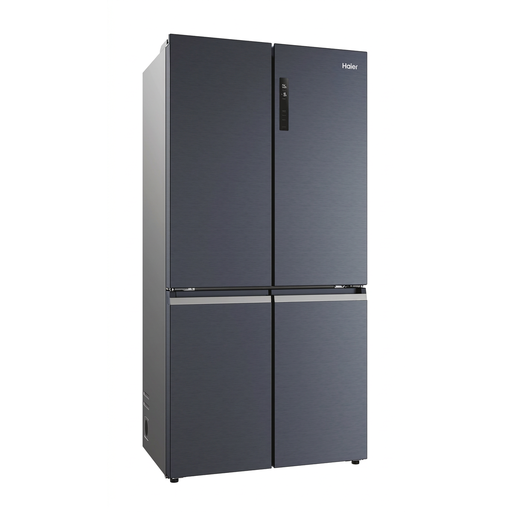
Consider this freestanding fridge-freezer if you need room for both family leftovers and frozen portions.
Its stated total capacity is 528 L. Check the shelf and drawer measurements against your containers, as well as the space needed to install and open the appliance.
 No image available
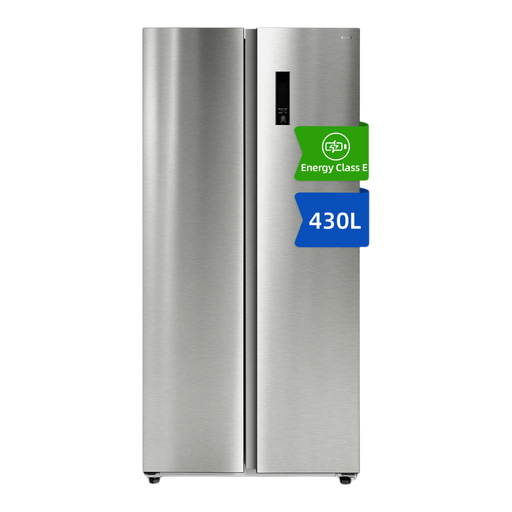
The side-by-side format is worth considering if you want separate access to chilled food and frozen portions.
The product title states a total capacity of 430 L and a width of 84 cm. Check door-opening space and whether your pasta containers fit the internal shelves.
 No image available
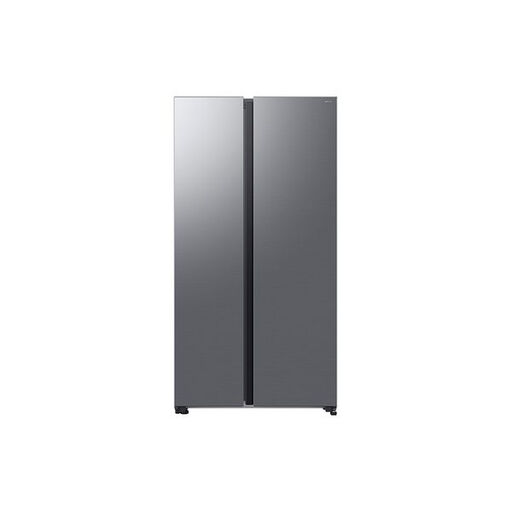
This freestanding American-style fridge-freezer is an option to assess when the household needs both chilled and frozen storage.
It is listed as C rated. Confirm access through the home, kitchen and door-opening clearance, then check the shelf layout against your usual covered dishes.
 No image available
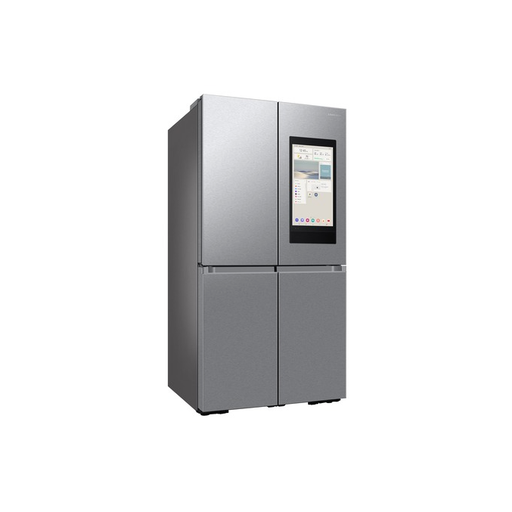
Consider this French-door fridge-freezer if you need chilled and frozen space and can accommodate its larger format.
Its stated total capacity is 646 L, but container fit still depends on the internal layout. The water and ice dispenser requires a potable mains water connection and qualified fitting; check access and door clearance too.
 No image available
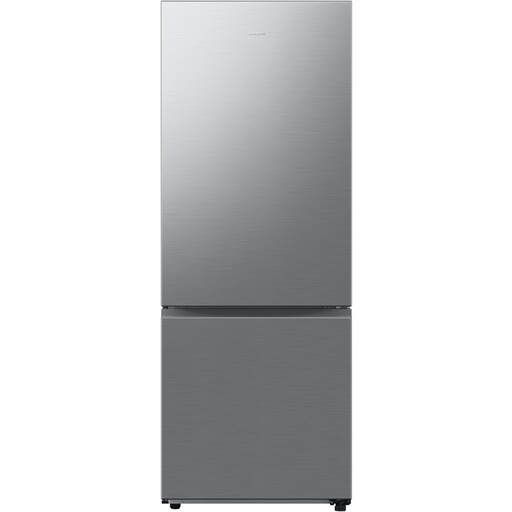
This freestanding model is worth comparing if chilled family food is a priority but you also need freezer space.
Its stated total capacity is 538 L, and the title gives a width of 75.9 cm. Check available height, ventilation space and internal container clearance before ordering.
Set the fridge to 5°C or below, as GOV.UK advises for keeping chilled food cold enough when the temperature varies. Cooked dishes need chilling, so make sure there is practical shelf space for them as well as your usual groceries.
Divide cooked dishes into smaller portions, cool them before freezing and label them, in line with GOV.UK guidance. When choosing a fridge-freezer, check whether those portion containers fit the freezer drawers.
No Frost is a freezer-maintenance feature, not a substitute for cooling cooked food and keeping chilled food appropriately cold. Beko and Samsung describe their model-specific frost-free systems in terms of avoiding manual defrosting or ice build-up; assess fridge space and temperature controls separately.
Choose an integrated model only when its housing, dimensions, ventilation and door-hinge requirements match your kitchen. A freestanding model offers more flexibility in placement, but still needs enough installation and door-opening space. Neither format alone tells you whether your pasta containers will fit inside.