Small-kitchen fit-first shoppers
You need the appliance and its open door to fit around walls, worktops and cupboards. Check the available height, width and depth alongside the exact model’s ventilation and installation instructions.


Choose a fridge-freezer that fits the measured space with room for ventilation and a fully opening door, then check whether its chilled compartment has a drawer that accommodates your carrot-stick container. An integrated model makes sense only with compatible housing and door fittings; without that cabinetry, a compact freestanding model avoids those particular installation requirements. Compare the fridge and freezer space separately, and treat frost-free features as a freezer-maintenance consideration rather than a promise about vegetable storage.
You need the appliance and its open door to fit around walls, worktops and cupboards. Check the available height, width and depth alongside the exact model’s ventilation and installation instructions.
You regularly store carrot sticks, vegetables or prepared salad ingredients. An accessible crisper or produce drawer that fits your usual container may matter more to you than the appliance’s total capacity.
You need chilled space for vegetables as well as room for frozen food. Once the appliance fits, compare the compartment layout and consider how much freezer defrosting you are prepared to do.
Decide whether the kitchen can accommodate an integrated appliance or needs a freestanding one before comparing produce drawers and compartment space.
Consider it when: There is no suitable integrated cabinet and the appliance needs its own position in the kitchen.
Trade-off: A smaller exterior can mean less room for groceries, so check the chilled compartment and crisper as well as the footprint.
Consider it when: The kitchen has, or is being built around, compatible tall housing and furniture doors.
Trade-off: Cabinet dimensions, ventilation and the hinge system restrict which models can be installed.
| Concern | What to check | Who this matters to |
|---|---|---|
| Physical fit | Compare the measured space with the exact model’s dimensions, ventilation requirements and fully open door path. | If the door would meet a cupboard or the appliance would crowd a narrow gap, installation comes before extra features. Around 36% of consumers put physical fit first. |
| Vegetable storage | Check the crisper’s shape and access, including whether your carrot-stick container fits inside. | When carrot sticks and other vegetables are stored regularly, I want a chilled place I can reach without rearranging the shelves. For around 29% of consumers, usable produce storage is the primary need. |
| Compartment balance | Compare chilled and frozen volumes separately, then look at the shelf and drawer layout. | If frozen food takes up a substantial part of my shop, a fridge-led layout might leave too little freezer room. Roughly 21% of consumers prioritise the balance between the two compartments. |
| Energy and upkeep | Compare the exact model’s energy information and whether its freezer has a frost-free specification. | Once a model fits and holds my food, I want to weigh its energy information against the effort of managing freezer ice. Around 14% of consumers make energy and maintenance their first concern. |
A fridge-freezer can fit the width of a gap yet leave too little space for ventilation or for its door to open properly.
Measure height, width and depth, then check the exact model’s installation instructions and door arc against nearby cupboards and walls.
An integrated fridge-freezer needs compatible housing and furniture-door fittings; its external dimensions alone do not establish that it will fit the cabinet.
Confirm the cabinet niche, ventilation and hinge arrangement against the installation documentation before choosing the model.
Total capacity does not tell you how much accessible chilled space remains for carrot sticks once other food and containers are inside.
Compare fridge and freezer space separately and check the produce drawer against the container you intend to use.
Produce drawers and branded cooling features vary by model. A feature description does not establish a particular storage-life result for carrot sticks.
Check the exact model’s drawer and its available space rather than relying on a range-level feature name.
Bosch offers integrated fridge-freezers and describes VitaFresh produce drawers with adjustable humidity on relevant models.
Beko’s range includes integrated fridge-freezers with salad crispers and selected HarvestFresh features.
Samsung lists 60 cm Classic Fridge Freezer models, with Humidity Fresh available on selected models.
These choices include freestanding fridge-freezers for compact spaces and one integrated model for a compatible cabinet. Compare the listed dimensions and features with your installation space, then check the usable chilled storage for your carrot-stick container.
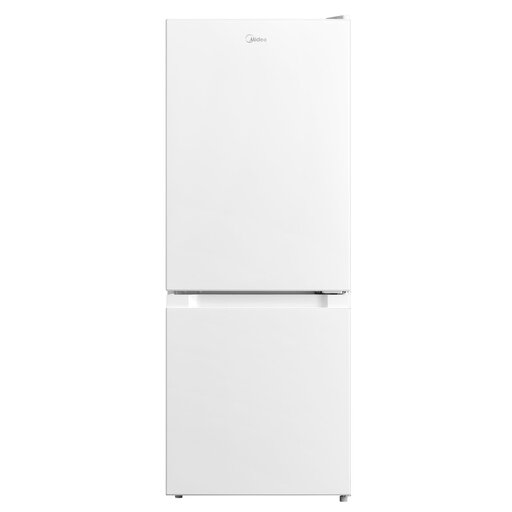 No image available
Consider this freestanding model if available height is a constraint and you need to check a shorter appliance against your kitchen space.
The product name lists a height of 123 cm, Low Frost and an E energy rating. Check installation clearances, door opening and whether your carrot-stick container fits the chilled storage; Low Frost should not be treated as a fully frost-free specification.
 No image available
Consider this freestanding model when the available width is particularly limited, provided there is enough room for ventilation and door opening.
The product name lists a width of 47 cm, height of 144 cm, 157 L capacity and Low Frost. Check the internal chilled layout against your vegetable container and confirm the expected defrosting routine.
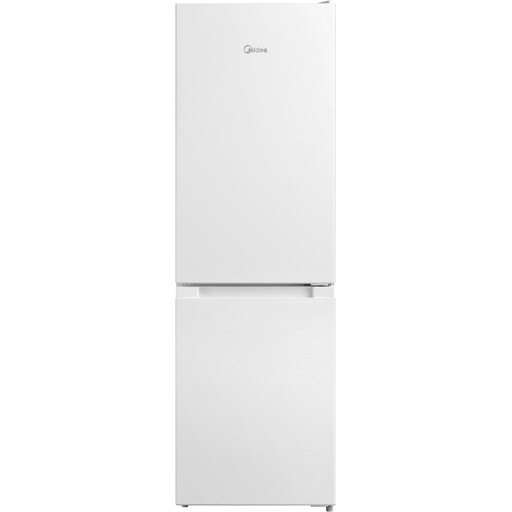 No image available
Consider this model if a 50 cm-wide freestanding appliance could fit and you want to compare its chilled layout with your regular vegetable storage needs.
The product name lists a width of 50 cm, total capacity of 173 L and an E energy rating. Confirm the exact overall dimensions and clearances before ordering, and check the space available for your carrot-stick container.
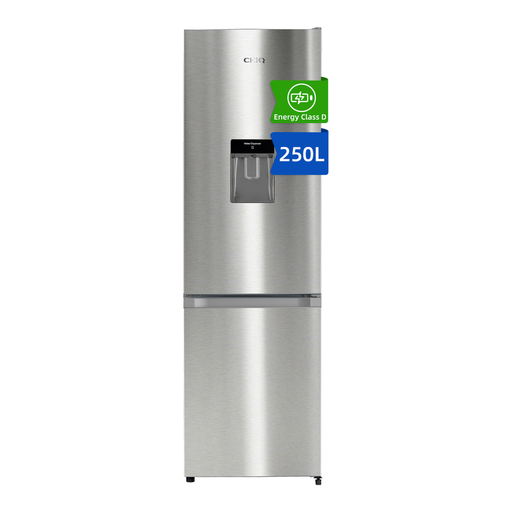 No image available
Consider this freestanding model only if the kitchen can accommodate its height as well as its stated width.
The product name lists a width of 54 cm, height of 181 cm, 250 L capacity, Total No Frost and a D energy rating. Confirm the full depth, ventilation and door clearance; Total No Frost is not a claim about how long carrot sticks will keep.
 No image available
Consider this model only for an integrated kitchen with a compatible cabinet niche and furniture-door arrangement.
The product name lists a 50/50 split, 249 L capacity and an E energy rating. Confirm cabinet dimensions, ventilation and the required hinge system against the installation instructions before ordering; also check that the produce drawer fits your container.
Measure the available height, width and depth, then check the exact model’s ventilation requirements, space for rear connections and fully opened door path. General airflow guidance is available, but the appliance’s own installation instructions should determine the clearances you allow.
No; a usable chilled drawer is the more immediate thing to check for your carrot-stick container. Bosch describes adjustable-humidity produce drawers, and Samsung lists Humidity Fresh on selected models, but neither feature name guarantees a particular storage-life improvement.
Do not choose frost-free on that assumption: it concerns frost management, chiefly in the freezer. For carrot sticks, check the chilled compartment’s drawer, its accessibility and your food-storage routine separately.
Compare the energy label and product information for the exact fridge-freezers you are considering, rather than judging by brand or capacity alone. Check those details after establishing that each model fits the space and provides the compartment layout you need.