Batch pastry makers
If you freeze portions in batches, compare frozen-compartment capacity and drawer dimensions before total appliance capacity. A 50/50 layout is worth considering when frozen and chilled ingredients need broadly equal space.


Start with the freezer compartment, not the appliance’s total capacity. A 50/50 fridge-freezer is a sensible starting point when pastry portions need roughly as much space as chilled ingredients; choose a 70/30 layout when chilled storage takes priority. In a shared kitchen, also check drawer dimensions, frost management and installation space, and establish temperature-monitoring and cross-contamination controls if the kitchen is used for a food business.
If you freeze portions in batches, compare frozen-compartment capacity and drawer dimensions before total appliance capacity. A 50/50 layout is worth considering when frozen and chilled ingredients need broadly equal space.
When several people use the freezer, labelled portions, allocated drawers and a date-rotation routine make storage easier to manage. Food-business use also calls for appropriate temperature monitoring and cross-contamination controls, as described by the Food Standards Agency’s MyHACCP guidance.
A narrow appliance still needs room for ventilation and a door that opens far enough to access its drawers. Measure the available height, width, depth and door-opening path before choosing a model.
Decide how much frozen storage the pastry portions need, then check whether the appliance and its drawers will work in the shared space. A 50/50 split means equal-height fridge and freezer doors, while a 70/30 split gives more height to the fridge; neither layout tells you the exact freezer litres.
| Concern | What to check | Who this matters to |
|---|---|---|
| Usable freezer space | Compare frozen-compartment litres and internal drawer dimensions with the portions, trays or containers you plan to store. | If pastry is prepared in batches, I need portions to fit without crushing them, even if that means giving up some fridge space. Roughly 40% of consumers put usable freezer capacity first. |
| Shared-use organisation | Check the number and size of drawers; plan labelled zones and date rotation. For food-business use, establish temperature-monitoring and cross-contamination controls. | When several people store different batches, I need to identify and retrieve my portions without disturbing others’ food. Around 30% of consumers prioritise shared-use organisation. |
| Fit and access | Measure the bay, allow for sockets and ventilation, and check the exact model’s installation instructions and full door swing. | In a tight communal kitchen, I need the appliance door and drawers to open without obstructing access. Roughly 20% of consumers make fit their primary concern. |
| Frost management | Check whether the exact freezer section is described as No Frost, frost-free or Low Frost, and read its cleaning and defrosting instructions. | If defrosting is difficult to coordinate between users, I want to understand how much upkeep the freezer requires. Around 10% of consumers put frost management first. |
Total litres include the fridge, so a large appliance can still have too little freezer space for pastry portions.
Compare the exact model’s frozen-compartment litres and drawer dimensions with your usual batch and containers.
Depth, ventilation space and door opening also affect whether people can use the appliance comfortably. General clearance guidance is available, but model-specific installation instructions take precedence.
Measure height and depth as well as width, account for anything behind the appliance, and check the door’s full opening path.
Reducing ice build-up does not identify whose food is in a drawer or replace food-business temperature and cross-contamination controls.
Agree labelled storage zones and date rotation. If the kitchen is used for a food business, include monitoring and shared-facility controls in its operating procedures.
The freestanding KGN27NWEAG illustrates a narrow, freezer-conscious option: Bosch lists it at 55 cm wide with 84 L of frozen-compartment capacity and Total No Frost.
Samsung lists the RB38C605DB1/EU as a 390 L total-capacity fridge-freezer with Total No Frost.
The freestanding HPKF 6353 XBR4UK is a 50/50 model with Dual No Frost and a Fast Freeze function.
Beko offers frost-free fridge-freezers; its FreezerGuard feature is specified for selected models intended for low-ambient locations.
These fridge-freezers offer integrated and freestanding options relevant to storing pastry portions alongside chilled ingredients. For integrated models, establish cabinet and hinge compatibility before comparing capacity; for every model, check that your portion containers fit the freezer drawers.
 No image available
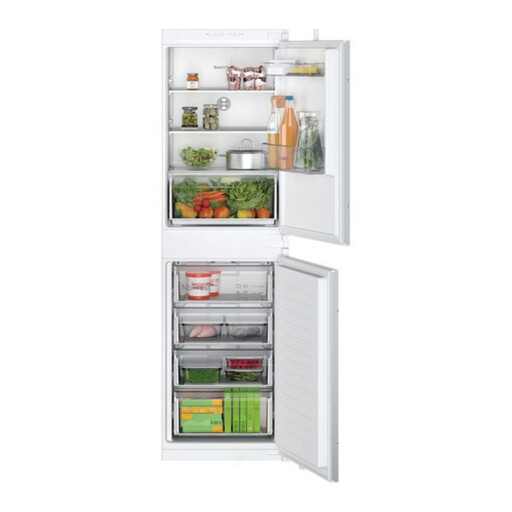
Consider this model where pastry and chilled ingredients need a 50/50 layout and the kitchen has compatible integrated housing.
The product title states a 249 L total capacity and E energy rating. Confirm fixed-hinge installation requirements, freezer litres and whether your containers fit its drawers.
 No image available
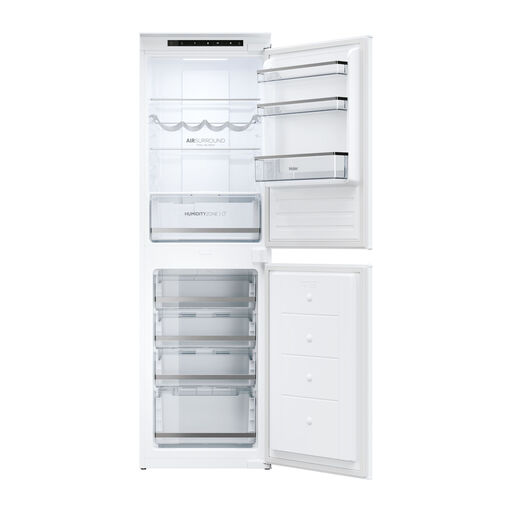
This 50/50 option is relevant when an existing kitchen cabinet can accommodate a sliding-hinge appliance.
Its product title specifies a 177 cm height, frost-free design, 249 L total capacity and E energy rating. Check cabinet fit, freezer litres and drawer dimensions before ordering.
 No image available
The 50/50 layout suits consideration where frozen pastry and chilled ingredients both need space in a compatible integrated kitchen.
The title states Total No Frost and an E energy rating. Check the housing, hinge arrangement, freezer capacity and usable drawer dimensions for your setup.
 No image available
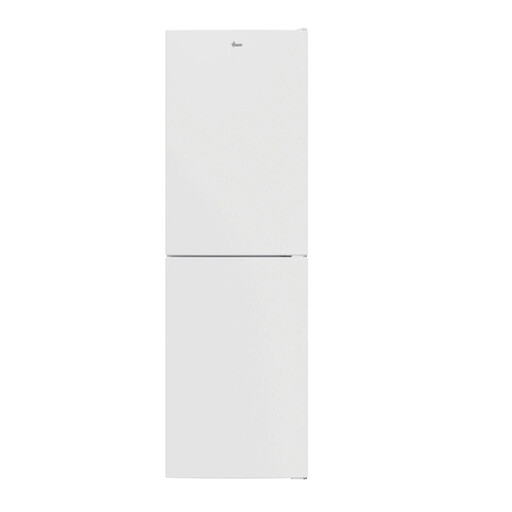
Its stated 55 cm width makes it worth measuring against a narrow shared-kitchen space.
The title also specifies a 176 cm height and E energy rating. Low Frost is not the same designation as No Frost: check its defrosting instructions, freezer capacity, drawer fit and required clearances.
 No image available
Consider its 50/50 layout if the shared kitchen needs both frozen-pastry storage and chilled space within compatible integrated housing.
The title states an E energy rating. Check cabinet and hinge requirements, actual freezer capacity, drawer dimensions and the model’s defrosting instructions.
Start with 50/50 if pastry portions need roughly as much room as chilled ingredients; choose 70/30 when chilled storage is the greater need. These splits are described by door height, so compare the exact models’ freezer litres and drawer dimensions before deciding.
Frost-free operation can reduce the ice build-up and defrosting work that users need to coordinate, but it does not replace cleaning, labelling or maintenance. Check the designation and care instructions for the exact freezer section rather than assuming Low Frost and No Frost mean the same thing.
An appliance alone does not establish a suitable food-safety process. The Food Standards Agency’s MyHACCP guidance addresses adequate freezing facilities, temperature monitoring and controls for cross-contamination in shared facilities; apply those checks to the actual operation.
If you are starting or taking over a food business, the Food Standards Agency says to register with the local authority at least 28 days before trading or food operations start. Using a domestic shared kitchen does not, by itself, establish whether your activity is a food business; check your circumstances with the local authority if uncertain.
If a food business produces food that qualifies as prepacked for direct sale, UK guidance requires the food name and a full ingredients list with allergens emphasised. Whether a particular pastry portion falls into that category depends on how and where it is packaged and sold.