Seasonal berry batch freezers
If much of your harvest arrives at once, prioritise freezer-compartment litres and drawers that keep berry bags or containers separate from other food. A split label alone will not tell you how that space is arranged.


For regular garden-berry harvests, start with the freezer compartment’s capacity and drawer layout, then check whether the fridge-freezer fits once ventilation and door clearance are allowed for. A 50/50 or 60/40 split is a useful starting point when frozen storage matters more than extra fridge space; compare the exact model’s dimensions and energy information before deciding.
If much of your harvest arrives at once, prioritise freezer-compartment litres and drawers that keep berry bags or containers separate from other food. A split label alone will not tell you how that space is arranged.
When the appliance must sit beside cabinets or a walkway, measure its installed position rather than comparing cabinet width alone. Leave room for the manufacturer’s required ventilation and for the door to open far enough to use the freezer.
If you want less manual defrosting, check the frost-control feature on the exact model. Compare its model-specific energy label alongside freezer capacity and fit, rather than choosing on an energy class alone.
For a compact UK kitchen and seasonal berry harvests, settle the installed fit and practical freezer space first; then decide how much defrosting work and ongoing energy use matter to you.
| Concern | What to check | Who this matters to |
|---|---|---|
| Freezer space and organisation | Compare frozen-compartment litres and the drawer arrangement with the bags or containers you expect to use. | If my berries arrive in batches, I need space to separate them from everyday frozen food. Around 31% of consumers put practical freezer storage first. |
| Installed fit | Measure height, width and depth, then check the model’s ventilation requirements and door-opening space. | A fridge-freezer that blocks my walkway or cannot open fully will not work in my kitchen. For around 31% of consumers, fitting the appliance is the primary concern. |
| Defrosting work | Check whether the exact model specifies Frost Free, No Frost or a different frost-control system; do not treat this as a measure of freezing speed. | I use the freezer often and would rather avoid routine ice removal. That upkeep is the leading need for around 19% of consumers. |
| Energy information | Compare the exact models’ energy labels and stated consumption alongside their freezer capacities. | Because the appliance runs continuously, I want to understand its energy use before accepting a larger cabinet or freezer section. Around 19% of consumers put that comparison first. |
Total litres include the fridge, while a stated width does not account for the depth, airflow space or door swing needed at home.
Compare freezer-compartment litres and drawers, then use the exact model’s dimensions and installation instructions to measure the complete space.
Frost-free operation addresses ice build-up and defrosting, not how quickly a new batch of berries freezes.
If freezing speed is important, check for a model-specific fast-freeze function and relevant independent performance results separately.
A fridge-led 70/30 layout allocates a smaller share of the cabinet to frozen storage than a 50/50 layout, which may constrain recurring harvest batches.
Compare 50/50 and 60/40 models too, using their actual freezer litres and internal layouts rather than the split label alone.
A fridge-freezer needs a removal plan as well as space for the replacement.
Before checkout, check the seller’s take-back or collection arrangements and whether collection can coincide with delivery.
A reference point for tall, freestanding, bottom-freezer models when cabinet width and freezer space both matter.
Worth comparing if frost-free operation and fresh-produce storage both influence your choice.
A reference point for a tall format with documented freezer capacity and a model-specific freezing function.
These options cover integrated, freestanding and French-door fridge-freezers. Start with the installation type your kitchen can accommodate, then compare the space available for berries within each exact model.
 No image available
Consider this 50/50 layout if you have a suitable integrated housing and regularly need freezer space for berries.
The product name specifies a fixed-hinge installation and 249 L total capacity. Check cabinet and furniture-door compatibility, freezer-compartment litres and the model’s energy label before ordering.
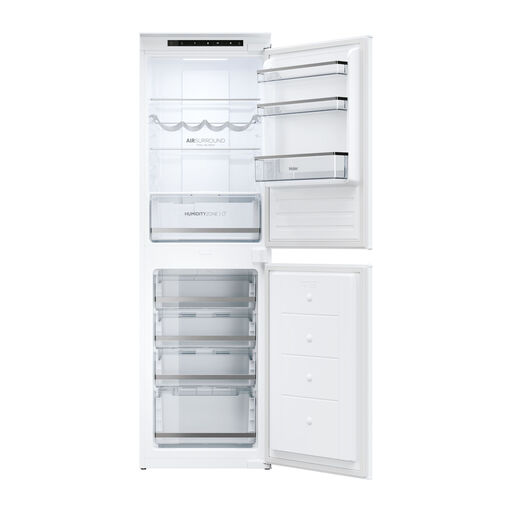 No image available
This is an option for a fitted kitchen where freezer space and reduced defrosting work are both priorities.
The product name specifies Total No Frost. Confirm the housing and furniture-door requirements, inspect the freezer layout and compare the exact model’s energy information.
 No image available
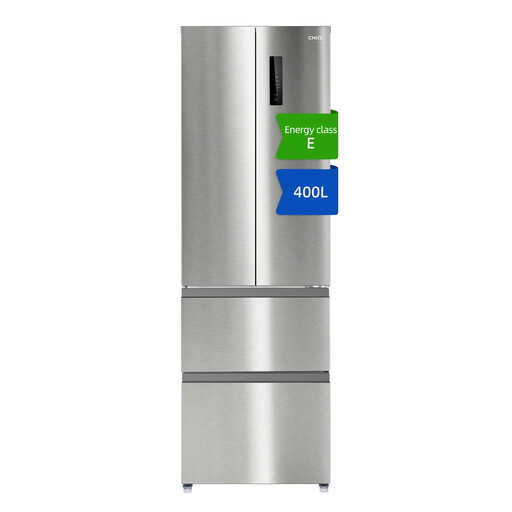
Consider this format if a 60 cm-wide position is available but you want to assess a different door and freezer arrangement for berry batches.
The product name specifies Total No Frost and 400 L total capacity, not the space available in the freezer alone. Check its freezer litres, full depth, ventilation requirements and room to open the doors.
 No image available
This 50/50 option is relevant if you have an integrated housing and are prepared to check its defrosting requirements.
The product name describes a static model. Confirm how its freezer is defrosted, whether the cabinet and furniture door fit, and how much usable freezer space its layout provides.
 No image available
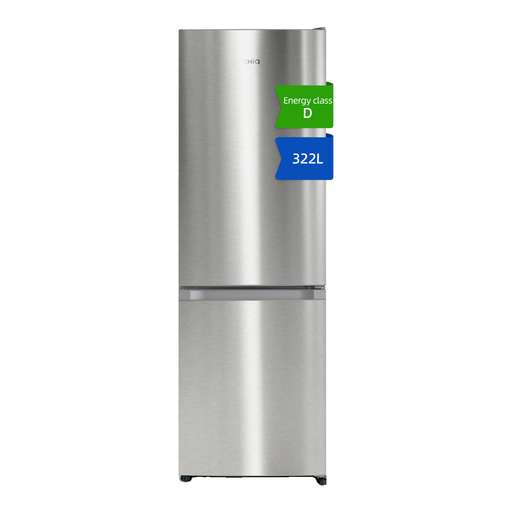
This freestanding option may suit a narrow position if its height and door access work in your kitchen.
The product name specifies a 185 cm height and Total No Frost. Check the freezer compartment’s layout and the installation instructions; the stated width alone does not establish the space needed to use it.
A 50/50 split is a sensible starting point when frozen berries are a recurring priority, because a 70/30 layout gives more of the cabinet to the fridge. Compare the exact models’ freezer-compartment litres and drawers before deciding.
Measure the available height, width and depth, plus the space needed to open the door and use the drawers. Check the exact model’s installation instructions for ventilation and any additional clearance around the cabinet.
Not necessarily: frost-free describes ice and defrosting management, not freezing speed. Check for a fast-freeze function on the exact model and seek relevant independent freezing-performance results if speed is a deciding factor.
Use the energy label for each exact model alongside its freezer capacity and dimensions. UK government guidance requires an energy label at the point of sale for products within the rules’ scope; do not assume that total capacity or a named feature predicts energy use.