Narrow-gap kitchen users
You need an appliance that fits the available space without blocking airflow or preventing the door from opening fully. General measurement guidance makes those clearances part of the fitting decision, not an afterthought.


A slim freestanding fridge-freezer is a practical starting point when a small kitchen needs both chilled space for prepared fruit salad and a freezer, but its width alone cannot establish whether it will fit. Measure the full installation space and door path; choose an integrated model only with compatible housing, or a low-height larder fridge only if you can provide freezer space separately. Food Standards Scotland advises keeping the fridge at 5°C or lower.
You need an appliance that fits the available space without blocking airflow or preventing the door from opening fully. General measurement guidance makes those clearances part of the fitting decision, not an afterthought.
You need shelf space for covered containers alongside other chilled food, with a layout that lets you reach them easily. Food Standards Scotland’s storage guidance also makes the fridge’s operating temperature and ingredient labels worth checking.
You need useful chilled and frozen compartments but would prefer less routine freezer defrosting. Compare the compartment volumes and the exact model’s frost-control description; Bosch UK and Beko UK show that these features vary by model.
Start with the space available for the appliance and its door, then decide how much accessible fridge space your covered fruit-salad containers need. The three layouts below solve different fitting problems rather than offering interchangeable versions of the same appliance.
Consider it when: You need chilled and frozen storage in one appliance and have a narrow, tall space without built-in housing.
Allow for: A slim cabinet still needs ventilation clearance and enough room to open the door and remove drawers.
Consider it when: You already have suitable appliance housing and want the fridge-freezer behind cabinet doors.
Allow for: Housing dimensions and the door-hinge arrangement must match the exact model; a similar appliance width is not enough.
Consider it when: Height prevents a tall appliance and you can accommodate a freezer elsewhere.
Allow for: A larder fridge supplies chilled space, not the freezer compartment of a fridge-freezer; the second appliance also needs its own space.
| Concern | What to check | Who this matters to |
|---|---|---|
| Fit and access | Measure height, width, depth and door swing. Check the exact model’s installation clearances; The general guidance suggests about 5 cm behind and 2 cm at each side of a freestanding appliance. | If the available gap is tight, I need to know I can open the door and pull out containers without obstructing airflow. Around 42% of consumers would put fit and access first. |
| Chilled fruit-salad storage | Check chilled-compartment volume and whether your covered containers fit the shelves. Food Standards Scotland advises keeping the fridge at 5°C or lower; check its actual temperature with a thermometer. | When I prepare fruit salad ahead, I need reachable space for covered portions alongside other fresh food. For around 33% of consumers, that chilled-storage need comes first. |
| Freezer space and upkeep | Compare fridge and freezer volumes separately, and check whether the exact model says No Frost, Frost Free or Low Frost. | If I also keep frozen groceries, I need a workable freezer compartment and want to understand the defrosting involved. That would be the primary concern for around 25% of consumers. |
Fruit salad takes up fridge space, not freezer space. A total capacity figure cannot tell you whether covered containers will fit alongside the rest of your chilled food.
Compare the two compartment volumes separately, then check shelf positions and drawer access against the containers you use.
A narrow appliance can still be awkward to install or use if there is too little ventilation space, insufficient depth or a wall in the door’s path.
Measure the full space and door path, then follow the installation instructions for the exact model rather than relying on its advertised width.
If the door cannot open properly or the required airflow space is unavailable, fitting the appliance may mean changing its location or installation arrangement.
A control setting does not tell you the temperature inside the compartment. Food Standards Scotland advises keeping a fridge at 5°C or lower.
Check the temperature with a fridge thermometer after installation, keep prepared fruit salad covered and follow storage instructions on its ingredients.
An under-counter larder fridge can address a height restriction, but it does not replace the frozen-food compartment of a fridge-freezer.
Choose that layout only if you already have suitable freezer space or can accommodate a separate freezer.
Bosch UK lists both slim freestanding and integrated fridge-freezers. Its KGN27NWEAG and KIN85NFE0G illustrate different installation routes; neither model name identifies the Bosch product shown in the Joybuy options below.
Beko UK’s CCFM3582 illustrates a narrow freestanding fridge-freezer with Frost Free operation.
Hotpoint UK describes 55 cm-range fridge-freezers for limited spaces and also lists under-counter chilled-storage appliances.
These options include narrow freestanding fridge-freezers and one integrated model. Match a model’s installation format and chilled-storage layout to your kitchen before comparing its total capacity; a Low Frost description should not be treated as Frost Free.
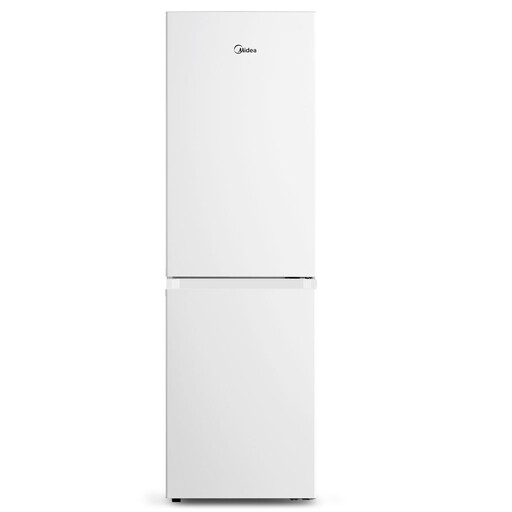 No image available
Consider this freestanding option if you need one appliance for covered fruit salad and frozen groceries in a narrow kitchen. Its title states a 55 cm width and 273 L total capacity; check the separate compartment space against your containers and the installation clearances against your kitchen.
Check the exact model’s energy label before choosing: the product information gives conflicting energy classes.
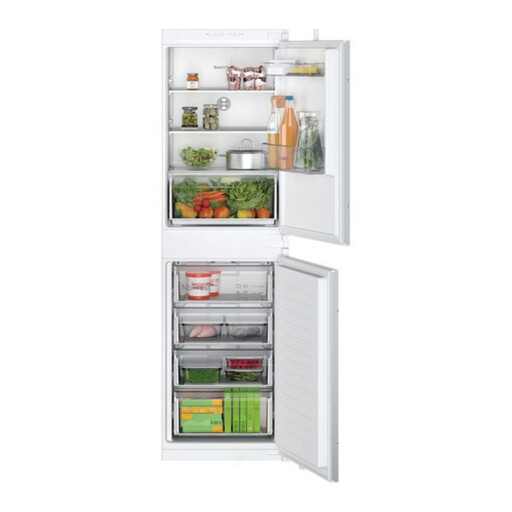 No image available
Consider this model only if your appliance housing and door arrangement suit an integrated fridge-freezer with a sliding hinge. The title states a 177 cm height, 249 L total capacity and Frost Free design; confirm the fitting requirements and usable shelf space for covered containers.
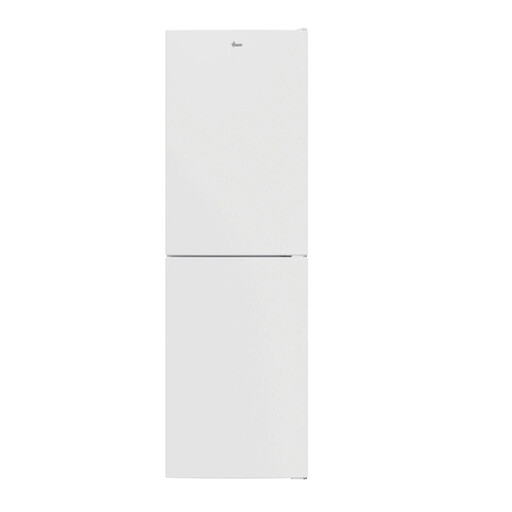 No image available
This freestanding model suits a narrow location if its door can open far enough to give access to covered containers. Its title states a 55 cm width and 176 cm height. Low Frost does not mean defrosting will never be needed; check the model’s maintenance instructions.
 No image available
Consider this freestanding model if a particularly narrow gap limits your choice. Its title states a 47 cm width and 144 cm height; check that the fridge compartment still takes your covered containers and other chilled food. Low Frost may still involve freezer defrosting.
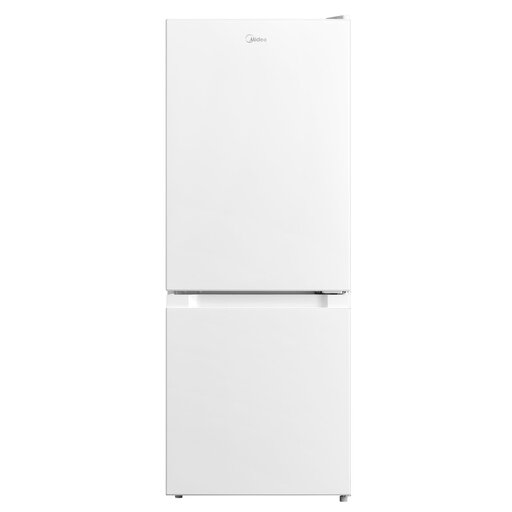 No image available
This freestanding model is worth checking where both width and height are restricted, provided its chilled compartment accommodates your fruit-salad containers. Its title describes a height of 123 cm; confirm the exact fitting dimensions and allow for defrosting under its Low Frost care instructions.
Keep the fridge at 5°C or lower, as Food Standards Scotland advises. Check the compartment with a fridge thermometer rather than relying on the dial setting, and keep the prepared fruit salad covered.
Follow the installation instructions for the exact model, including its ventilation and door-opening requirements. General measurement guidance suggests about 5 cm behind and 2 cm at each side for airflow, but the available space must also let you open the door and remove drawers.
It can be if the chilled compartment and shelf layout fit your covered containers alongside your other food. Bosch UK lists 171 L of chilled space for its 55 cm-wide KGN27NWEAG, but that example does not establish the compartment space of another 55 cm model; compare exact models before choosing.
Check the energy label for the exact model you intend to buy. GOV.UK guidance says products within the UK energy-labelling rules must display an accurate label at the point of sale, including on a website; use the model-specific label rather than assuming two similarly sized appliances have the same rating.