
24/7 Customer Support

Free returns

Same-day & Next-day Delivery

Quality Guaranteed

Unlock Your Welcome Offers: FREE Delivery | Up to 80% OFF | Free 30-day JoyPlus trial
Download the APP
Replacing a fridge freezer is rarely as simple as choosing the largest capacity within budget. The wrong appliance can block a doorway, fail to open beside a wall or leave you paying for storage you do not use. UK kitchens also vary considerably, from compact flats and rental properties to open-plan family spaces.
Before comparing models, watch for three common buying traps:
Measure the intended space before browsing. Record the available height, width and depth, then check the manufacturer’s installation guidance for clearance around the appliance. Also measure the route from the entrance to the kitchen, including lifts, stairways and narrow doorways.
50cm fridge freezers can suit galley kitchens, utility rooms and smaller homes, while 60cm fridge freezers often provide more internal space without requiring the width of a large American-style appliance. However, a cabinet opening is not the only consideration. Check whether the doors can open sufficiently to remove drawers and shelves.
A reversible door is useful when the surrounding layout may change. Integrated models may use a sliding or fixed hinge system, so confirm compatibility with the kitchen cabinet before purchase.
As a broad planning guide:
Look at the separate fridge and freezer capacities. A 70/30 layout favours fresh food, whereas a 50/50 split provides more freezer storage. French door and four-door fridge freezers often make wide shelves and separate freezer drawers easier to organise, but their door swing and width need careful planning.
UK appliances use the A to G energy-efficiency scale, with A at the more efficient end of the scale. An E rated fridge freezer is common across many available models, but the rating alone does not show the likely annual cost. Compare the stated kWh/year figure and multiply it by your electricity tariff.
For example, the Midea MDRF600BIE70 lists 285kWh/year, while the Haier Cube 90 lists 330kWh/year. Their actual running cost will depend on your tariff and usage conditions. Keeping the appliance away from radiators and allowing suitable ventilation can also support normal operation.
Total No Frost fridge freezers circulate cold air to help reduce frost and ice formation, removing the routine need for manual freezer defrosting. This convenience can be worthwhile for busy households, but it may add to the purchase price.
Low frost fridge freezers use design features intended to reduce ice build-up compared with traditional static cooling. They still need defrosting when ice becomes noticeable. This can be a sensible compromise for shoppers prioritising a lower purchase price or compact dimensions.
Other features should be judged by everyday use rather than marketing language. Adjustable shelves help accommodate tall bottles, crisper drawers separate fresh produce and external electronic displays can reduce the need to open the door when changing settings. A lower decibel figure may be preferable in an open-plan room, although noise can vary with operating conditions.

Why This Fits Their Persona: Its 47cm width and 157-litre capacity suit students, renters, studio flats and smaller kitchens where standard-height appliances may be unsuitable.
The compact dimensions are clearly specified, while Low Frost makes the maintenance requirement more transparent than a frost-free label would.
157-litre total capacity, three freezer drawers, reversible door and E energy rating.
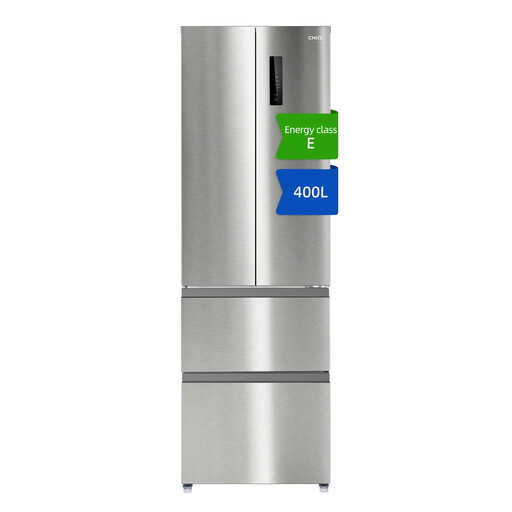
Why This Fits Their Persona: It provides a multi-door format and 400 litres of storage while remaining 60cm wide, making it suitable for households wanting extra organisation without a 90cm appliance.
The specification states the 600mm width, 638mm depth, capacities and Total No Frost system, allowing a more informed fit and maintenance check.
400-litre capacity, two freezer drawers, Care+ Space modes and 37dB stated noise level.
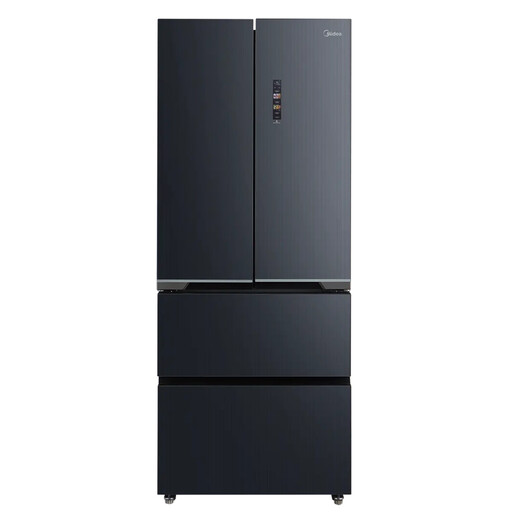
Why This Fits Their Persona: Families and batch-cooking households gain 435 litres of storage, a wide fridge compartment and separate freezer drawers, without the usual 90cm width of many American fridge freezers.
Its 600mm depth and 753mm width are specified alongside the 276-litre fridge and 159-litre freezer split, reducing guesswork about fit and usable space.
Total No Frost, XL crisper, external electronic display and stated 35dB operation.
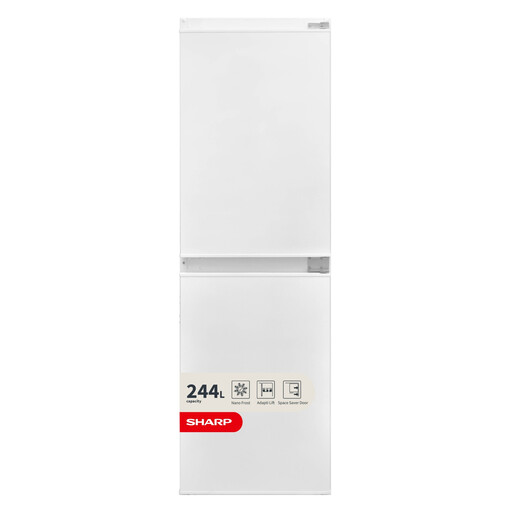
Why This Fits Their Persona: Homeowners planning a coordinated kitchen can place this 1775mm-high appliance behind a cabinet door for a consistent integrated finish.
The product is identified as integrated, with a 54cm width, 545mm depth and reversible door, so cabinet and hinge requirements can be checked before fitting.
244-litre capacity, 50/50 layout, NanoFrost low-frost cooling and adjustable shelves.
We have compiled a complete, real-time list of products that fully satisfy these strict selection criteria and UK safety regulations.
Lifespan varies with construction, usage, ventilation, installation and maintenance. Keep condenser areas and ventilation spaces clear, avoid overloading shelves and replace damaged door seals promptly. The manufacturer’s warranty covers specific terms, so check it before purchase.
Not automatically. Running cost depends on the appliance’s annual kWh consumption, your electricity tariff, room temperature and usage. Total No Frost mainly offers a maintenance convenience by reducing frost accumulation; compare the full energy specification before deciding.
It may be possible when the manufacturer’s installation instructions allow it, but heat can make refrigeration work harder. Leave the required ventilation clearance and avoid positioning the appliance beside heat sources unless the installation guidance confirms suitability.