
24/7 Customer Support

Free returns

Same-day & Next-day Delivery

Quality Guaranteed

Unlock Your Welcome Offers: FREE Delivery | Up to 80% OFF | Free 30-day JoyPlus trial
Download the APP
Buying fridges and freezers is rarely just a question of capacity or colour. A compact appliance may not hold the food you regularly buy, while a large model can be difficult to install, expensive to run or awkward to organise. The right choice depends on your available space, shopping habits and tolerance for maintenance.
Whether you are furnishing a rented flat, upgrading a family kitchen or adding storage to a garage, these are the practical details worth checking before you buy.
A freezer may look spacious online, but internal baskets, drawers, cooling components and thick insulation reduce the available storage area. Always compare net capacity, rather than relying on gross volume or vague descriptions such as “family-sized”.
Also measure the complete installation area. Check the appliance’s height, width and depth, then allow room for ventilation, door opening and delivery access. A 60cm fridge freezer may not fit a narrow kitchen alcove if skirting boards, pipework or nearby cabinets reduce the usable width.
Manual defrosting can become inconvenient, particularly with chest freezers used for batch cooking or bulk shopping. A model with No Frost or Low Frost technology can reduce ice-related maintenance, but these terms should not be treated as interchangeable.
For example, the Russell Hobbs RH300CF201B 300L Chest Freezer has a counterbalanced lid and internal wire basket or baskets, but its manual defrost system means periodic ice removal remains part of ownership.
UK refrigeration appliances use the A to G energy-efficiency scale, where A is the higher-rated category and G is the lower-rated category. The label also displays annual energy consumption in kilowatt-hours (kWh). This figure is useful when comparing likely running costs, although actual consumption can vary with room temperature, usage and ventilation.
Do not assume a smaller appliance always costs less to run. An under-filled, poorly ventilated or frequently opened appliance may use more electricity than expected. Compare the annual kWh figure, not just the letter rating.
Choose the internal split according to your routine:
Look at drawer and shelf layout as carefully as litres. Transparent freezer drawers, adjustable glass shelves and a separate crisper can make everyday access easier.
Check whether the product is freestanding, built-in or suitable for both arrangements. A built-in wine cooler needs the correct aperture dimensions and ventilation clearance; a freestanding unit may need space around its sides and rear.
A reversible door is valuable in compact kitchens, utility rooms and offices, but door reversal may require tools or professional installation. Confirm that the plug remains accessible and that the power cable will not be trapped behind the appliance.
Noise is measured in decibels (dB). A rating around 39–42dB may be more suitable for open-plan kitchens, studio flats or home offices than a louder appliance. Remember that compressor cycling can still be audible even when the published figure appears low.
For garages, sheds and outbuildings, check the manufacturer’s stated operating conditions. Low ambient temperatures can affect some refrigeration appliances, so do not assume every model is suitable for an unheated space.
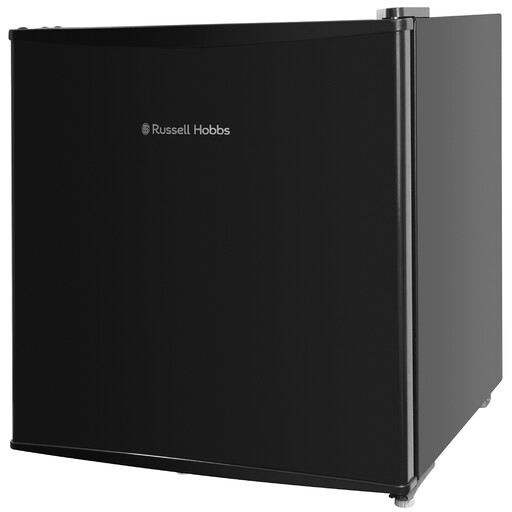
Why This Fits Their Persona: Its 43-litre capacity and compact 49.2 x 47.2 x 45cm dimensions suit students, tenants, home offices and rooms where a full-size refrigerator is impractical.
The removable wire shelf makes taller items easier to store, while the reversible door helps avoid awkward placement in rooms with a small footprint.
E-rated efficiency, manual temperature control, ice box, bottle rack and adjustable feet.
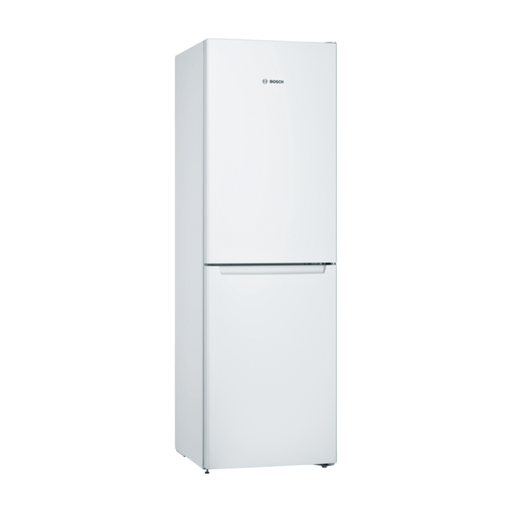
Why This Fits Their Persona: This 300-litre freestanding model combines a 50/50 layout with Total No Frost, making it suitable for households wanting organised daily storage with less freezer maintenance.
Total No Frost addresses regular ice removal, while transparent drawers and LED lighting improve visibility of stored food.
193-litre fridge compartment, three freezer drawers, E energy rating and 42dBA noise level.
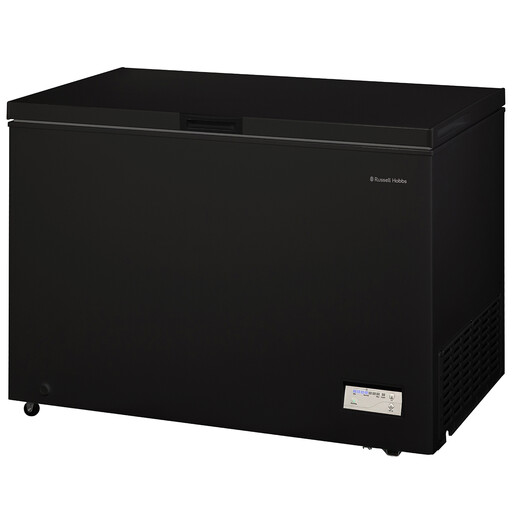
Why This Fits Their Persona: With approximately 300 litres of freezer storage, this freestanding chest freezer suits bulk shoppers, large households and home cooks who freeze batch-prepared meals.
The counterbalanced lid stays open during loading, while wire baskets help separate frequently used items from deeper storage.
300-litre capacity, adjustable mechanical thermostat, power indicator and 4-star freezer rating.
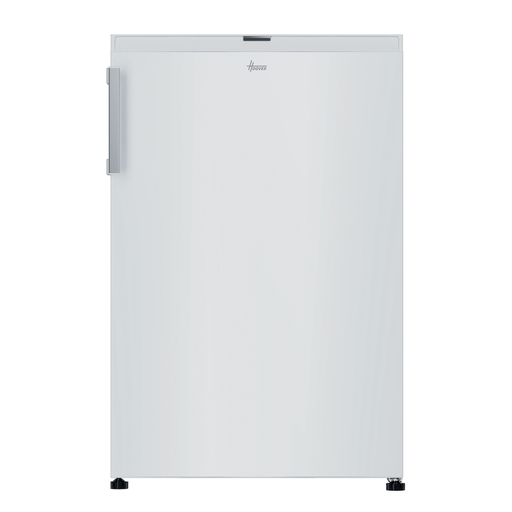
Why This Fits Their Persona: The 127-litre larder design dedicates all internal space to fresh food, making it suitable for couples, landlords and households with a separate freezer.
It does not sacrifice usable fridge space for a small ice box and uses Auto Defrost to reduce routine maintenance.
55cm width, adjustable safety-glass shelves, large crisper drawer, reversible door and 90kWh annual consumption figure.
We have compiled a complete, real-time list of products that fully satisfy these strict selection criteria and UK safety regulations.
If wine storage is your priority, a built-in wine cooler can provide a more controlled arrangement than a standard fridge door. The Russell Hobbs RHBI18WC1 range stores up to 18 bottles across six wooden shelves, with a 5–18°C temperature range and 39dB(A) operating noise. Check the required aperture dimensions before fitting it into cabinetry.
For a smaller freezer footprint, the Russell Hobbs RH198CF0E1W offers 198 litres, a removable basket and adjustable feet. Its dimensions are approximately 85 x 77 x 56cm, making it more manageable than a 300-litre chest freezer while retaining substantial frozen storage.
They can be suitable where the space is dry, level and well ventilated, but check the appliance’s operating-temperature guidance before installation. Avoid direct sunlight, heat sources and damp conditions. Leave ventilation openings clear and use a properly earthed wall socket.
Total No Frost generally reduces frost maintenance more extensively, while Low Frost reduces but may not eliminate ice build-up. If you want to minimise manual defrosting, check the exact defrost system and the manufacturer’s instructions rather than relying on promotional wording.
Find the annual consumption figure in kWh on the energy label or product specification. Multiply it by your electricity tariff per kWh to estimate annual use. This is an indication rather than a guarantee, as room temperature, ventilation, loading and door-opening frequency affect actual consumption.